






Ubiquitin and Ubiquitination
Ubiquitin protein and ubiquitination are extremely important concepts in cell biology and are related to many biological processes, especially closely linked to protein degradation and the maintenance of homeostasis.
1. Ubiquitin Protein:
Ubiquitin is a small, highly conserved protein composed of about 76 amino acids. It is present in all eukaryotic organisms and is involved in numerous cellular processes.
2. Ubiquitination:
- Ubiquitination is a post-translational modification process where ubiquitin forms a covalent bond with specific amino acid residues (usually lysine) of target proteins through its C-terminal. This process involves three main enzymes: E1 ubiquitin-activating enzyme, E2 ubiquitin-conjugating enzyme, and E3 ubiquitin ligase. The E3 ligase plays a decisive role in selecting specific target proteins and transferring ubiquitin onto them.
- Ubiquitination can involve attaching a single ubiquitin to a target protein (monoubiquitination) or forming a ubiquitin chain (polyubiquitination). The type and length of the ubiquitin chain can influence the fate of the target protein. For example, proteins marked by four or more ubiquitins linked through K48 are typically degraded by the proteasome.
3. Functions of Ubiquitination in Cells:
- Protein Degradation: As mentioned earlier, certain types of ubiquitination signals mark proteins for degradation by the proteasome.
- Cell Signaling: Ubiquitination can affect the activity, localization, or interactions of proteins with other proteins.
- DNA Repair: Ubiquitination can recruit and activate repair enzymes at sites of DNA damage.
- Cell Cycle Regulation: Ubiquitination plays a critical role at multiple stages of the cell cycle, controlling its progression.
The ubiquitin-proteasome system is a sophisticated system that ensures the proper degradation of proteins within the cell, thus maintaining cellular health and function. Moreover, due to its critical roles in various diseases, including cancer, neurodegenerative diseases, and viral infections, ubiquitination and the proteasome pathway have become potential targets for many disease treatments.
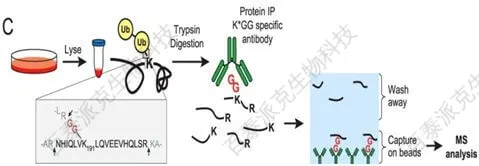
Figure 1
BiotechPack, A Biopharmaceutical Characterization and Multi-Omics Mass Spectrometry (MS) Services Provider
Related Services:
Ubiquitination Quantitative Proteomics Study
Post-translational Modification Proteomics Analysis
Histone Post-translational Modification Analysis
Label-free Quantitative Proteomics Analysis
Label-based Protein Quantification Techniques - iTRAQ, TMT, SILAC
How to order?




