






Considerations for Sample Amount in Circular Dichroism Spectroscopy
Compared to other analytical methods, circular dichroism (CD) spectroscopy requires relatively less sample, but the specific amount needed depends on various factors, including:
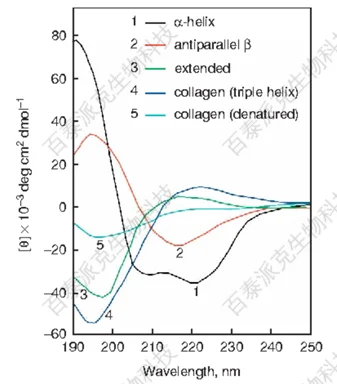
Figure 1. CD spectra exhibit representative secondary structures of polypeptides and proteins
1. Instrument Sensitivity:
Different CD spectrometers may have varying levels of detection sensitivity.
2. Sample Type:
For example, the requirements for proteins, nucleic acids, or small molecules may differ.
3. Sample Purity:
High-purity samples can provide more accurate data.
4. Measurement Objective:
If only qualitative analysis is required, less sample may be needed; whereas quantitative analysis or other specific studies may require more.
5. Cuvette Path Length:
CD measurements typically use quartz cuvettes with path lengths ranging from 0.1 cm to 1 cm. Shorter path length cuvettes can handle higher concentration samples, while longer path length cuvettes may require lower concentration samples.
For protein samples, the common concentration range in CD spectroscopy is 0.1 to 1 mg/mL, but this is just a general reference. The specific amount and concentration needed should be adjusted based on the experimental purpose and the instrument's sensitivity.
BiotechPack, A Biopharmaceutical Characterization and Multi-Omics Mass Spectrometry (MS) Services Provider
Related Services:
Protein Circular Dichroism Analysis
Determination of Protein Primary Structure
Protein Secondary Structure Analysis
Biopharmaceutical Disulfide Bond/Free Cysteine Detection
Protein Disulfide Bond Identification and Quantitative Analysis
How to order?




