






How to Detect Protein Ubiquitination - IP
Protein Ubiquitination is an important cellular biological process that involves the conjugation of ubiquitin proteins with target proteins, thereby regulating functions such as the degradation, localization, and activation of target proteins. To detect protein ubiquitination, techniques such as immunoprecipitation (IP) combined with Western blot and mass spectrometry analysis are commonly used. Below is a typical protocol for protein ubiquitination IP:
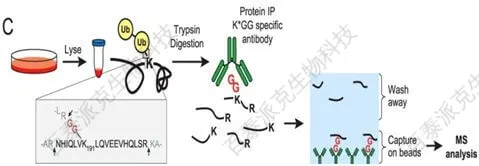
Figure 1. Ubiquitination Modification Research Route
1. Extraction of Cells or Tissues:
Collect cell or tissue samples and lyse them using an appropriate cell lysis buffer (containing protease inhibitors) to release proteins.
2. Sample Pre-treatment:
The samples can be sonicated or centrifuged to break up the cell nuclei. Add dimethyl sulfoxide (DMSO) or other cross-linking agents to stabilize protein-protein interactions.
3. Antibody Selection:
Select an antibody specific to the ubiquitinated substrate of interest. Typically, an anti-ubiquitin antibody or an antibody specific to the particular substrate is used.
4. Immunoprecipitation (IP):
Combine the selected antibody with Protein A/G agarose beads or magnetic beads to form an antibody-bead complex. Add the antibody-bead complex to the cell extract to allow the antibody to bind to the ubiquitinated substrate. Incubate the sample with rotation or on a shaker to enable specific binding of the antibody to the ubiquitinated substrate.
5. Washing:
Wash the antibody-bead complex multiple times with washing buffer to remove non-specifically bound proteins.
6. Protein Extraction:
Use SDS-PAGE or other protein separation techniques to separate the precipitated proteins.
7. Western Blot Analysis:
First, transfer the separated proteins onto a membrane. Use specific antibodies to probe the target proteins to detect ubiquitination levels. A secondary antibody can be used to detect the antibody in the antibody-bead complex. Through Western blot analysis, the extent of protein ubiquitination can be determined, such as the presence of ubiquitinated substrates and the degree of ubiquitination.
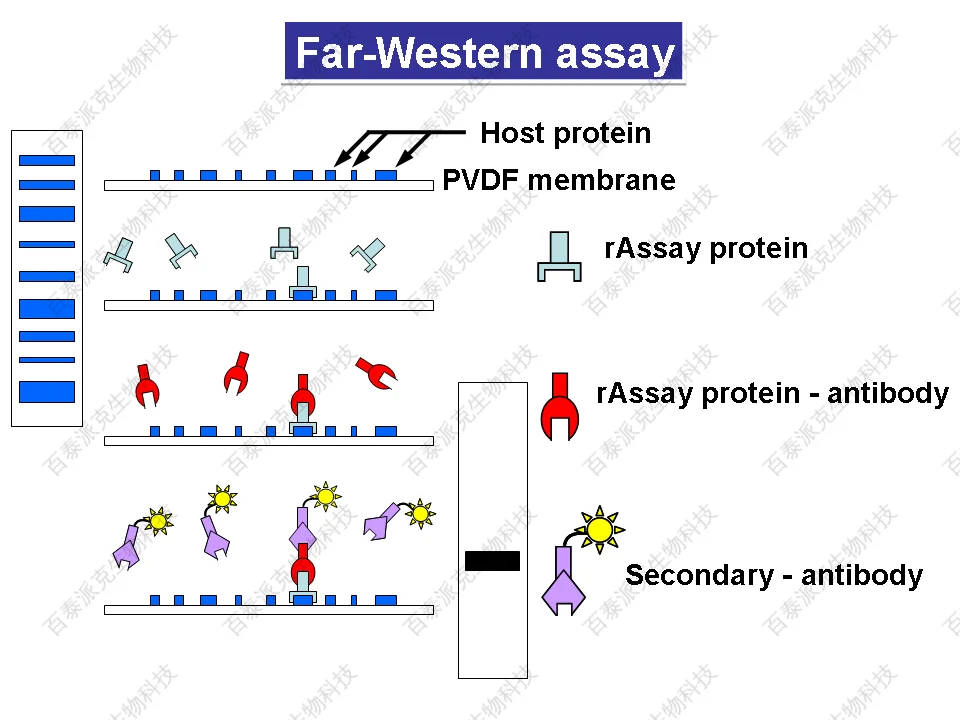
Figure 2. Far-Western Blot Analysis
BiotechPack, A Biopharmaceutical Characterization and Multi-Omics Mass Spectrometry (MS) Services Provider
Related Services:
Quantitative Proteomics Study of Ubiquitination
Post-translational Modification Proteomics Analysis
Histone Post-translational Modification Analysis
Label-free Quantitative Proteomic Analysis
Label-based Protein Quantification Techniques - iTRAQ, TMT, SILAC
MRM/PRM Quantitative Proteomics Analysis
How to order?




