






Infrared Spectroscopy Protein Secondary Structure Analysis
The secondary structure of proteins refers to the specific conformation formed by the polypeptide backbone atoms coiling or folding along a certain axis. It involves the spatial arrangement of the main chain skeleton atoms of the peptide chain, excluding the side chains of amino acid residues. The main types of protein secondary structures are α-helix, β-sheet, β-turn, and random coil, with hydrogen bonds being the primary force maintaining these secondary structures.
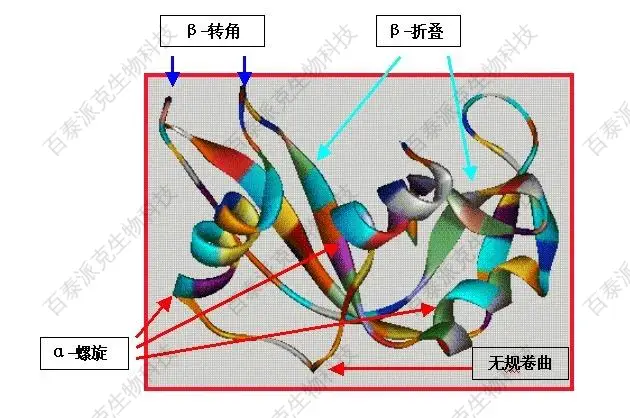
Figure 1 Main forms of protein secondary structure
The secondary structure of proteins is key to understanding protein function and interactions. There are many methods for detecting protein secondary structure, including nuclear magnetic resonance (NMR), circular dichroism (CD), X-ray diffraction, ultraviolet and fluorescence spectroscopy, and infrared spectroscopy (IR). Each method has certain limitations: NMR is suitable for proteins with relatively small molecular mass; CD is only applicable to low-concentration, clear protein solutions; X-ray diffraction cannot detect the effects of physiological conditions on protein secondary structure; fluorescence and ultraviolet spectroscopy are limited to structural analysis of proteins with chromophores (such as Trp, Tyr, etc.). However, IR is not restricted by functional groups, protein state, molecular mass, concentration, environment, etc. In addition, IR requires less sample amount, is not affected by light scattering and fluorescence, and can also study dynamic properties. IR is also simple to operate, has high wavelength precision, good resolution, fast scanning speed, and high sensitivity, making it widely used in various fields of production and research.
The principle of using IR to measure protein secondary structure is based on electromagnetic radiation with a wavelength range of 4000 to 400 cm-1. The C=O and N-H structures of peptide bonds in proteins absorb specific wavelengths of infrared light, mainly appearing in the 1700-1600 cm-1 (Amide I band) and 1550-1500 cm-1 (Amide II band) regions of the infrared spectrum. Among them, the Amide I band contains abundant information about the secondary structure of proteins, such as α-helix, β-sheet, random coil structures, etc. Therefore, the Amide I band is often used to analyze protein secondary structure. By analyzing and fitting the absorption peaks in the Amide I band region, the relative content of various secondary structures in proteins can be obtained.
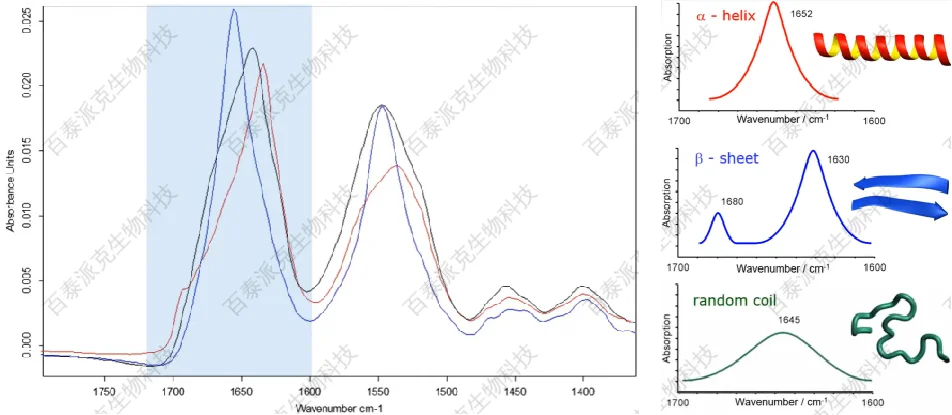
Figure 2 Infrared spectrum detection of the Amide I band
BTP Bio-Technology has established seven testing platforms based on the dual quality certification system of CNAS/ISO9001. Using Thermo's Nicolet series instruments, BTP has established an FT-IR analysis platform to measure the infrared spectrum of proteins and peptides in samples, followed by baseline correction, Gaussian deconvolution, and second derivative fitting, ultimately determining the secondary structure information of proteins and peptides in samples based on peak areas. Contact us for free project consultation.
BTP Bio-Technology—Characterization of Biological Products, a Premium Service Provider for Multi-Omics Mass Spectrometry Testing
Related services:
Infrared Spectroscopy Analysis (FT-IR)
Protein Secondary Structure Analysis
Protein Structure Identification
Determination of Protein Primary Structure
Protein Circular Dichroism Analysis
Disulfide Bond/Free Cysteine Detection
Thermal Stability Analysis (DSC)
Hydrogen-Deuterium Exchange Mass Spectrometry (HDX MS)
How to order?




