






Best Practices for Sample Preparation in Circular Dichroism Analysis
Circular dichroism spectroscopy is a widely used technique in protein structure research and is of great significance for elucidating the secondary structure of proteins. However, the accuracy and reliability of circular dichroism analysis results largely depend on the quality of sample preparation. Therefore, proper sample preparation is crucial before conducting circular dichroism analysis.
1. Sample Selection and Purity Requirements
Before performing circular dichroism analysis, samples with high purity and reliable quality should be selected. Protein samples can be obtained through various purification methods such as chromatography and electrophoresis. Care should be taken during purification to avoid damage and degradation of the sample structure. Additionally, for complex samples such as cell extracts or serum, extra preprocessing steps like removing background substances and concentrating the sample may be necessary to improve the accuracy of the analysis results.
2. Selection and Optimization of Buffer Solution
An appropriate buffer solution is essential for sample preparation. Choosing a buffer solution suitable for the protein is key to maintaining sample stability and activity. The pH value should be selected based on the characteristics and stability of the target protein. Additionally, the salt concentration, additives, and solution temperature in the buffer need to be optimized to achieve the best sample preparation conditions.
3. Optimization of Sample Concentration
The concentration of the sample has a significant impact on the sensitivity and signal quality of circular dichroism analysis. Typically, too low a sample concentration may result in significant signal noise, while too high a concentration may cause sample aggregation. Therefore, the sample concentration should be optimized through appropriate dilution or concentration methods to achieve the best analytical results.
4. Control of Temperature and Time
Circular dichroism analysis is usually performed at specific temperatures because temperature can affect the secondary structure of proteins. Therefore, temperature conditions need to be well-controlled during sample preparation to ensure the sample is in the most suitable structural state. Additionally, the time required for sample preparation should be reasonably controlled to avoid degradation and inactivation of the sample during processing.
5. Conclusion
Sample preparation is a critical step in circular dichroism analysis and is essential for obtaining accurate and reliable analytical results. By selecting appropriate samples, optimizing buffer solutions, controlling sample concentration and temperature, and other best practice methods, the effectiveness and reliability of circular dichroism analysis can be enhanced.
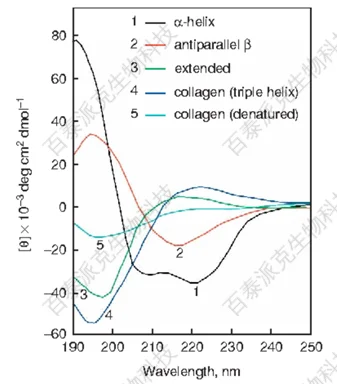
Figure 1
Bio-Techne Biotech—BiologicalProductsCharacterization, a high-quality service provider for multi-omics mass spectrometry detection
Related Services:
Protein Circular Dichroism Analysis
Circular Dichroism Analysis (CD)
Protein Structure Identification
How to order?




