






Mass Spectrometry Technology Unveiled: New Approaches and Strategies for Finding Protein Interactions
Proteins are one of the most important functional molecules in living organisms, and their interactions play a crucial role in normal cellular function and regulation. Traditional methods, such as yeast two-hybrid and co-immunoprecipitation, provide limited information for studying protein interactions. However, with technological advancements, the emergence of mass spectrometry has offered new avenues and strategies for uncovering protein interactions. This article will explore in detail the application of mass spectrometry in discovering protein interactions and its potential for drug development and therapeutic strategies.
I.Principles of Mass Spectrometry
Mass spectrometry is an analytical method based on the mass and structure of proteins. The principle involves ionizing protein molecules in a sample using a mass spectrometer, then separating, accelerating, and detecting them under high vacuum conditions. The mass spectrometer generates a mass spectrum based on the mass-to-charge ratio (m/z) of the protein molecules, providing information on the mass and abundance of the proteins.
II.Common Mass Spectrometry Techniques
1. Mass Spectrometry Quantification Techniques
Mass spectrometry quantification techniques use isotope labeling or labeled metabolites to compare the mass spectra of samples and controls, determining differences in protein abundance. This method can provide quantitative information on protein interactions and reveal changes under different conditions.
2. Mass Spectrometry Identification Techniques
Mass spectrometry identification techniques involve matching protein mass spectra with known protein spectrum libraries to identify unknown proteins. This method helps identify proteins involved in specific interaction networks, further revealing the composition and function of interaction networks.
3. Mass Spectrometry Imaging Techniques
Mass spectrometry imaging combines tissue sectioning and mass spectrometry analysis to generate molecular distribution maps within tissues, revealing the spatial distribution of proteins. This method allows us to understand protein interactions at the tissue and cellular levels, providing more detailed information for studying complex cellular systems.
III.Applications of Mass Spectrometry in Protein Interaction Research
1. Identifying Protein Complexes
Mass spectrometry can help identify the components of protein complexes, revealing networks of protein interactions. By separating and analyzing complexes, we can determine interacting proteins within the complex and further understand the functions and regulatory mechanisms of the complex.
2. Studying Protein Structure and Function
By analyzing protein mass spectra, we can understand changes in protein structure and function, and study their mechanisms of action within cells. For example, mass spectrometry can be used to study protein modifications, such as phosphorylation, acetylation, and methylation, which play important roles in regulating protein function and interactions.
3. Discovering Protein Modifications
Mass spectrometry can detect the modification states of proteins, such as phosphorylation and methylation, providing important clues for studying signal transduction and cellular regulation. By analyzing modified mass spectra, we can determine the modification sites and types, further understanding the impact of protein modifications on interaction networks.
IV.Innovative Mass Spectrometry Strategies
1. Cross-Linking Mass Spectrometry
Cross-linking mass spectrometry is a method that involves cross-linking interacting proteins and identifying cross-linking sites using mass spectrometry. By using chemical cross-linkers, we can fix the distance between interacting proteins and determine cross-linking sites through mass spectrometry analysis. This method reveals the spatial structure of protein interactions, helping us understand the organization and function of complex protein interaction networks.
2. Capture-Tagging Spectrometry
Capture-tagging spectrometry uses affinity agents or antibodies to capture protein complexes and identify their components through mass spectrometry. By combining specific capture agents, we can selectively enrich target protein complexes and determine their components' identities through mass spectrometry analysis. This method helps us understand complex protein interaction networks and signaling pathways.
BiotechPack, A Biopharmaceutical Characterization and Multi-Omics Mass Spectrometry (MS) Services Provider
Phosphorylation mass spectrometry combines selective action of phosphatases to identify the phosphorylation state of proteins through mass spectrometry. By analyzing samples specifically degraded by phosphatases, we can determine the phosphorylation sites of proteins and understand the role of phosphorylation modifications in protein interaction networks.
As a powerful analytical tool, mass spectrometry plays an important role in protein interaction research. Through its principles and common methods, we can reveal networks of protein interactions, gain insights into protein structure and function, and study protein modification states. Innovative mass spectrometry strategies provide us with more options, helping us uncover new pathways of protein interactions. These advances not only contribute to the development of basic science but also offer new ideas and strategies for drug development and therapeutic strategies. By deeply studying protein interaction networks, we can provide more precise targets for disease treatment and promote the development of personalized medicine.
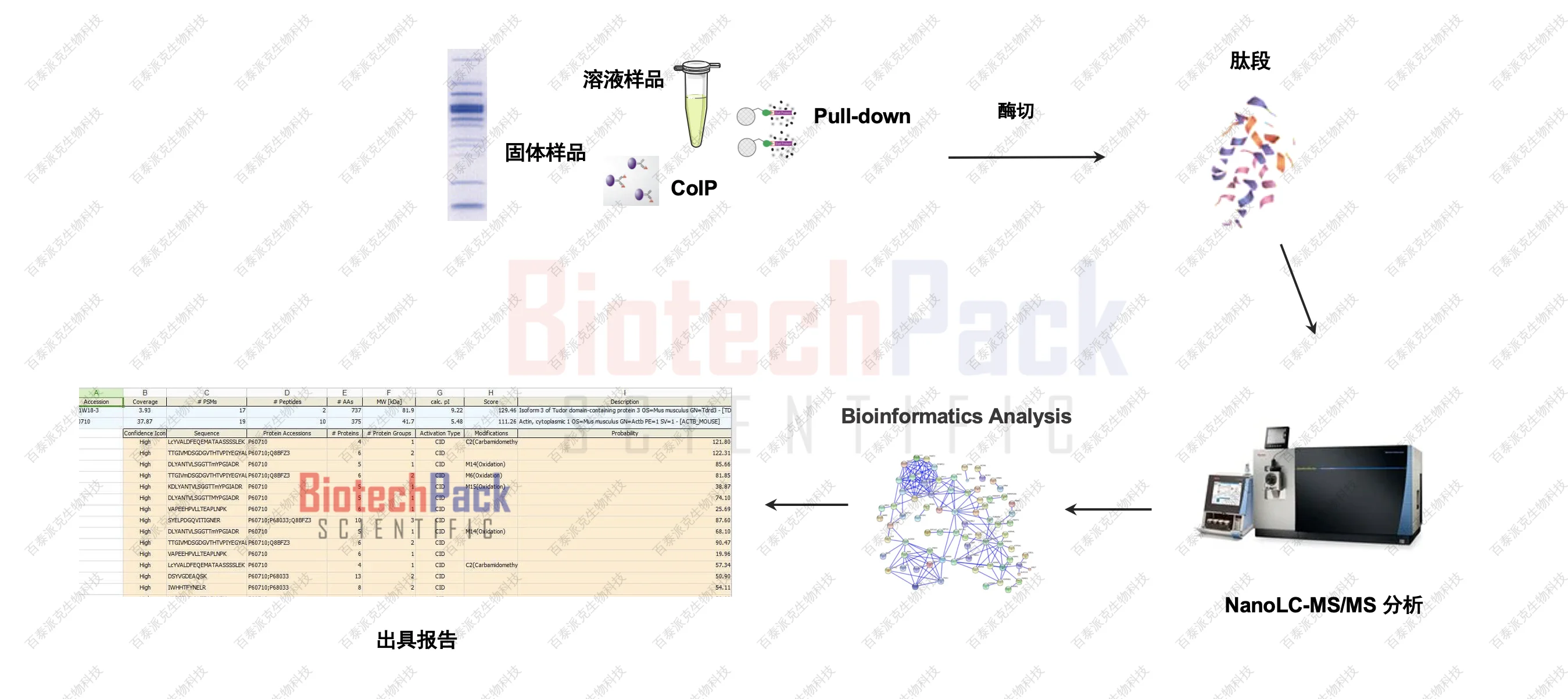
Figure 1
Biotech Peptide — BiotechnologyProductsCharacterization, Multi-Omics Mass Spectrometry Detection Quality Service Provider
Related Services:
Protein Interaction Mass Spectrometry Analysis
Cross-Linking Protein Interaction Analysis
Label Transfer Protein Interaction Analysis
Pull-Down Target Protein Mass Spectrometry Identification
Shotgun Proteomics Identification
How to order?




