






What are the applications and advantages of high-performance liquid chromatography in protein purity determination?
The purity of a protein is one of the important indicators for evaluating its quality and function. In the process of biological drug research and production, accurately determining the purity of a protein is crucial to ensuring the safety and efficacy of the drug. This article will introduce high-performance liquid chromatography (HPLC) as a commonly used method for protein purity determination, discussing its applications and advantages in protein research.
1.Principle of High-Performance Liquid Chromatography
1.1 Chromatographic Separation: HPLC uses the interaction between the stationary phase and the mobile phase to separate components in a mixture for quantitative analysis.
1.2 Detectors: Common detectors used in HPLC include UV-visible detectors, fluorescence detectors, and mass spectrometry detectors, which are used to quantitatively measure the target protein in samples.
2.Applications of HPLC in Protein Purity Determination
2.1 Protein Purity Measurement: HPLC can be used to determine the content of impurities in protein samples, evaluating the purity and purification efficacy of the protein.
2.2 Protein Component Analysis: HPLC can separate and quantitatively analyze different components in protein samples, such as subunits and mutants.
2.3 Protein Quality Control: HPLC allows for the quantitative analysis of protein samples to ensure their quality and consistency, providing reliable data for drug development and production.
3.Advantages of HPLC in Protein Purity Determination
3.1 Sensitivity and Accuracy: HPLC has high sensitivity and accuracy, capable of quickly determining the target components in protein samples.
3.2 High Resolution: HPLC offers good separation performance, effectively separating impurities and components in protein samples.
3.3 Stability and Reproducibility: HPLC provides good stability and reproducibility, allowing for repeated measurements of samples with reliable results.
4.Future Prospects
4.1 Automation and High Throughput: The automation and high-throughput capabilities of HPLC will drive its widespread application in protein purity determination, improving efficiency and accuracy.
4.2 Multidimensional Chromatography Techniques: Combining multidimensional chromatography techniques, such as two-dimensional chromatography and liquid chromatography-mass spectrometry, can further improve the resolution and sensitivity of protein purity determination.
HPLC, as a common method for protein purity determination, offers advantages such as high sensitivity, good resolution, and strong stability. It can accurately determine the purity and components of protein samples, providing reliable data support for biological drug research and production. With continuous technological advancements, the application prospects of HPLC in protein quality control and purification processes will become even broader.
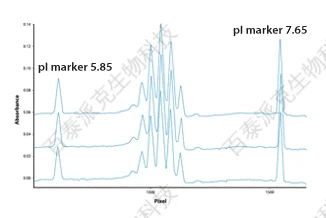
Figure 1
Biotech - BiologicalProductsCharacterization, a leading provider of mass spectrometry services for multi-group biological substances
Related Services:
Protein Purity and Homogeneity Characterization
SDS-PAGE Protein Purity Analysis
Protein Purity Analysis (Size Exclusion/Reverse Phase Chromatography)
Protein Isoelectric Point Determination
Protein Structure Identification
Molecular Weight Determination
HPLC Protein Analysis
HPLC Protein Purity Determination
How to order?




