






Proteomics Separation Techniques: Comprehensive Mass Spectrometry Analysis from Samples to Results
Introduction
Proteins are one of the most fundamental functional molecules within living organisms, playing crucial roles in the regulation of cellular structure and function. Proteomics is the scientific field that studies the composition, structure, and function of all proteins within a biological system. Proteomics separation techniques are a vital component of proteomics research, enabling the separation of complex protein mixtures into individual proteins, thus providing the foundation for subsequent analysis.
The Importance of Proteomics Separation Techniques
The development of proteomics separation techniques allows us to better understand protein functions and interactions. By separating proteins, more accurate information on protein composition can be obtained, thereby revealing the functions and regulatory mechanisms of proteins in biological systems. Proteomics separation techniques have broad application prospects in biomedical research, drug development, and clinical diagnostics.
Classification of Separation Techniques
Proteomics separation techniques can be classified based on different principles and methods. Common proteomics separation techniques include gel electrophoresis, liquid chromatography, and mass spectrometry. The principles and applications of these techniques will be introduced below.
1. Gel Electrophoresis
Gel electrophoresis is a commonly used proteomics separation technique that separates proteins based on differences in migration speed within an electric field. Common gel electrophoresis methods include polyacrylamide gel electrophoresis (SDS-PAGE) and two-dimensional gel electrophoresis (2-DE). SDS-PAGE uses the surfactant SDS to impart a negative charge to the proteins, allowing them to migrate in an electric field according to molecular weight. 2-DE combines isoelectric focusing and SDS-PAGE, allowing simultaneous analysis of protein molecular weight and isoelectric point. Gel electrophoresis is widely used in proteomics research to separate complex protein mixtures and perform quantitative and qualitative analyses.
2. Liquid Chromatography
Liquid chromatography is a technique that separates proteins based on interactions between the stationary phase and the mobile phase. Common liquid chromatography methods include ion exchange chromatography, reverse phase chromatography, and size exclusion chromatography. Ion exchange chromatography utilizes interactions between ion exchange groups on the stationary phase and protein charges for separation. Reverse phase chromatography uses hydrophobic interactions between hydrophobic groups on the stationary phase and proteins. Size exclusion chromatography separates proteins based on molecular size. Liquid chromatography techniques are characterized by high separation efficiency and selectivity, and are widely used in the enrichment and purification processes in proteomics research.
3. Mass Spectrometry
Mass spectrometry is a technique for separating and analyzing proteins based on mass and charge properties. Mass spectrometry techniques include mass spectrometers and mass spectrometry analysis methods. Common mass spectrometers include mass spectrometric analyzers (MS) and mass spectrometric imaging (MALDI-TOF). Mass spectrometry analysis methods include mass-based analysis (such as mass spectrum analysis) and mass-charge based analysis (such as mass spectrometry proteomics). Mass spectrometry techniques have the advantages of high sensitivity and high resolution and can be used to identify and quantify protein composition, study protein modifications and interactions, etc.
Applications of Proteomics Separation Techniques
Proteomics separation techniques have a wide range of applications in biomedical research and clinical diagnostics. Below are some typical application areas:
1. Biomarker Discovery
Proteomics separation techniques can be used to discover and identify disease-related biomarkers. By comparing differential protein expression between disease and normal tissues, potential biomarkers can be screened, providing a basis for early diagnosis and treatment of diseases.
2. Drug Target Identification
Proteomics separation techniques can be used to identify drug targets. By mixing drugs with proteins and then using separation techniques to isolate drug-binding proteins, the drug targets can be determined, providing guidance for drug development.
3. Protein Interaction Studies
Proteomics separation techniques can be used to study protein-protein interactions. By mixing proteins and then using separation techniques to isolate interacting proteins, protein interaction networks can be revealed, providing insights into complex signal transduction and regulatory mechanisms within biological systems.
Conclusion
Proteomics separation techniques are essential tools in proteomics research, allowing the separation of complex protein mixtures into individual proteins, thus providing the foundation for subsequent analysis. Gel electrophoresis, liquid chromatography, and mass spectrometry are commonly used proteomics separation techniques with broad application prospects in biomedical research and clinical diagnostics. Through proteomics separation techniques, we can gain a better understanding of protein functions and interactions, offering new insights and methods for disease diagnosis and treatment.
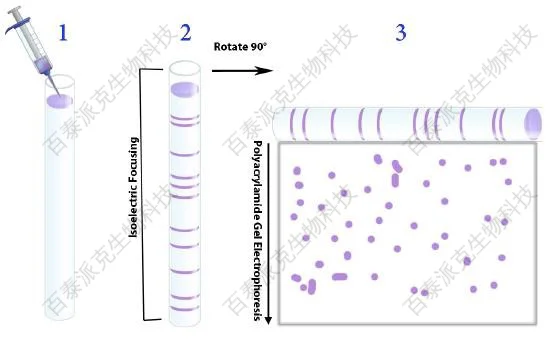
Figure 1
BiotechPack, A Biopharmaceutical Characterization and Multi-Omics Mass Spectrometry (MS) Services Provider
Related Services:
Two-Dimensional Gel Electrophoresis Services
Protein Separation Based on SDS-PAGE
Two-Dimensional Gel Electrophoresis Services
2D Blue Native/SDS-PAGE Complex Analysis Services
Molecular Weight Determination
Identification of Gel Spots, Gel Strips, and IP Sample Proteins
Peptide MassFingerprinting Analysis ServicesMembrane Protein Identification Services
Protein Mass Spectrometry Identification
How to order?




