






Spatial Proteomics Reveals the Spatial Structure of Biological Systems
On the magnificent stage of biological sciences, proteins are undoubtedly one of the most important players. They are the most basic biological macromolecules within living organisms, undertaking most of the cell's functions and tasks. However, merely understanding the sequence of proteins is not enough to reveal their true function, as a protein's function is often closely related to its three-dimensional spatial structure. It is the emergence of spatial proteomics that has opened a new door for us to explore the spatial structures of proteins, helping us to understand the important functions of proteins in biological systems from local to global perspectives.
1. The Three-Dimensional Structure of Proteins: A Key to Understanding Biological Function
The biological function of proteins depends on their structure, not just their linear amino acid sequence. Proteins undergo a complex folding process within cells and organisms to form specific three-dimensional structures. This structure determines the location of the protein within the cell, its interaction partners, and the role it plays within the organism. In some cases, even slight structural changes can lead to significant changes in protein function. Therefore, accurately understanding the three-dimensional structure of proteins is crucial for uncovering complex biological processes within organisms and for drug development.
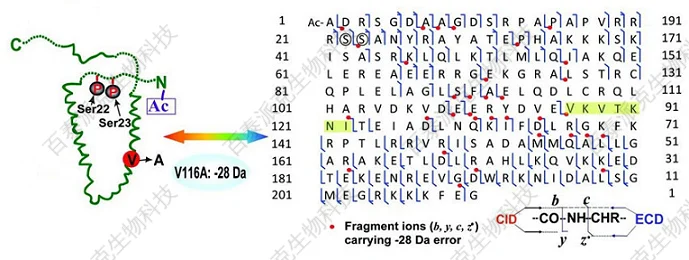
Figure 1
2. Limitations of Traditional Methods
In the past, scientists have used techniques such as X-ray crystallography and nuclear magnetic resonance to resolve the three-dimensional structure of proteins. While these methods are significant, they have limitations. First, some proteins may be difficult to crystallize, making X-ray crystallography inapplicable. Second, the structure of some proteins in cells may differ from their structure when crystallized in vitro, as protein structures are influenced by the cellular environment. Due to these limitations, scientists need to find new methods to more comprehensively understand the spatial structure of proteins.
3. Spatial Proteomics: New Hope
Spatial proteomics is an emerging field of study that integrates knowledge from biology, chemistry, physics, and computer science to explore the three-dimensional structures of proteins within cells and organisms. At its core, this technology uses advanced instruments and computational methods to analyze large-scale protein samples and integrate and model the resulting data to determine the three-dimensional structures of proteins.
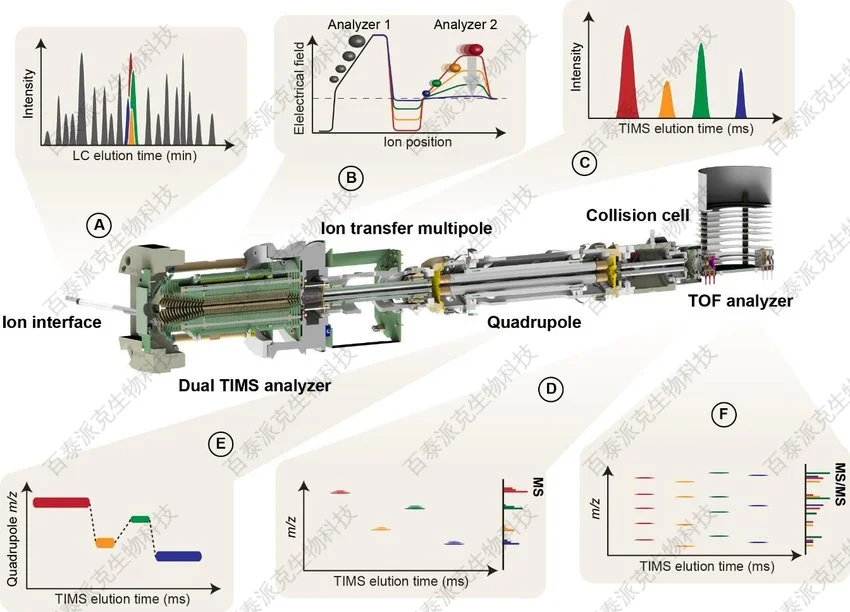
Figure 2
4. Applications of Spatial Proteomics in Biomedicine
Spatial proteomics has wide-ranging applications in the field of biomedicine. Firstly, it helps scientists better understand complex intracellular signaling networks and metabolic pathways, aiding in the discovery of new disease markers and drug targets. Secondly, spatial proteomics provides new insights for drug development. By studying the interactions between drugs and proteins, scientists can design more precise and effective drugs while reducing side effects. Additionally, spatial proteomics plays a key role in researching the molecular mechanisms of diseases, laying the foundation for future personalized medicine.
5. Future Prospects of Spatial Proteomics
With continuous technological development and breakthroughs, spatial proteomics will continue to play an important role. The introduction of new instruments and computational methods will enable us to more comprehensively understand the three-dimensional structures of proteins, uncovering more biological mysteries. As the technology matures, spatial proteomics is expected to bring more breakthroughs in drug development and treatment, advancing medical progress and benefiting human health.
Through spatial proteomics, we can understand the spatial structure of proteins in biological systems from local to global perspectives. This technology provides us with a new pathway to explore the mysteries of life, opening up endless possibilities for future biological science and medical research.
Baiteipike Biotechnology--BiologicalProductsCharacterization, a leading service provider of multi-omics biomolecular mass spectrometry detection
Related Services:
Quantitative Proteomics Analysis
Targeted Proteomics
Determination of Protein Primary Structure
Protein Secondary Structure Analysis
Detection of Disulfide Bonds/Free Cysteines in Biopharmaceuticals
Identification and Quantitative Analysis of Protein Disulfide Bonds
Protein Identification
Shotgun Proteomics
Hydrogen-Deuterium Exchange Mass Spectrometry (HDX MS)
Top-Down Approach-Based PTMs Characterization
Isoelectric Point Determination of Proteins
Molecular Weight Determination
Protein Purity and Homogeneity Characterization
How to order?




