






Diversity of Polysaccharide Composition: Analysis by Circular Dichroism Method
Polysaccharides are an important class of biological macromolecules widely found in organisms, such as cell walls, cell membranes, cartilage, bones, muscles, skin, blood vessels, and eyes. The structure and composition of polysaccharides have a significant impact on their biological functions. Therefore, the analysis and characterization of polysaccharides are of great significance for a deeper understanding of their biological functions. Circular dichroism spectroscopy is a commonly used method for analyzing polysaccharides, which can be used to analyze the structure and composition of polysaccharides.
1. Structure and Composition of Polysaccharides
Polysaccharides are macromolecular compounds composed of monosaccharide molecules linked by glycosidic bonds. The structure and composition of polysaccharides have a significant impact on their biological functions. Polysaccharide structures include chain structures and branched structures, with chain structures including straight chains and branched chains. The composition of polysaccharides includes the types of monosaccharides, the linkage modes of monosaccharides, and the relative proportions of monosaccharides.
2. Circular Dichroism Spectroscopy Method
Circular dichroism spectroscopy is a commonly used method for analyzing polysaccharides, which can be used to analyze the structure and composition of polysaccharides. Circular dichroism spectroscopy utilizes the chiral structure of polysaccharide molecules, which affects the rotation direction of circularly polarized light, thereby analyzing the structure and composition of polysaccharides. Circular dichroism spectroscopy can analyze the secondary structure of polysaccharides, such as α-helix, β-sheet, and random coil structures. It can also analyze information on monosaccharide composition and linkage modes.
3. Applications of Circular Dichroism Spectroscopy
Circular dichroism spectroscopy is widely used in the analysis and characterization of polysaccharides. It can be used to analyze the structure and composition of polysaccharides, such as secondary structure, monosaccharide composition, and linkage modes. Circular dichroism spectroscopy can also be used to analyze spatial structures and intermolecular interactions of polysaccharides. In the biomedical field, it is widely used to analyze the structure and composition of polysaccharide drugs, as well as their interactions with receptors.
4. Advantages and Limitations of Circular Dichroism Spectroscopy
Circular dichroism spectroscopy offers advantages such as high sensitivity, high resolution, and non-destructive analysis, allowing for the analysis of polysaccharide structures and compositions. However, it also has limitations, such as requiring high-purity samples and specialized instruments and skills for operation. Additionally, circular dichroism spectroscopy cannot directly analyze the three-dimensional structure and intermolecular interactions of polysaccharides.
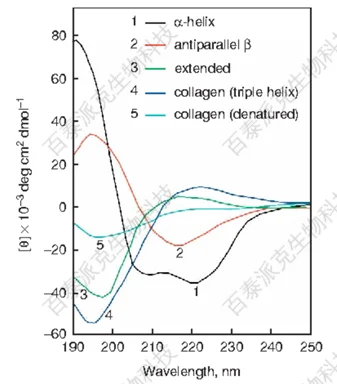
Figure 1
5. Conclusion
Polysaccharides are an important class of biological macromolecules, and their structure and composition have a significant impact on their biological functions. Circular dichroism spectroscopy is a commonly used method for analyzing polysaccharides, which can be used to analyze their structure and composition. Although circular dichroism spectroscopy has advantages such as high sensitivity, high resolution, and non-destructive analysis, it also has certain limitations. It holds significant value in the analysis and characterization of polysaccharides, providing important information for a deeper understanding of their biological functions.
Biotech Co., Ltd. - BioProductsCharacterization, High-Quality Multi-Group Biomass Spectrometry Detection Service Provider
Related Services:
Protein Circular Dichroism Analysis
Circular Dichroism Analysis (CD)
Protein Structure Identification
How to order?




