






Exploring Circular Dichroism Data Processing: Analysis Techniques and Diversity
Circular dichroism spectroscopy is an important analytical technique widely used in the field of biopharmaceuticals. It provides valuable information on molecular structure, conformation, and interactions. However, processing and interpreting circular dichroism data is not an easy task. This article will guide you through the intricacies and diversity of circular dichroism data processing.
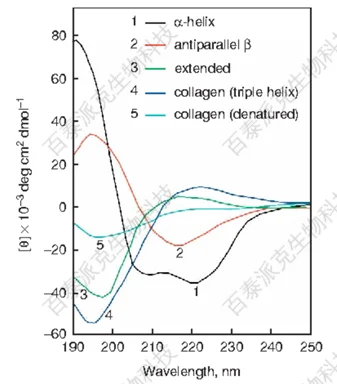
Figure 1
1. Basic Principles of Circular Dichroism Data Processing
Circular dichroism is obtained by measuring the differential absorption of left-handed and right-handed circularly polarized light by a sample at different wavelengths. This data is usually presented in terms of ellipticity or optical rotation. To correctly interpret and analyze this data, we need to master some basic processing principles.
1.1 Baseline Correction
Before data processing, we need to perform baseline correction. Baseline correction is intended to eliminate the influence of instrument drift and noise on the actual sample signal. Common baseline correction methods include zero-point correction and reference substance method.
1.2 Data Smoothing
Circular dichroism data is often affected by noise. To reduce the impact of noise, data smoothing methods can be used. Common data smoothing algorithms include the moving average method and the Savitzky-Golay method.
1.3 Data Normalization
To compare circular dichroism data between different samples, data normalization is required. Common normalization methods include maximum normalization and area normalization.
2. Advanced Techniques in Circular Dichroism Data Processing
In addition to basic data processing methods, there are advanced techniques that can help us better interpret circular dichroism data.
2.1 Multivariate Analysis
Multivariate analysis is a data processing method that considers multiple variables comprehensively. In circular dichroism data processing, multivariate analysis methods such as principal component analysis (PCA) and partial least squares regression (PLS) can be used to extract the main information and correlations in the data.
2.2 Pattern Recognition
Pattern recognition is a method of classifying and identifying data. In circular dichroism data processing, pattern recognition methods such as support vector machines (SVM) and artificial neural networks (ANN) can be used to identify differences and similarities between different samples.
2.3 Structure Prediction
Circular dichroism data can provide information about molecular structure and conformation. By comparing and simulating with known structures, we can predict the structure and conformation of unknown samples. Common structure prediction methods include molecular docking and molecular dynamics simulation.
3. Diverse Applications of Circular Dichroism Data Processing
The diversity of circular dichroism data processing techniques allows for extensive applications in the field of biopharmaceuticals.
3.1 Protein Structure Studies
Circular dichroism can provide information on protein secondary structures (such as α-helices and β-sheets) and tertiary structures (such as folded and unfolded states). By processing and interpreting circular dichroism data, we can understand the structural characteristics and stability of proteins, providing guidance for protein engineering and drug design.
3.2 Drug Interaction Studies
Circular dichroism can be used to study interactions between drugs and target proteins. By processing and interpreting circular dichroism data of drug-target protein complexes, we can understand the binding mode and affinity between drugs and target proteins, providing a basis for drug design and screening.
3.3 Biocompatibility Evaluation
Circular dichroism can be used to evaluate the compatibility of biomaterials. By processing and interpreting circular dichroism data of interactions between biomaterials and biological tissues, we can understand the surface properties and interaction mechanisms of biomaterials, providing guidance for the design and application of biomaterials.
Circular dichroism data processing is an important technique in the field of biopharmaceuticals. By mastering basic data processing principles and advanced processing techniques, we can better interpret and apply circular dichroism data. The diverse applications of circular dichroism data processing play an important role in protein structure research, drug interaction studies, and biocompatibility evaluation.
Biotech Bio-Technology -- BiologicalProductsCharacterization, a high-quality service provider of multi-group biological mass spectrometry detection
Related Services:
Protein Circular Dichroism Analysis
Circular Dichroism Analysis (CD)
Protein Structure Identification
How to order?




