






Recombinant Protein Drug Post-Translational Modification (Oxidation, Deamidation) Analysis
Recombinant protein drugs are medicines produced through bioengineering techniques by expressing specific proteins in microorganisms or cells, followed by purification to isolate the proteins. These drugs are characterized by their complex molecular structure and because they are produced by biological systems, post-translational modifications may occur during production, altering the protein's properties and functions. Oxidative modification and deamidation are two common post-translational modifications in recombinant protein drugs. Oxidative modification typically occurs at specific amino acid residues in proteins, such as cysteine, methionine, and tyrosine. Deamidation refers to the hydrolysis of amide bonds in proteins, forming free acids and amines. These modifications can change the structure and function of proteins, affecting the stability and bioactivity of the drugs. Understanding and effectively controlling these modifications is key to improving the quality and safety of recombinant protein drugs.
Mass spectrometry (MS) plays a crucial role in the study of protein post-translational modifications (PTMs), particularly in the analysis of oxidation and deamidation. By measuring the mass or mass-to-charge ratio of charged particles, mass spectrometry provides detailed information about molecules and their composition. This technique has gained widespread recognition and development in the analysis of protein drugs, especially in the analysis of protein modifications. For oxidative modifications, we first need to enzymatically digest the protein drugs into small peptides, which are then analyzed by mass spectrometry. As oxidation adds an oxygen atom to the protein molecule, resulting in a slight increase in peptide mass, this change can be detected using high-precision mass spectrometry equipment. For deamidation, the analysis process is similar, except that the hydrolysis of amide bonds leads to a decrease in peptide mass.
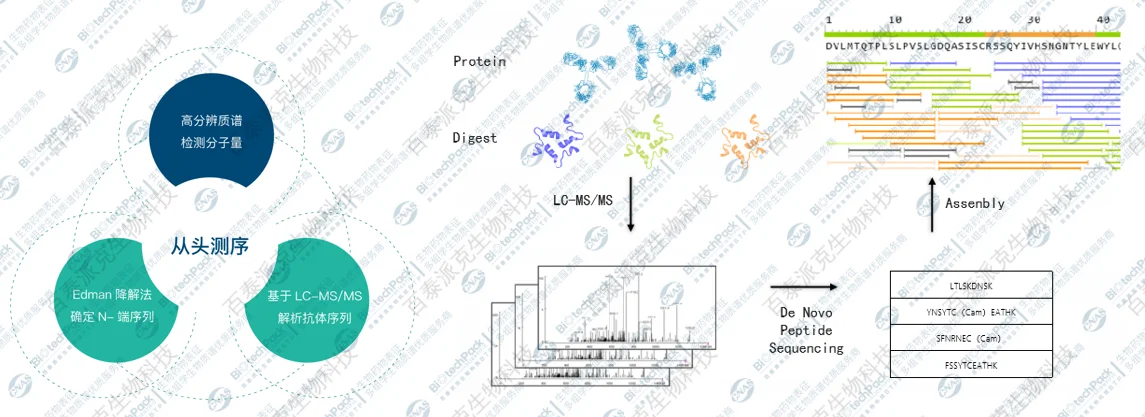
Schematic diagram of post-translational modification (oxidation, deamidation) analysis in biopharmaceutical characterization
BTP BioTech utilizes ISO9001 certified quality control systems to manage its laboratories and has received CNAS national laboratory accreditation, providing clients with drug quality research services compliant with global regulatory standards. Based on Thermo Fisher's Q Exactive HF, Orbitrap Fusion, and Orbitrap Fusion Lumos mass spectrometry platforms combined with Nano-LC, we offer services for analyzing oxidative modifications and deamidation in recombinant protein drugs, determining whether recombinant protein samples have undergone oxidative modifications or deamidation, and identifying the amino acid sites where these modifications occur.
Characterization content of recombinant protein drugs at BTP BioTech

Related Services
Post-translational modification proteomics analysis
Quantitative phosphoproteomics study
Quantitative acetylomics study
Quantitative ubiquitin-proteomics study
Biopharmaceutical glycan profiling
Glycosylation site detection in biopharmaceuticals
Quantitative glycoproteomics study
Detection of disulfide bonds/free cysteines in biopharmaceuticals
Protein disulfide bond identification and quantitative analysis
How to order?




