






Application of Targeted Proteomics
Targeted proteomics is a method for detecting proteins of interest, characterized by accuracy, sensitivity, and good reproducibility. It is applicable in systems biology and biomedical research. Biotech company Biotyper offers targeted proteomics analysis services based on MRM and PRM.
Applications and significance of targeted proteomics
Targeted proteomics has had a significant impact on systems biology and biomedical research, with increasing applications in clinical settings. Applications of targeted proteomics include studies on post-translational modifications (such as phosphoproteomics), protein conformation, protein-protein interactions, dynamics, proteomics, and systemic research on metabolic and signaling pathways. Notably, the absolute quantification of proteins in metabolic and signaling pathways enables precise pathway modeling and engineering. Clinical applications of targeted proteomics mainly encompass preclinical validation of candidate protein biomarkers and pharmacokinetic (PK) studies of monoclonal antibody (mAb) administration. Targeted proteomics aids in enhancing our understanding of the phenotypic significance of biological networks and specific network states and in advancing biomarkers towards clinical applications.
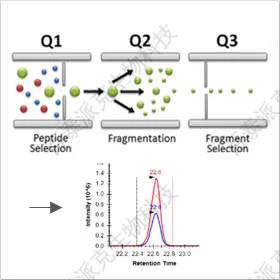
Applications of targeted proteomics
Advantages of targeted proteomics
Targeted proteomics technology is a powerful tool for protein quantification, capable of selective and sensitive detection, and allows for the quantitative analysis of any protein of interest in complex proteomes. Compared to untargeted proteomics, targeted proteomics offers better accuracy, sensitivity, and reproducibility. Targeted proteomics uses QQQ-MS or Q-Orbitrap-MS to monitor target proteins or peptides, and compared to other MS methods, the MRM or PRM methods in targeted proteomics offer higher sensitivity for low-abundance peptide fragments and higher quantification precision.
Related services
How to order?




