






What is Peptide Mass Spectrometry Identification
Peptides are compounds with molecular structures between amino acids and proteins. They are composed of 20 types of natural amino acids arranged in different compositions and sequences, collectively referred to as dipeptides to complex linear or cyclic polypeptides. Peptides composed of 2-10 amino acids are called oligopeptides, peptides consisting of 11-50 amino acids are called polypeptides, and those with more than 50 amino acids are called proteins. The distinction between polypeptides and proteins is only in the length of the peptide chains, with no strict separation between them.
Polypeptides, as important bioactive substances, play a vital role in life activities and are widely used in pharmaceuticals, health foods, cosmetics, and other fields. Therefore, the identification of polypeptides is of great significance. There are various methods for identifying polypeptides, the most common of which is peptide mass spectrometry.
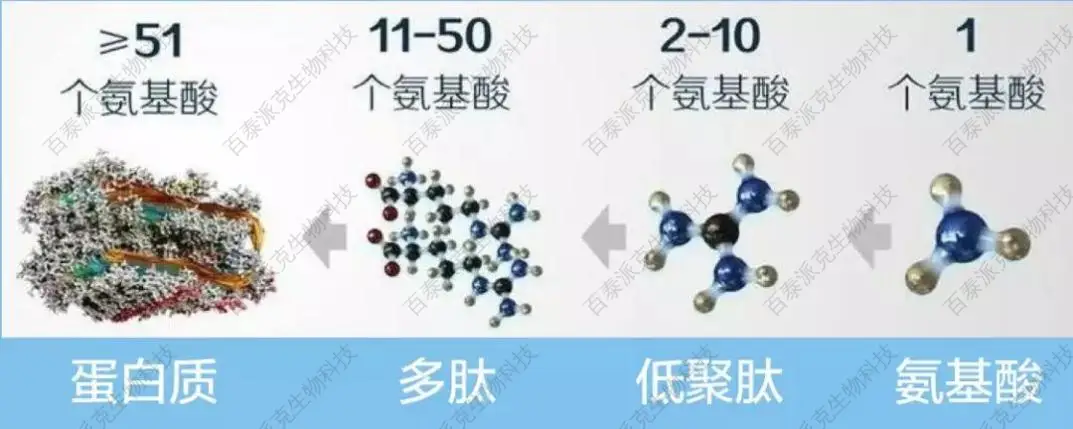
Figure 1: Peptide structure model
Polypeptide mass spectrometry identification involves analyzing and identifying polypeptides using mass spectrometry technology, mainly for qualitative identification. Mass spectrometry technology is based on the principle of measuring the mass-to-charge ratio (m/z) of molecules. The polypeptide samples are first ionized into charged particles, then separated in an electromagnetic field according to their mass-to-charge ratio, and finally detected and recorded by a detector to determine the ion intensity at different mass-to-charge ratios. By analyzing these data, one can infer the molecular weight, amino acid sequence, and post-translational modifications of the polypeptides. The main steps of polypeptide mass spectrometry identification include sample preparation, mass spectrometry analysis, and data interpretation.
•Sample preparation: Sample preparation is the first step in polypeptide mass spectrometry identification, which usually includes the cleavage and enrichment of proteins. Proteins are cleaved into polypeptide fragments under the action of proteases, and then the target polypeptides are separated using techniques such as liquid chromatography and gel electrophoresis.
•Mass spectrometry analysis: Mass spectrometry analysis is the key step in polypeptide mass spectrometry identification. Polypeptide fragments are ionized in the mass spectrometer and separated according to their mass-to-charge ratios in a magnetic field, ultimately producing a mass spectrum. Based on the mass and fragmentation patterns of the polypeptide fragments in the mass spectrum, the sequence information of the polypeptides can be deduced.
•Data interpretation: By comparing the experimentally obtained mass spectrometry data with known protein databases, the sequence information of the polypeptide fragments can be determined. Researchers can use bioinformatics tools and algorithms to analyze and interpret the mass spectrometry data to accurately identify the polypeptide sequences in proteins.
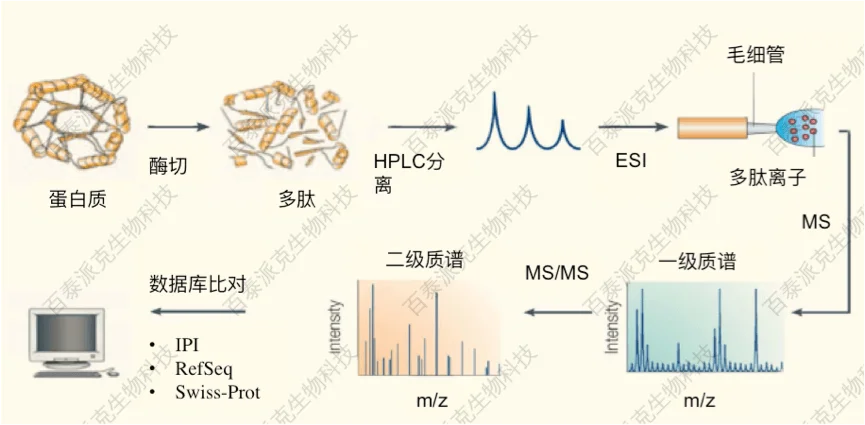
Figure 2: Steps of polypeptide mass spectrometry identification
Currently, polypeptide mass spectrometry identification has a wide range of applications in fields such as biology and medicine. For example, in biological research, it can help researchers determine the sequence and structure of unknown proteins, leading to a deeper understanding of protein functions and mechanisms. In drug development, it can assist researchers in identifying drug targets and understanding the mechanisms of drug-protein interactions. Overall, polypeptide mass spectrometry identification, as an efficient and precise protein analysis technology, plays a vital role in promoting life science research and advancing medical progress. Biotyper Bioscience uses the latest Obitrap Fusion Lumos mass spectrometer from Thermo combined with Nano-LC nanoliter chromatography technology to provide high-resolution and high-sensitivity identification of polypeptides. You only need to provide samples, and we will offer you a one-stop service of 'sample processing - on-machine analysis - data analysis - project report.' Welcome to inquire.
Biotyper Bioscience - Characterization of Bioproducts, Quality Service Provider for Multi-Omics Biomass Spectrometry Detection
Related services:
Polypeptide mass spectrometry identification
Polypeptide biomarker identification
Immunopeptidomics analysis and neoantigen discovery based on high-precision mass spectrometry
Polypeptide structure determination
How to order?




