






Key Methods for Protein Sequence Analysis: Decoding the Basic Composition of Biomolecules
1. Protein Sequence Determination Methods
Protein sequence determination is the foundation of protein sequence analysis. The commonly used protein sequence determination methods include:
1.1. Sanger Sequencing Method
The Sanger sequencing method is a classic sequencing method that determines the amino acids in a protein sequence one by one through DNA synthesis reactions. This method is highly accurate and reliable but slower, making it suitable for small-scale protein sequence determination.
1.2. High-throughput Sequencing Technologies
With the development of high-throughput sequencing technologies, such as Illumina sequencing and Ion Torrent sequencing, the speed and scale of protein sequence determination have greatly improved. These technologies can simultaneously determine numerous protein sequences, providing powerful tools for large-scale proteomics research.
2. Protein Sequence Analysis Methods
Protein sequence analysis involves further study and interpretation of protein sequences to reveal their structure and function. Common protein sequence analysis methods include:
2.1. Sequence Alignment
Sequence alignment involves comparing the protein sequence under analysis with known protein sequences to identify similar regions and conserved amino acid residues. Common tools for sequence alignment include BLAST and ClustalW, which help researchers determine the homology and evolutionary relationships of protein sequences.
2.2. Secondary Structure Prediction
Protein secondary structure refers to the spatial arrangement of amino acid residues within a protein, including structures like α-helix, β-sheet, and random coil. Secondary structure prediction methods can infer the protein's structure and function. Common tools for secondary structure prediction include PSIPRED and GOR.
2.3. Functional Annotation
Functional annotation involves predicting and annotating the functions of a protein sequence to understand its biological role. Functional annotation methods include sequence-based function prediction, structural genomics, and protein interaction network analysis. These methods help researchers comprehend the functions and interaction networks of proteins.
3. Applications of Protein Sequence Analysis
Protein sequence analysis has widespread applications in the biotechnology field, including drug development, disease diagnosis, and genetic engineering.
3.1. Drug Development
Protein sequence analysis can help researchers understand the interaction mechanisms between drugs and target proteins, thereby accelerating the drug development process. By analyzing protein sequences and structures, more selective and potent drug molecules can be designed.
3.2. Disease Diagnosis
Protein sequence analysis can help researchers discover protein biomarkers related to diseases, providing strategies for early diagnosis and treatment of diseases. By comparing the protein sequence differences between patients and healthy individuals, potential disease-related genes and proteins can be identified.
3.3. Genetic Engineering
Protein sequence analysis provides vital information and guidance for genetic engineering. By analyzing protein sequences and structures, proteins with specific functions and properties can be designed for use in bioengineering and biopharmaceutical fields.
4. Conclusion
Protein sequence analysis is one of the key methods for deciphering the basic composition of biomolecules. By determining and analyzing protein sequences, the structure and function of proteins can be revealed, providing important information and guidance for drug development, disease diagnosis, and genetic engineering. With continuous technological advancements, protein sequence analysis will play an increasingly important role in the biotechnology field.
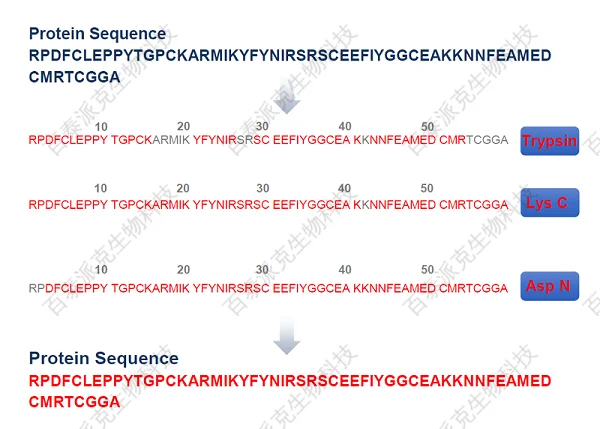
Figure 1
BiotechPack, A Biopharmaceutical Characterization and Multi-Omics Mass Spectrometry (MS) Services Provider
Related Services:
Protein N/C-terminal Sequencing
Biopharmaceutical N/C-terminal Sequencing
How to order?




