






Analysis of Protein N-Terminal and C-Terminal Sequencing Methods
N-terminal and C-terminal sequencing of proteins is a method for analyzing the arrangement of amino acids in a protein sequence, particularly at the start and end positions. This sequencing provides important information about the origin, structure, and function of the protein.
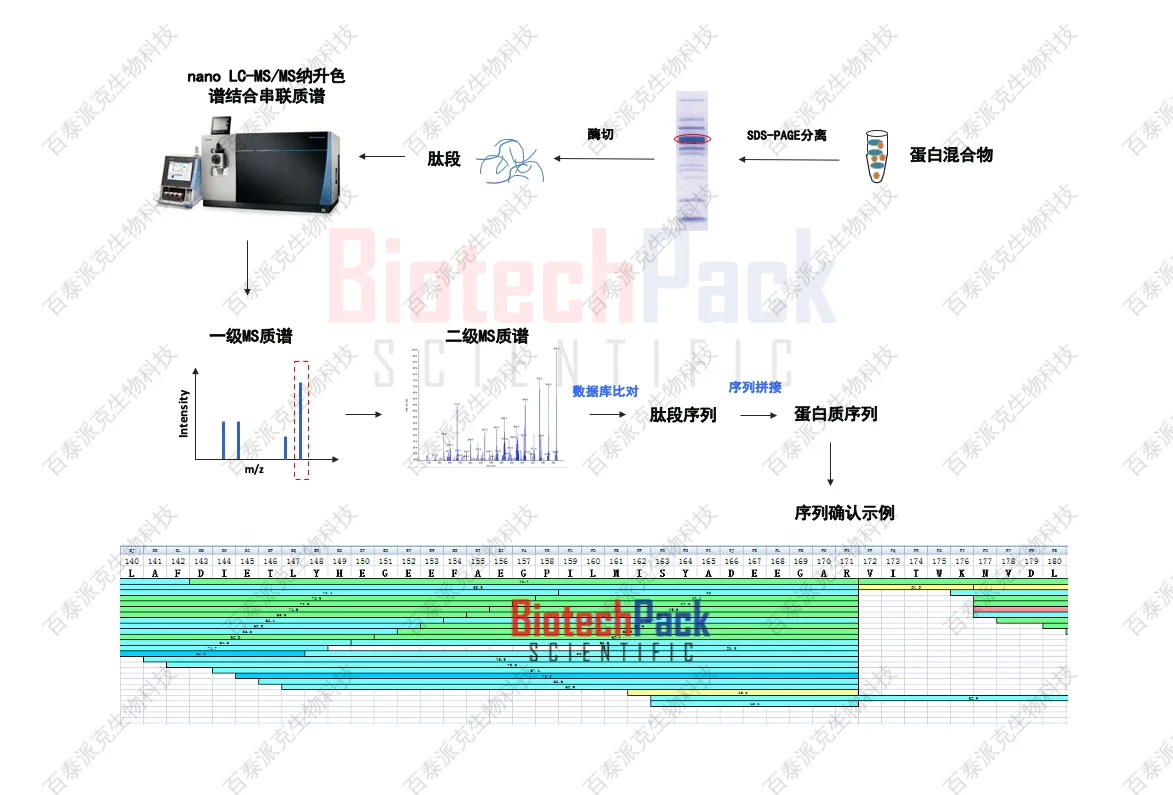
Figure 1
I. N-terminal Sequencing (Edman Degradation):
Edman degradation is a classical method for N-terminal protein sequencing. In this process, the N-terminal amino acids of a protein are selectively removed one by one and identified. This process can be repeated to obtain the first few residues of the protein's amino acid sequence.
Advantages: High accuracy and sensitivity.
Disadvantages: The process is relatively slow and challenging for sequencing long-chain proteins.
II. C-terminal Sequencing:
Unlike N-terminal sequencing, C-terminal sequencing methods are less mature and widespread. The C-terminal of a protein can typically be identified through enzymatic or chemical cleavage. Using specific enzymes, such as carboxypeptidases, amino acids can be sequentially removed from the C-terminal. By analyzing the removed amino acids, the C-terminal sequence can be deduced.
However, this method is often limited by protein structure and cleavage site, and may not be applicable to all proteins.
With advances in mass spectrometry, particularly tandem mass spectrometry, full sequence analysis of proteins has become easier and more accurate. By enzymatically digesting proteins and then sequencing the fragments using mass spectrometry, the entire amino acid sequence of a protein can be reconstructed, thus obtaining N-terminal and C-terminal information.
BiotechPack, A Biopharmaceutical Characterization and Multi-Omics Mass Spectrometry (MS) Services Provider
Related Services:
Protein N/C-terminal Sequencing
Biopharmaceutical N/C-terminal Sequencing
Edman Degradation-Based Protein N-terminal Sequencing
How to order?




