






Mass Spectrometry Analysis of Peptides and Its Applications in Biochemistry and Proteomics
Mass spectrometry is an analytical technique used to determine the composition and structure of compounds by measuring the mass of molecular ions. In biochemistry and proteomics, mass spectrometry has become one of the main methods for analyzing peptides and proteins.
1. Mass Spectrometry Analysis of Peptides:
1. Electrospray Ionization (ESI) and Matrix-Assisted Laser Desorption/Ionization (MALDI):
These are two commonly used ionization techniques that can convert proteins or peptides into gaseous ions for analysis in a mass spectrometer.
2. Tandem Mass Spectrometry (MS/MS):
Through collision-induced dissociation of specific precursor ions, mass spectrometry information of peptide or protein fragments is obtained, helping to determine the amino acid sequence of the original peptide.
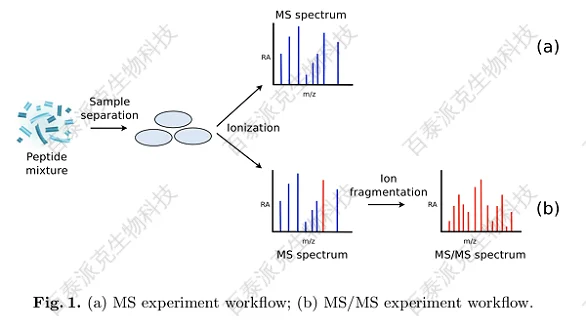
Figure 1
2. Applications of Mass Spectrometry in Biochemistry and Proteomics:
1. Protein Identification:
By matching experimental data with protein databases, specific proteins in the sample can be identified.
2. Study of Protein Post-Translational Modifications:
Mass spectrometry can be used to identify and quantify post-translational modifications such as phosphorylation, acetylation, and glycosylation of proteins.
3. Proteomics:
By analyzing the total proteins in cells or tissues, the expression, interaction, and function of proteins can be revealed.
4. Study of Protein-Protein Interactions:
Combining immunoprecipitation with mass spectrometry, interaction partners of specific proteins can be identified.
5. Quantitative Proteomics:
Using labels such as SILAC (Stable Isotope Labeling by/with Amino acids in Cell culture) or iTRAQ (Isobaric Tags for Relative and Absolute Quantitation) allows for the relative or absolute quantification of proteins.
6. Discovery of New Proteins and Biomarkers:
Mass spectrometry can help discover proteins that have not yet been described or proteins that are biomarkers for diseases.
7. Protein Structure Studies:
Mass spectrometry can also provide information on the three-dimensional structure and dynamic changes of proteins, especially when combined with other techniques such as hydrogen/deuterium exchange.
Mass spectrometry analysis of peptides is a highly complex and powerful technique that plays a key role in biomedical research, drug development, and many other fields.
BiotechPack, A Biopharmaceutical Characterization and Multi-Omics Mass Spectrometry (MS) Services Provider
Related Services:
Peptide Mass Spectrometry Identification
Molecular Weight Determination
Peptide Biomarker Identification
How to order?




