






Peptide Sequencing Principle
Peptide sequencing refers to the process of determining the order of amino acid residues in a peptide or protein molecule. This process is crucial for the study of protein structure and function, as the amino acid sequence directly determines the three-dimensional structure and biological function of the protein. Peptide sequencing primarily relies on mass spectrometry (MS) technology, particularly tandem mass spectrometry (MS/MS).
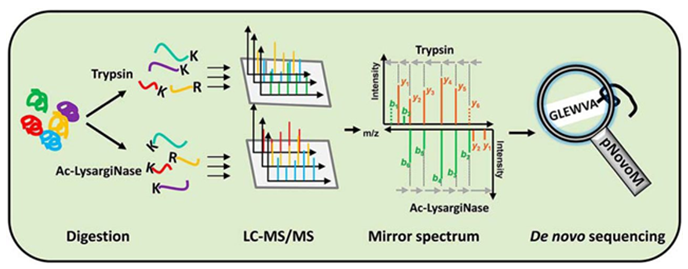
Figure 1. The process of de novo peptide sequencing using mass spectrometry
Principles of Mass Spectrometry Sequencing
1. Ionization of Peptides
In mass spectrometry analysis, the peptide sample first needs to be ionized. Ionization is the process of converting peptide molecules into charged particles, which is essential for subsequent mass spectrometric detection. Common ionization methods include electrospray ionization (ESI) and matrix-assisted laser desorption/ionization (MALDI).
2. Separation of Ions
The ionized peptide ions are then introduced into the mass spectrometer where they are separated by a mass analyzer. The mass analyzer separates them based on their mass-to-charge ratio (m/z). Common mass analyzers include time-of-flight (TOF), ion trap, and Fourier transform ion cyclotron resonance (FT-ICR).
3. Fragmentation of Peptides
In MS/MS analysis, the selected precursor ions (peptide ions with specific m/z ratios) are further fragmented. Fragmentation involves breaking the peptide ions under controlled conditions to generate a series of smaller fragment ions that provide information about the peptide sequence. Common fragmentation techniques include collision-induced dissociation (CID), electron transfer dissociation (ETD), and photon-induced dissociation (PID).
4. Detection of Fragment Ions
The fragment ions produced by fragmentation are subsequently sent to a second mass analyzer for detection and analysis. By analyzing the m/z values of these fragment ions, information about the amino acid sequence of the peptide can be obtained.
5. Sequence Analysis and Identification
Finally, bioinformatics software and database matching techniques are used to infer the original peptide's amino acid sequence based on the mass-to-charge ratios and patterns of the fragment ions. This step usually involves comparison with known protein databases to identify the sequence of unknown peptides or proteins.
The accuracy and success rate of peptide sequencing are influenced by various factors, including the purity of the sample, ionization efficiency, fragmentation methods, and the resolution and accuracy of the mass spectrometer. With the continuous development and optimization of mass spectrometry technology, peptide sequencing has become an indispensable tool in proteomics and biomolecular research.
BiotechPack, A Biopharmaceutical Characterization and Multi-Omics Mass Spectrometry (MS) Services Provider
Related Services:
How to order?




