






Selection of Proteomics Types: Mass Spectrometry Methods and Technologies
Proteomics is the science of studying the composition, structure, function, and interactions of all proteins within a biological organism. It is an important branch of life sciences and has significant implications for disease diagnosis, treatment, and drug development. The research methods and technologies in proteomics are continuously evolving and now encompass a variety of different techniques and methods.
1. Methods and Techniques in Proteomics
1. Two-Dimensional Gel Electrophoresis
Two-dimensional gel electrophoresis is a commonly used protein separation technique that can separate complex protein mixtures into hundreds of individual protein spots. This technique can be used to study information such as protein expression levels, modifications, and subcellular localization.
2. Mass Spectrometry
Mass spectrometry is a highly sensitive and high-resolution protein analysis technique. It can be used to identify amino acid sequences, determine modifications and structural information of proteins. Mass spectrometry can be divided into two types: mass-based mass spectrometry and time-based mass spectrometry.
3. Protein Microarray Technology
Protein microarray technology is a high-throughput protein analysis technique. It can be used to simultaneously detect information about the expression levels, modifications, and interactions of thousands of proteins. Protein microarray technology can be divided into two types: antibody arrays and protein arrays.
4. Protein Affinity Purification Technology
Protein affinity purification technology is a commonly used protein purification technique. It utilizes specific binding agents to separate and purify proteins. This technology can be used to study information about protein structure and function.
2. Selection of Proteomics Types: Mass Spectrometry Methods and Techniques
In proteomics research, selecting the appropriate techniques and methods is very important. Mass spectrometry is a commonly used proteomics method for identifying and quantifying proteins in samples. It can be divided into two types: mass-based mass spectrometry and time-based mass spectrometry.
1. Mass-Based Mass Spectrometry
Mass-based mass spectrometry is a commonly used proteomics method. It can be used to identify and quantify proteins in samples. Mass-based mass spectrometry can be divided into two types: MALDI-TOF mass spectrometry and ESI-MS mass spectrometry.
MALDI-TOF mass spectrometry is a commonly used mass spectrometry analysis technique. It can be used to identify and quantify proteins in samples. MALDI-TOF mass spectrometry works by mixing the sample with a matrix, ionizing protein molecules with laser pulses, and determining the protein mass by measuring the time of flight. This method is simple, fast, and suitable for large-scale protein identification and quantification.
ESI-MS mass spectrometry is another commonly used mass spectrometry analysis technique. It involves dissolving protein molecules in a solvent and ionizing them through a high-voltage electric field. The ionized protein molecules are introduced into a mass spectrometer for mass measurement. ESI-MS mass spectrometry has the advantages of high sensitivity and high resolution and is suitable for the identification and quantification of proteins in complex samples.
2. Time-Based Mass Spectrometry
Time-based mass spectrometry is an emerging proteomics method. It separates proteins in samples over time and then measures their mass with a mass spectrometer. Time-based mass spectrometry can be divided into two types: two-dimensional electrophoresis mass spectrometry and liquid chromatography-mass spectrometry.
Two-dimensional electrophoresis mass spectrometry is a common time-based mass spectrometry method. It separates protein samples in two different dimensions and then measures their mass with a mass spectrometer. This method can be used for the identification and quantification of proteins in complex samples.
Liquid chromatography-mass spectrometry is another common time-based mass spectrometry method. It separates protein samples in a liquid chromatography column and then measures their mass with a mass spectrometer. Liquid chromatography-mass spectrometry has the advantages of high resolution and high sensitivity and is suitable for the identification and quantification of proteins in complex samples.
3. Conclusion
Proteomics is an important field in biopharmaceutical research, helping us to deeply understand the structure, function, and interactions of proteins. In proteomics research, selecting appropriate techniques and methods is crucial. Mass spectrometry is a commonly used proteomics method, which can identify and quantify proteins in samples through mass-based and time-based mass spectrometry. Mass-based mass spectrometry includes MALDI-TOF and ESI-MS, while time-based mass spectrometry includes two-dimensional electrophoresis and liquid chromatography-mass spectrometry. The application of these methods and techniques can help us better understand the functions and interactions of proteins, providing important references for biopharmaceutical development and treatment.
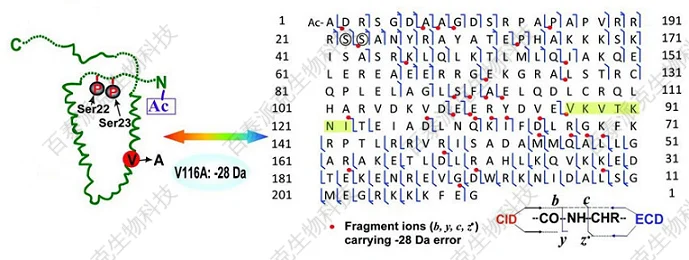
Figure 1
BiotechPack, A Biopharmaceutical Characterization and Multi-Omics Mass Spectrometry (MS) Services Provider
Related Services:
Protein Structure Identification
Protein Circular Dichroism Analysis
Determination of Primary Protein Structure
Protein Secondary Structure Analysis
Biopharmaceutical Disulfide Bond/Free Cysteine Detection
Protein Disulfide Bond Identification and Quantitative Analysis
Shotgun Proteomics Identification
Hydrogen-Deuterium Exchange Mass Spectrometry (HDX MS)
Top-Down Characterization of PTMs
Protein Isoelectric Point Determination
How to order?




