






Protein Sequencing Methods: How to Analyze Protein Sequence Information?
Proteins are crucial molecules within biological organisms, playing key roles in many biological processes. To gain an in-depth understanding of protein structure and function, we need to analyze their sequence information. Protein sequencing methods provide us with critical tools to uncover protein sequence information. This article will introduce some common protein sequencing methods and how they help us reveal the mysteries of proteins.
1. Mass Spectrometry:Mass spectrometry is a commonly used protein sequencing method. It determines the sequence of amino acid residues by measuring the mass-to-charge ratio (m/z) of proteins. Mass-based sequencing methods, such as protein derivative mass spectrometry sequencing (PSD) and collision-induced dissociation (CID), infer protein sequences by analyzing the mass-to-charge ratio of fragment ions. Additionally, methods like isotope labeling and ion fragmentation labeling introduce specific labeling groups onto amino acid residues and determine the sequence through mass spectrometry analysis.
2. Sanger Sequencing:Sanger sequencing is a classic sequencing technique that reveals DNA sequences by measuring chain-terminating inhibitors in DNA synthesis. In protein sequencing, Sanger sequencing is used to determine the coding gene sequence of proteins. By transcription and translation, it links protein sequences to their corresponding DNA sequences, thereby obtaining protein sequence information.
3. High-Throughput Sequencing Technologies:In recent years, the development of high-throughput sequencing technologies has greatly advanced the field of protein sequencing. For example, second-generation sequencing technologies like the Illumina sequencing platform can efficiently determine the sequences of DNA and RNA, helping us understand the genetic information encoding proteins. Furthermore, emerging third-generation sequencing technologies such as PacBio and Nanopore enable direct sequencing of individual proteins, bringing groundbreaking advancements to the field of protein sequencing.
These protein sequencing methods allow us to obtain protein sequence information. Analyzing protein sequences is crucial for revealing protein structure and function. The sequence of a protein determines its folding pattern and functional regions, which in turn dictate its role in cells. By analyzing protein sequences, we can predict secondary and tertiary structures and potential functional domains, providing important clues for further research.
Moreover, the analysis of protein sequences is of great significance in the biomedical field. In drug development, understanding the sequence information of target proteins can help us design more effective drug molecules. Additionally, research on protein sequences aids in understanding disease mechanisms and offers new perspectives for disease diagnosis and treatment.
Protein sequencing methods provide important means for analyzing protein sequence information. Through these methods, we can gain a deep understanding of protein structure, function, and mechanisms of action. The analysis of protein sequences is not only vital for basic research but also has broad applications in the biomedical field. With continuous technological advancements, the field of protein sequencing will further drive scientific progress and innovative breakthroughs.
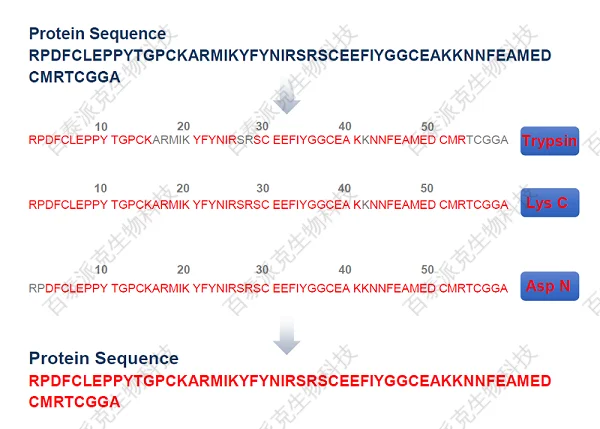
Figure 1
Biotech Co., Ltd.--BiotechProductsCharacterization, high-quality mass spectrometry detection service provider for multi-group biological substances
Related Services:
Protein Sequencing
Peptide Sequencing
Antibody Sequencing
De Novo Protein Sequencing
Protein N/C Terminal Sequencing
Biopharmaceutical N/C Terminal Sequencing
Mass Spectrometry-Based Sequence Analysis
Top Down Protein Sequencing Method
How to order?




