






Antibody Sequence Analysis: Accurate Assessment of Antibody Structure and Function
Antibody sequence analysis is an effective method that can obtain the sequence information of antibodies through sequencing technology and further evaluate their structure and function.
I. Principle
Antibody sequence analysis is based on protein sequencing technologies, such as mass spectrometry or gene sequencing, to obtain amino acid sequences of antibodies. Antibody sequences include sequences of heavy and light chains, where the heavy chain is divided into V (variable), D (diversity), and J (joining) segments, and the light chain includes V and J segments. By analyzing the sequence of antibodies, one can understand their structural and functional characteristics.
II. Methods
Antibody sequence analysis mainly includes the following methods and steps:
1. Protein Sequencing:Use mass spectrometry or gene sequencing technology to obtain the amino acid sequence of antibodies. Mass spectrometry is suitable for determining the amino acid sequences of the heavy and light chains of antibodies, while gene sequencing can obtain the DNA or RNA sequence of antibodies.
2. Sequence Alignment:Align the antibody sequence with known antibody sequences in databases to determine its family affiliation and identify variant sites.
3. Structure Prediction:Predict the three-dimensional structure of antibodies using protein structure prediction algorithms, such as homology modeling or protein folding prediction.
4. Function Prediction:Based on conserved regions and functional motifs of the antibody sequence, predict its function, such as antigen binding and mediating immune response.
III. Key Points
When conducting antibody sequence analysis, the following key points need attention:
1. Data Quality Control:Ensure the quality and accuracy of sequencing data to avoid the impact of low-quality sequences.
2. Sequence Alignment and Annotation:Use appropriate alignment algorithms and databases for sequence alignment and annotation to accurately identify variant sites and functional regions.
3. Reliability of Structure and Function Prediction:Predicting the structure and function of antibodies is a complex task that requires comprehensive consideration of multiple prediction methods and results from experimental validation.
IV. Application Prospects
Antibody sequence analysis has broad application prospects in antibody research and application fields. Accurate evaluation of the structure and function of antibodies helps researchers understand their mechanisms of action, optimize their affinity and specificity, and develop new therapeutic and diagnostic tools.
V. Conclusion
Antibody sequence analysis is an important method for evaluating the structure and function of antibodies. By obtaining sequence information of antibodies through sequencing technology, one can further understand their structural and functional characteristics. Accurate evaluation of antibody structure and function is of great significance for antibody research and application, providing new perspectives and opportunities for disease treatment and biological research.
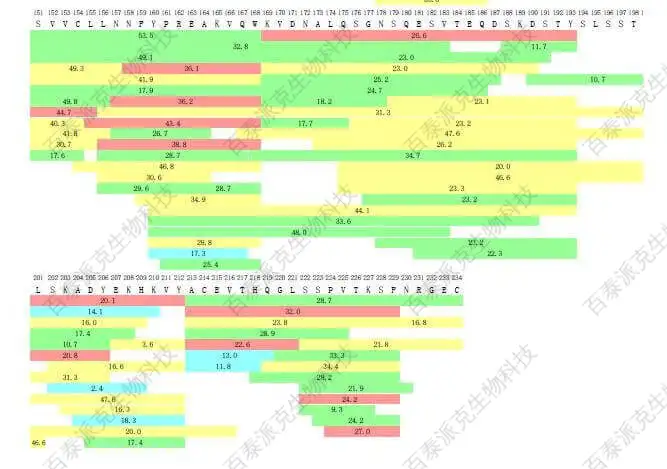
Figure 1
Biotai Parker Biotechnology - A leading service provider for biological product characterization and multi-omics mass spectrometry analysis
Related Services:
Full-length Antibody Protein Sequence Analysis
De Novo Sequencing of Monoclonal Antibodies
Protein Sequencing
Peptide Sequencing
De Novo Sequencing
De Novo Protein Sequencing
De Novo Peptide Sequencing
Protein N/C-terminal Sequencing
Biopharmaceutical N/C-terminal Sequencing
How to order?




