






Peptide De Novo Sequencing: An Analytical Strategy to Revolutionize Peptide Research
Peptides are an important component of protein molecules, possessing rich biological functions and potential applications. Accurately obtaining the amino acid sequence of peptides is of great significance for research and development. De novo peptide sequencing is a powerful analytical strategy that can bring new breakthroughs and advancements to peptide research.
I. Principle
De novo peptide sequencing involves analyzing the amino acid sequence of a peptide to obtain comprehensive information, including sequence and modifications. This method can be achieved through mass spectrometry analysis or DNA sequencing techniques. Mass spectrometry is generally suitable for purified peptide samples, analyzing the mass and sequence information of peptides using a mass spectrometer. DNA sequencing is used to determine the DNA sequence of the peptide gene, thereby inferring the amino acid sequence of the peptide.
II. Method
De novo peptide sequencing mainly includes the following methods and steps:
1. Sample Preparation:Extract peptides from biological samples, which can be obtained through chemical synthesis, enzymatic digestion, or acid hydrolysis.
2. Analytical Instruments:Use instruments such as mass spectrometers to perform mass analysis and sequence determination on purified peptides. Mass spectrometry can detect the mass and fragmentation information of peptides, deducing the amino acid sequence.
3. Data Processing and Analysis:Process and analyze mass spectrometry data, including steps such as peak recognition, fragment assembly, and sequence alignment, to obtain accurate amino acid sequences of peptides.
III. Key Points
When conducting de novo peptide sequencing, the following key points should be noted:
1. Data Quality Control:Ensure the quality and accuracy of mass spectrometry data, avoiding the influence of low-quality peaks.
2. Sequence Analysis and Modification Analysis:Determine the amino acid sequence and modification sites of the peptide, such as phosphorylation and methylation, through mass spectrometry data analysis.
3. Interpretation and Validation of Results:Conduct comprehensive analysis and interpretation of the sequencing results, confirming the structure and function of the peptide through experimental validation.
IV. Application Prospects
De novo peptide sequencing has broad application prospects in peptide research and application fields. Accurately obtaining the amino acid sequence of peptides can help researchers understand the structure and function of peptides, accelerating the discovery and development of novel peptide drugs. Additionally, by analyzing modification sites and structural characteristics of peptides, we can reveal their bioactivity and mechanism of action, providing new ideas and methods for disease treatment and biological research.
V. Conclusion
De novo peptide sequencing is a powerful analytical strategy that, through analyzing the amino acid sequence of peptides, can bring new breakthroughs and advancements to peptide research. Accurately obtaining the amino acid sequence of peptides is crucial for understanding their structure and function, providing important clues for the discovery and development of novel peptide drugs.
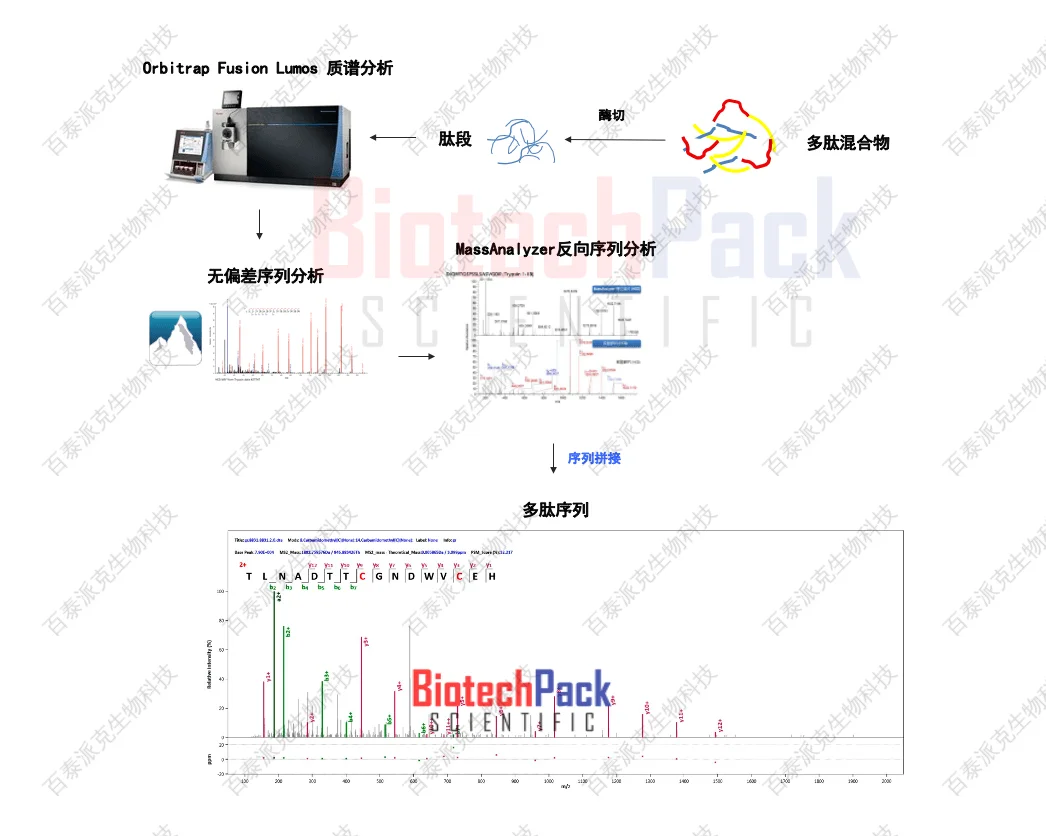
Figure 1
Biotai Park Biotechnology -- A premium service provider for bioproduct characterization and multi-omics mass spectrometry detection
Related Services:
Polypeptide Sequencing
De Novo Polypeptide Sequencing
Protein N/C-terminal Sequencing
How to order?




