






Mass Spectrometry Peptide Sequence Determination: Analyzing the Structure and Function of Peptides
The application of biopharmaceuticals in the medical field is becoming increasingly widespread, and understanding the structural and functional characteristics of biopharmaceuticals is crucial. Mass spectrometry peptide sequencing is an advanced and efficient method that provides researchers with an important tool for analyzing and interpreting peptide structures. This article will detail the principles, techniques, and applications of mass spectrometry peptide sequencing, revealing its significant role in deciphering peptide structures and functions.
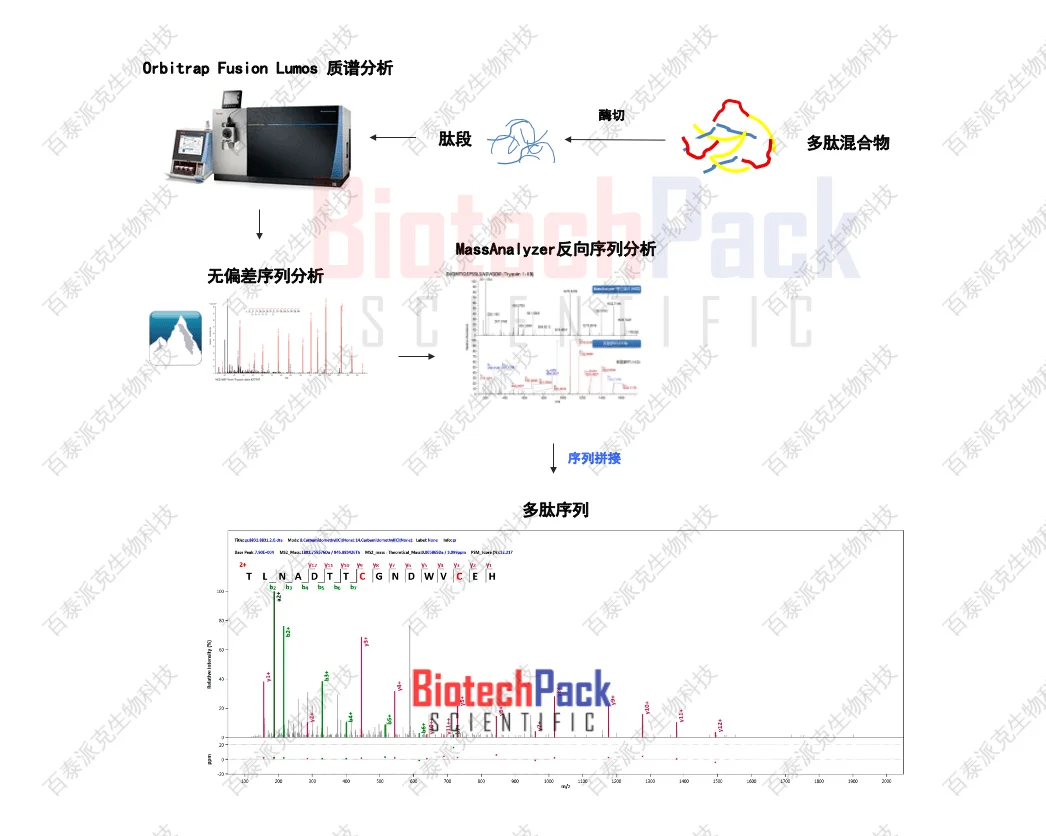
Figure 1
I.Peptides and Biopharmaceuticals
Biopharmaceuticals are proteins composed of one or more peptides that play a key role in regulating physiological processes and inhibiting or promoting disease progression. The structure of peptides determines their functional properties, so analyzing peptide structures is crucial for understanding the activity and stability of biopharmaceuticals.
II.Principle of Mass Spectrometry Peptide Sequencing
Mass spectrometry peptide sequencing involves analyzing peptides using mass spectrometers to determine their amino acid sequences. This technique is based on the characteristics of amino acid residues in peptides. The mass spectrometer ionizes and fragments peptides, then measures the mass of the ions and the mass spectra of the fragments. By analyzing these mass spectrometry data, the sequence of the peptide can be inferred.
III.Techniques of Mass Spectrometry Peptide Sequencing
Mass spectrometry peptide sequencing mainly includes mass spectrometry instruments, sample preparation, and data analysis.
1.Mass Spectrometry Instruments:Common instruments for mass spectrometry peptide sequencing include mass spectrometers (MS) and tandem mass spectrometers (MS/MS). MS is used to measure ion mass, while MS/MS is used to measure the fragment mass spectra.
2.Sample Preparation: Sample preparation includes purification and cleavage of peptides. The purification step aims to remove other impurities, making the peptide the main component for analysis. The cleavage step uses enzymes or chemical methods to break down peptides into smaller fragments.
3.Data Analysis:Data analysis involves interpreting mass spectra and inferring sequences. By comparing with known peptide libraries or using specialized software, the sequence of the peptide can be determined.
IV. Applications of Mass Spectrometry Peptide Sequencing
Mass spectrometry peptide sequencing has wide applications in biopharmaceutical development and analysis.
1.Drug Development:Mass spectrometry peptide sequencing can be used for structural confirmation and activity studies of new drugs. By understanding the peptide structure of drugs, researchers can design more effective drugs and optimize drug preparation processes.
2.Proteomics:Mass spectrometry peptide sequencing is widely used in proteomics research for identifying and quantifying peptides in protein samples. This helps in understanding the composition, function, and interaction of proteins within organisms.
3.Quality Control:Mass spectrometry peptide sequencing can be used for quality control of biopharmaceuticals, ensuring consistency and stability between batches. By monitoring the sequence and relative content of peptides, the purity and activity of drugs can be assessed.
As an important technical tool, mass spectrometry peptide sequencing provides researchers with key information for deciphering peptide structures and functions. It plays a significant role in biopharmaceutical development, proteomics, and quality control, promoting the further development and application of biopharmaceuticals.
Biotech-Peak BioScience--BiologicalProductsCharacterization, a leading service provider in multi-omics mass spectrometry detection
Related Services:
How to order?




