






Development of Quantitative Methods for Protein Modifications Based on Proteomics
Proteins are among the most important molecules in living organisms, playing key roles in cell structure, function, and signal transduction. However, proteins are not static entities; they frequently undergo modifications to achieve specific functions. Protein modification refers to the process of altering the biochemical properties and functions of proteins through covalent bonding or non-covalent interactions. These modifications can include phosphorylation, acetylation, methylation, among others, and they regulate cellular metabolism, signal transduction, and gene expression by modulating protein structure and interactions.
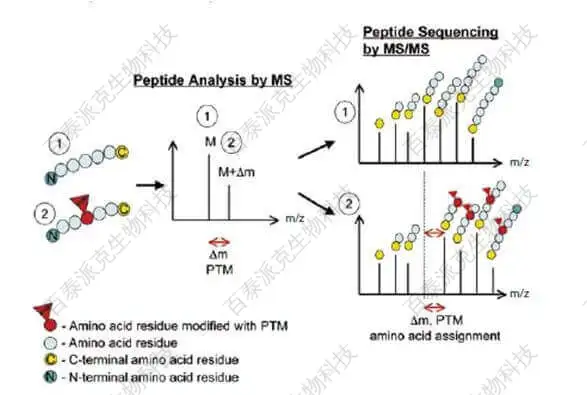
Figure 1
I.Protein Mass Spectrometry Analysis
Protein mass spectrometry analysis is an important technique for the comprehensive identification and quantification of proteins and their modifications. It utilizes mass spectrometry instruments to separate, ionize, and measure the mass of protein samples. Key techniques in mass spectrometry analysis include spectral analysis, mass analysis, and quantitative analysis. Through these techniques, we can obtain rich information about proteins and their modifications, such as molecular weight, amino acid sequences, modification sites, and types.
II.Development of Quantitative Methods for Protein Modifications
With the continuous development of protein mass spectrometry analysis technology, more and more quantitative methods have been developed to reveal the important roles of protein modifications in cellular processes and diseases. These methods mainly include quantitative proteomics, quantitative mass spectrometry, and quantitative chemical methods.
1.Quantitative ProteomicsThis is a method for quantifying modifications by comparing protein expression levels in different samples. Isotope labeling technology is a commonly used method, where samples are reacted with stable isotope labeling agents and then detected and quantified using mass spectrometry. Additionally, quantitative proteomics includes techniques such as differential gel electrophoresis, multiple reaction monitoring, and metabolic stable isotope tracing.
2.Quantitative Mass Spectrometry AnalysisThis is a method based on mass spectrometry that can quantitatively determine the abundance of proteins and their modifications. There are two main strategies: peptide-based quantification and protein-based quantification. Peptide-based quantification methods include targeted multiple reaction monitoring and isotope labeling methods, while protein-based quantification methods include protein comparison and protein labeling methods.
3.Quantitative Chemical MethodsThis method uses chemical reagents to react with modification products and quantitatively analyze modifications through chromatographic separation and mass spectrometry detection. These methods include reactive dye methods, coupling reagent methods, and chemical labeling methods.
III.Application Prospects
The quantitative methods for protein modifications based on protein mass spectrometry analysis have significant importance in biopharmaceutical research and clinical applications. Firstly, these methods help scientists better understand the mechanisms of protein modifications in living organisms and reveal their critical roles in disease occurrence and development. Secondly, they can be used for quality control and monitoring of biopharmaceuticals to ensure consistent quality and efficacy of produced drugs. Additionally, these methods can be applied in personalized medicine, guiding treatment choices based on a patient's protein modification profile to improve treatment outcomes and prognosis.
Protein modifications are crucial regulatory mechanisms within cells, playing a key role in biopharmaceutical research and clinical applications. The continuous advancement of protein modification quantification methods based on protein mass spectrometry analysis provides us with powerful tools to understand protein modifications in depth. Through these methods, we can reveal important information about the types, locations, and quantities of protein modifications, providing key evidence for drug development and personalized treatment, thus advancing the field of biopharmaceuticals.
BioSciTech - BiotechProductsCharacterization, a premium service provider for multi-omics mass spectrometry detection
Related Services:
Post-translational Modification Proteome Analysis
Quantitative Proteome Analysis
4D Proteomics
Targeted Proteomics
Label-Free Quantitative Proteome Analysis
Label-based Protein Quantification Technologies - iTRAQ, TMT, SILAC
TMT/iTRAQ/MultiNotch Quantitative Proteomics Analysis
DIA Quantitative Proteomics
MRM/PRM Quantitative Proteomics Analysis
Absolute Quantification Analysis (AQUA)
How to order?




