






Guidelines for Acetylated Protein Detection Methods: Analyzing the Role and Analysis of Acetylation Modification
Acetylated proteins are important biomolecules that play a critical role in cells. Acetylation modification is a common protein modification method that regulates cellular functions and gene expression by adding an acetyl group to proteins. In the field of biopharmaceuticals, understanding acetylation modifications is crucial for the development and production of protein drugs. This article will delve into the detection methods of acetylated proteins, helping readers to fully understand this important area.
1. Role of Acetylated Proteins
Acetylated proteins are modifications formed by combining an acetyl group with lysine residues in proteins. This simple modification reaction plays complex and important biological roles in cells. It is involved in regulating gene expression, cell signaling, cell cycle control, and various other biological processes. Changes in acetylation modifications may lead to disease development, so understanding the role of acetylated proteins is of great significance for disease treatment and biopharmaceutical development.
2. Detection Methods for Acetylated Proteins
2.1. Western Blot
Western blot is one of the most commonly used protein detection methods and is also applicable to the detection of acetylated proteins. This method uses specific antibodies to recognize acetylated proteins and detects their presence and abundance in samples through protein electrophoresis and membrane transfer techniques. Western blot is a simple and effective method commonly used for preliminary screening of acetylation modifications.
2.2. Mass Spectrometry
Mass spectrometry is a highly sensitive protein analysis technique that is also very useful for detecting acetylated proteins. Through mass spectrometry, acetylation sites and modification levels can be directly determined, providing detailed acetylation information. This is vital for protein quality control and modification optimization in biopharmaceutical development.
2.3. Antibody Enrichment
Due to the low abundance of acetylated proteins, direct detection is quite challenging. Antibody enrichment uses specific antibodies to enrich acetylated proteins from complex samples, increasing detection sensitivity. This method is particularly useful for studying the specific functions and regulatory mechanisms of acetylation modifications.
2.4. Metabolic Labeling
Metabolic labeling uses special acetylase substrates to label acetylated proteins, which are then analyzed by mass spectrometry or other detection methods. This method allows for the quantitative measurement of dynamic changes in acetylated proteins, revealing the regulatory processes of acetylation modifications in cells.
3. Prospects
The continuous development of acetylated protein detection technologies brings many prospects to the field of biopharmaceuticals. In drug development, understanding the role of acetylation modifications in protein stability, activity, and efficacy helps optimize drug quality and potency. Additionally, detecting acetylated proteins can lead to a better understanding of the molecular mechanisms of disease occurrence and development, providing new targets and strategies for disease treatment.
As an important research target in the field of biopharmaceuticals, acetylated proteins play a key role in biological processes. Effective detection of acetylation modifications is a crucial step in studying the function of biopharmaceuticals and optimizing production processes. Through various detection methods such as Western blot, mass spectrometry, antibody enrichment, and metabolic labeling, we can gain in-depth insights into acetylation modification information, providing more comprehensive and accurate data support for research and applications in the biopharmaceutical field.
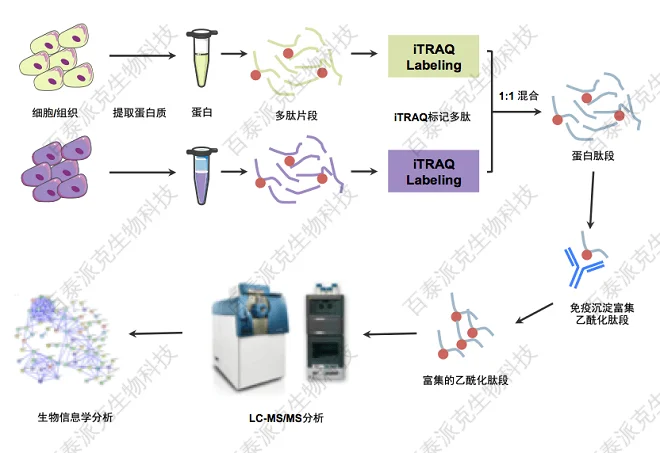
Figure 1
Bio-Techne Biotech -- BiologicalProductsCharacterization, Multi-omics Mass Spectrometry Detection High-quality Service Provider
Related Services:
Acetylation Quantitative Proteomics Study
Post-translational Modification Proteomics Analysis
Histone Post-translational Modification Analysis
Quantitative Proteomics Analysis
Targeted Proteomics
4D Proteomics
DIA Quantitative Proteomics
Label-free Based Quantitative Proteomics Analysis
Label-based Protein Quantification Techniques - iTRAQ, TMT, SILAC
MRM/PRM Quantitative Proteomics Analysis
How to order?




