






The Importance of Primary Structure in the Design of Novel Biologics
Biological products refer to drugs and therapeutic substances based on biological macromolecules (such as proteins, antibodies, and polypeptides). In the design of novel biological products, understanding and optimizing the primary structure of biological products is crucial. The primary structure refers to the amino acid sequence of a biomolecule, which has a critical impact on the function and performance of the drug.
Firstly, the primary structure determines the functionality of biological products. The primary structure of proteins and other biomolecules determines their bioactivity and interactions with other molecules. By understanding and adjusting the primary structure, researchers can optimize the efficacy and selectivity of the drug, enabling it to bind more effectively to targets and reduce interactions with non-targets. For example, altering the primary structure of monoclonal antibodies can adjust their affinity, neutralization, and pharmacodynamics, thereby improving therapeutic effects.
Secondly, the primary structure plays an important role in the stability and resistance to changes of biological products. Biological products face many challenges during production, storage, and transportation, such as temperature changes, oxidation, and enzymatic degradation. Good design of the primary structure can enhance the stability of biological products, extend their shelf life, and reduce the risk of degradation and inactivation. For instance, introducing specific disulfide bonds in the primary structure can increase the antioxidant capacity of proteins, thereby enhancing their stability.
Additionally, the primary structure has a significant impact on the production and purification process of biological products. The production of biological products often involves complex steps such as genetic engineering, cell culture, and protein purification. Rational design of the primary structure can improve the efficiency and yield of the production process and reduce the incidence of adverse reactions and side effects. By optimizing the primary structure, harmful byproducts that may occur during production can be minimized, ensuring the purity and consistency of the product.
In the design of novel biological products, researchers also utilize the primary structure to develop innovative drug platforms and technologies. By understanding the primary structural characteristics of different proteins, scientists can design new biological products, such as humanized antibodies, recombinant proteins, and polypeptide drugs. These innovative biological products can better meet clinical needs and provide more effective therapeutic solutions.
However, optimizing the primary structure of biological products is not easy, as it involves balancing multiple factors. Researchers need to consider various aspects such as protein stability, folding speed, solubility, and functional activity, and perform rational design and engineering. This requires the comprehensive use of computational simulation, genetic engineering, and protein engineering techniques, along with extensive experimental validation.
In summary, the primary structure of biological products plays an indispensable role in the design of novel biological products. It determines the drug's functionality, stability, and the efficiency of the purification process, while also providing a foundation for the development of innovative drug platforms. A deep understanding and optimization of the primary structure of biological products will bring new opportunities and challenges to drug development and therapeutic strategy improvement.
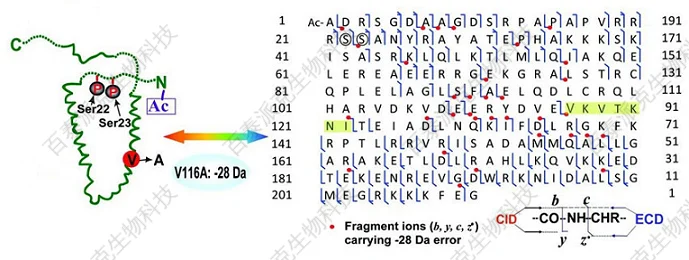
Figure 1
BioTech-Pack Biotechnologies - a quality service provider for biological product characterization and multi-omics mass spectrometry analysis
Related Services:
Protein Structure Identification
Protein Circular Dichroism Analysis
Determination of Protein Primary Structure
Protein Secondary Structure Analysis
Detection of Disulfide Bonds/Free Cysteine in Biologics
Identification and Quantitative Analysis of Protein Disulfide Bonds
Protein Identification
Shotgun Proteomics
Hydrogen-Deuterium Exchange Mass Spectrometry (HDX MS)
Characterization of PTMs Based on Top-Down Approach
Determination of Protein Isoelectric Point
Molecular Weight Determination
Characterization of Protein Purity and Homogeneity
How to order?




