






How to Interpret Mass Spectra for Protein Phosphorylation Sites
In mass spectrometry analysis, proteins or peptides are ionized into charged particles and then separated by a mass spectrometer. A mass spectrum displays the relationship between the mass-to-charge ratio (m/z) of these particles and their intensity (signal size). Interpreting the mass spectrum requires understanding the fragmentation patterns of peptides and the mass changes caused by phosphorylation. Here are the basic steps to interpret mass spectra to identify protein phosphorylation sites:
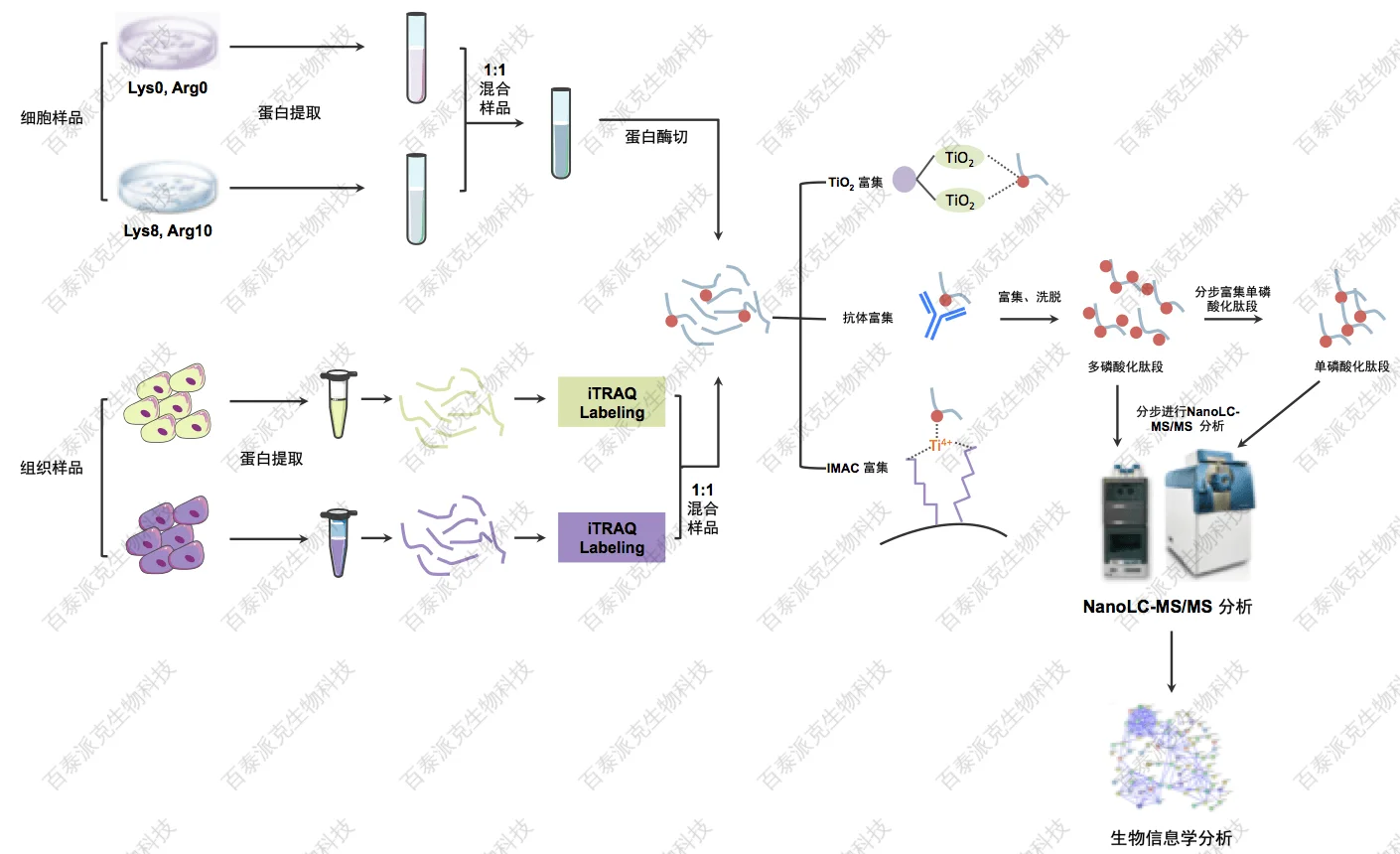
Figure 1
1.Identify phosphorylation-specific signals:
- Phosphorylated peptides have specific signals in the mass spectrum. The addition of a phosphate group increases the mass of the peptide (approximately 79.966 Da). Therefore, in the mass spectrum, phosphorylated peptides will show a corresponding mass increase compared to the unmodified peptides.
- In MS/MS analysis, the fragmentation of phosphorylated peptides often results in the loss of the phosphate group (-98 Da), which can be observed in the mass spectrum.
2.Analyze b-ions and y-ions sequences:
- In tandem mass spectrometry (MS/MS), the fragmentation of peptides produces b-series and y-series ions. By analyzing the sequences of these ions, the amino acid sequence of the peptide can be determined.
- Ion peaks near phosphorylation sites will exhibit mass changes. By comparing the mass of the peptide before and after modification, the phosphorylation sites can be located.
3. Use mass spectrometry data analysis software:
Various software tools (such as MaxQuant, Mascot, etc.) can assist in identifying and verifying phosphorylation sites. These tools can automatically match peptide sequences and annotate potential modification sites.
Biotech-Peak Biotechnology - Characterization of Bioproducts, High-Quality Multi-Omics Mass Spectrometry Services
Related services:
Quantitative phosphoproteomics research
Multi-pathway phosphoproteomics
Post-translational modification proteome analysis
Histone post-translational modification analysis
Quantitative proteome analysis
Label-free quantitative proteome analysis
Label-based protein quantification technologies - iTRAQ, TMT, SILAC
How to order?




