






Histone Lactylation Modification Detection
Histone lactylation is a post-translational modification that is widespread in eukaryotes and plays important roles in many biological processes, including gene expression regulation, cell cycle control, and response to environmental stimuli. Therefore, studying histone lactylation modifications is of great significance for a deeper understanding of the physiological and pathological processes in organisms.
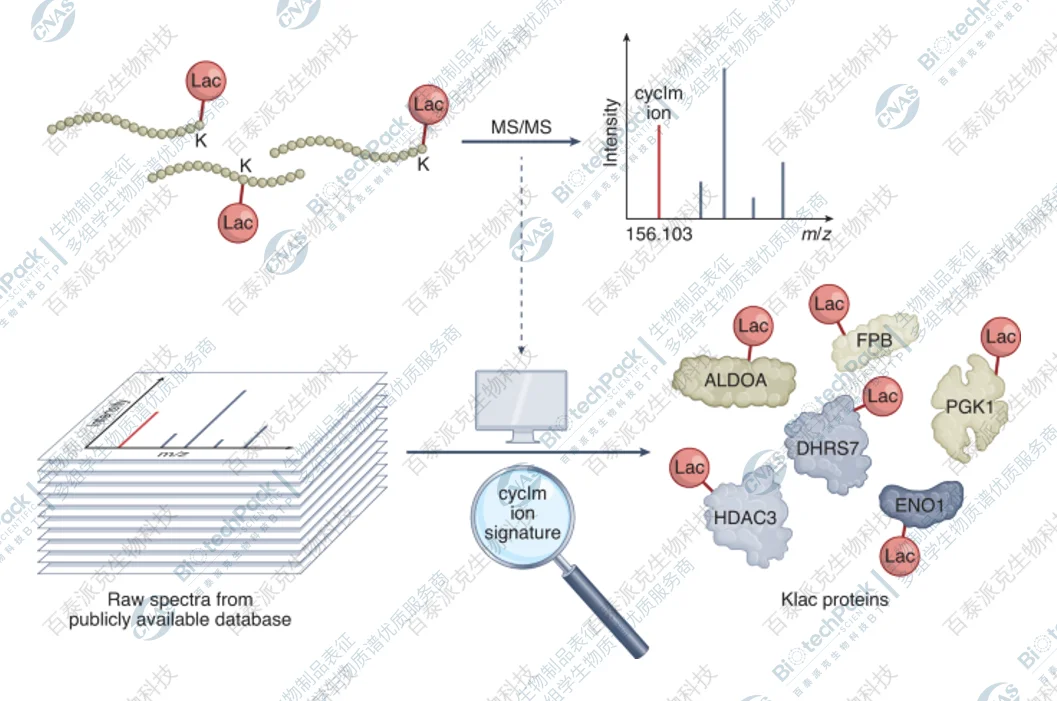
Figure 1. Mass spectrometry analysis of protein lactylation modification
I. Overview of Histone Lactylation Modification
Histone lactylation is a process catalyzed by yeast lactate dehydrogenase (HAT), primarily occurring on the lysine residues of histones. Lactylation can alter the structure of chromatin, thereby affecting gene activation or repression. In addition, lactylation can serve as a signal to induce other post-translational modifications, such as methylation, phosphorylation, and ubiquitination.
II. Methods for Detecting Histone Lactylation Modifications
Currently, there are several methods for detecting histone lactylation modifications:
1. Western blot:
This is a commonly used protein detection method that can be used to detect the presence and modification state of specific proteins. By using specific antibodies, the degree of histone lactylation can be detected.
2. Immunofluorescence staining:
Using specific antibodies and fluorescent secondary antibodies, histone lactylation can be localized and detected at the cellular or tissue section level.
3. Chromatin immunoprecipitation (ChIP):
This technique can detect the DNA sequences at specific histone lactylation sites. By combining with high-throughput sequencing (ChIP-seq) or PCR (ChIP-qPCR), the genome-wide distribution of histone lactylation can be obtained.
4. Mass spectrometry detection:
Through enzymatic digestion, liquid chromatography, and mass spectrometry analysis, lactylation sites can be accurately identified and their abundance quantitatively analyzed.
Histone lactylation modifications play an important role in gene expression regulation, and accurate and sensitive detection methods are crucial for understanding the functions and mechanisms of histone lactylation. Currently, although there are multiple detection methods, each has its limitations. Therefore, developing new detection technologies and tools, as well as improving existing techniques, are key focuses of future research.
Biotech Peptide - A leading service provider for biologics characterization, multi-omics mass spectrometry detection.
Related services:
Protein lactylation modification
Protein deamidation modification analysis
Protein oxidation modification analysis
Post-translational modification proteomics analysis
Quantitative proteomics analysis
Protein-protein interaction analysis
Protein mass spectrometry identification
Phosphorylation quantitative proteomics research
How to order?




