






Single-Molecule Protein Sequencing Reveals the Dynamic Process of Protein Interactions
Protein-protein interactions are a crucial part of various life processes within organisms. Understanding the dynamic processes of protein interactions is of great significance for uncovering cellular signal transduction, drug mechanisms, and the development of diseases. Traditional protein sequencing methods often fail to capture the dynamic changes in protein interactions. As an innovative technological approach, single-molecule protein sequencing can directly observe and reveal the dynamic processes of protein interactions. This article will detail the methods of single-molecule protein sequencing and focus on how this method reveals the dynamic processes of protein interactions.
1. Principles and Methods of Single-Molecule Protein Sequencing
Single-molecule protein sequencing is a method for directly observing individual protein molecules. It uses microscopy or nanotechnology to fix protein molecules onto a substrate and observe their dynamic behaviors. Common single-molecule protein sequencing methods include single-molecule fluorescence microscopy, atomic force microscopy, and nanopore sequencing.
2. Revealing the Dynamic Processes of Protein Interactions through Single-Molecule Protein Sequencing
Single-molecule protein sequencing methods provide high spatiotemporal resolution information, enabling scientists to directly observe and reveal the dynamic processes of protein interactions. For example, single-molecule fluorescence microscopy can observe the localization and movement trajectories of proteins within cells, further unveiling protein interaction networks. Atomic force microscopy can detect the interaction forces between proteins and study their structure and mechanical properties. Nanopore sequencing can monitor the transmission process of proteins passing through nanopores in real-time, revealing their dynamic behaviors and structural characteristics.
3. Applications of Single-Molecule Protein Sequencing in Research
Single-molecule protein sequencing methods have extensive applications in the study of protein interactions. They can be used to study the structure, conformational changes, and dynamic properties of proteins, providing deeper insights into protein functions and interaction mechanisms. This method can also be applied in drug development, protein engineering, and biosensor design, providing significant support for new drug discoveries and biotechnology.
4. Future Development of Single-Molecule Protein Sequencing
With continuous technological advancements, single-molecule protein sequencing methods will further develop and improve. Future directions include enhancing sequencing spatiotemporal resolution, increasing complexity, and expanding the applicable range. This will provide more opportunities and challenges for us to deeply understand the dynamic processes of protein interactions.
Single-molecule protein sequencing is an important method for directly observing and revealing the dynamic processes of protein interactions. Through this method, scientists are able to deeply study the structure, function, and interaction mechanisms of proteins, making significant contributions to the development of life sciences.
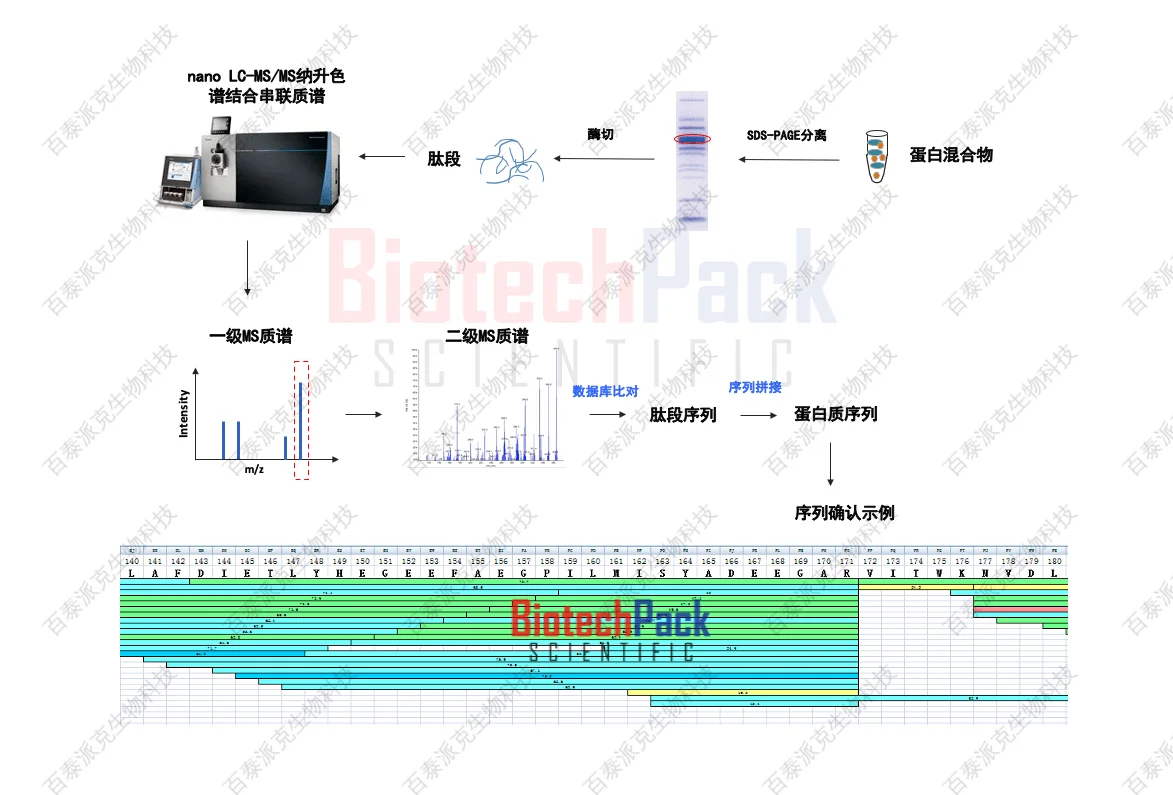
Figure 1
Biotech Co., Ltd. -- Characterization of Biologics, Multi-group Biomass Spectrometry Detection Quality Service Provider
Related Services:
Protein Sequencing
Protein N/C-terminal Sequencing
Biopharmaceutical N/C-terminal Sequencing
N-terminal Sequencing Based on Edman Degradation
Full Protein Sequence Determination
De Novo Protein Sequencing
Top-down Protein Sequencing Method
Mass Spectrometry-based Sequence Analysis
Peptide Sequencing
Antibody Sequencing
How to order?




