






Application and Breakthrough of Mass Spectrometry Technology in Determining Amino Acid Sequences
The research and production of biopharmaceuticals are crucial for the development of human health and the medical field. In the biopharmaceutical sector, understanding the amino acid sequence of proteins is essential for drug design, production, and quality control. With the continuous advancement of science and technology, mass spectrometry has become an important tool in determining amino acid sequences in the field of biopharmaceuticals. This article will provide a detailed introduction to the application and breakthroughs of mass spectrometry in amino acid sequence determination, and discuss its importance in biopharmaceutical research and quality control.
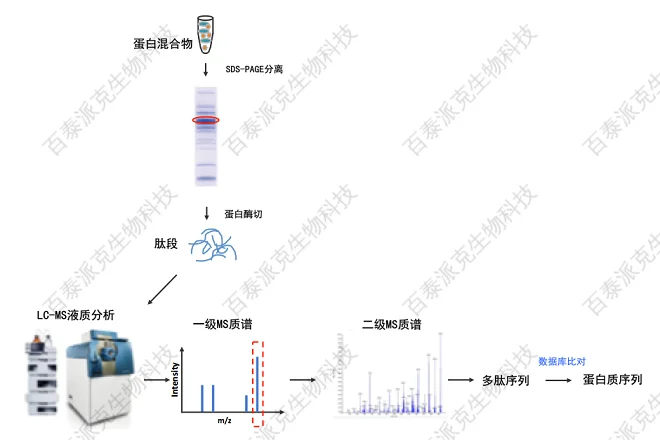
Figure 1
1.Principles and Advantages of Mass Spectrometry
Mass spectrometry is a method capable of analyzing and determining compounds, based on the mass-to-charge ratio of molecules to identify and quantify compounds in a sample. In amino acid sequence determination, mass spectrometry can infer the amino acid sequence by measuring the mass of peptide fragments. Mass spectrometry offers advantages such as high sensitivity, high resolution, a wide mass range, and diverse analytical modes, making it the preferred method for amino acid sequence determination in the biopharmaceutical industry.
2.Application of Mass Spectrometry in New Drug Development
In the process of new drug development, understanding the amino acid sequence of proteins is critical for comprehending their function, structure, and interactions. Mass spectrometry can help scientists understand the relationship between the structure and function of proteins by measuring the amino acid sequence of drug candidate molecules. Additionally, mass spectrometry can be used to determine drug purity and identify potential variations and modifications, providing essential support and validation for new drug development.
3.Application of Mass Spectrometry in Biopharmaceutical Quality Control
In the production of biopharmaceuticals, quality control is a crucial step. Mass spectrometry can be used to verify each stage of the production process to ensure the quality and consistency of biopharmaceuticals. By measuring amino acid sequences, mass spectrometry can detect and quantify potential variations, modifications, and impurities, providing critical quality control information. Furthermore, mass spectrometry can be employed to detect potential additives and contaminants in biopharmaceuticals, ensuring the safety and purity of the drugs.
4.Breakthroughs and Future Outlook of Mass Spectrometry
With the continuous development and innovation of mass spectrometry, the requirements for accuracy, sensitivity, and high-throughput analysis in amino acid sequence determination are also increasing. The introduction of new-generation mass spectrometers and analytical methods, such as high-resolution mass spectrometry (HRMS) and tandem mass spectrometry (MS/MS), has made amino acid sequence determination more accurate and reliable. Additionally, combining mass spectrometry with other analytical techniques, such as proteomics and metabolomics, allows for a more comprehensive understanding of the interactions and regulatory mechanisms of proteins and metabolites in biological systems.
The application and breakthroughs of mass spectrometry in amino acid sequence determination are of great significance in the biopharmaceutical field. It not only helps scientists understand the relationship between the structure and function of proteins in new drug development but also ensures the quality and consistency of drugs in biopharmaceutical quality control. With the continuous development and innovation of mass spectrometry, we have reason to believe that it will continue to play an important role in the future, driving further development and breakthroughs in the biopharmaceutical field.
BaiTai Parker Biotechnology--BiologicalProductsCharacterization, a leading service provider for multi-omics mass spectrometry analysis
Related Services:
Mass Spectrometry-Based Sequence Analysis
Mass Spectrometry-Based Protein Sequencing
Mass Spectrometry-Based Antibody Sequencing
Mass Spectrometry-Based Peptide Sequencing
Protein N/C Terminal Sequencing
Complete Protein Sequence Determination
Top-Down Approach Protein Sequencing
How to order?




