






Proteomics Mass Spectrometry
Proteins are the primary agents of life activities, and their expression and quantity are closely linked to the physiological state and health of organisms. The types, structures, quantities, and modification states of proteins directly affect various functions of the organism. To gain a deeper understanding of the structure and function of proteins, proteomics technology has emerged.
Proteomics technology is essentially a technique for studying proteins using mass spectrometry. The principle involves digesting proteins with proteases to form peptide mixtures, which are then ionized to form charged ions in the mass spectrometer. The electric and magnetic fields of the mass analyzer separate the peptide ions based on specific mass-to-charge ratios (M/Z). The detector collects the separated ions to determine each ion's M/Z value. The mass analyzer can analyze each peptide's M/Z, resulting in a mass spectrum of all peptides, known as the primary mass spectrum. The ion selection device automatically selects stronger peptide ions for secondary mass spectrum analysis. The output secondary spectrum is compared with theoretical primary and secondary spectra to identify proteins.
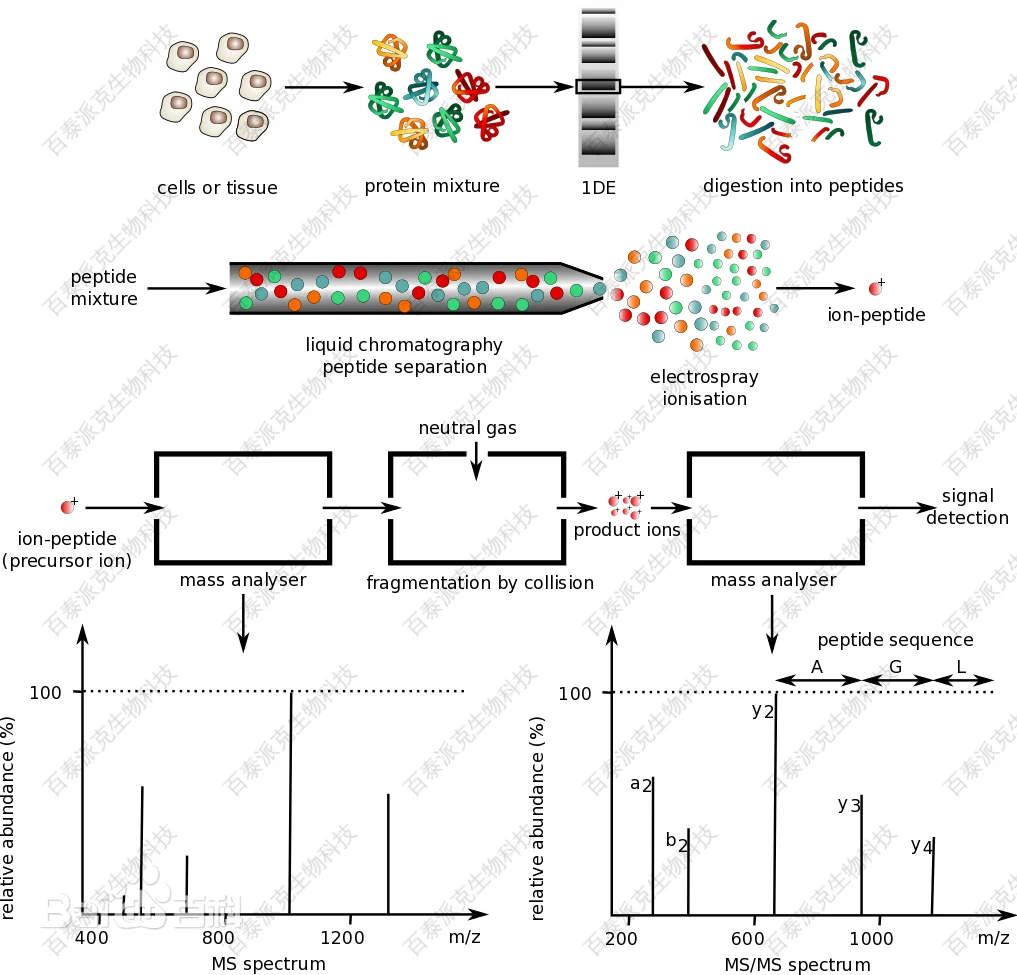
Figure 1: Workflow of Protein Gel Strip Mass Spectrometry Analysis
Commonly usedThere are several main types of proteomics technologies:
1. Liquid Chromatography-Mass Spectrometry (LC-MS): LC-MS is the most commonly used proteomics technology. It separates different substances based on their distribution equilibrium between the liquid mobile phase and the stationary phase, and then detects the separated components. In protein analysis, High-Performance Liquid Chromatography (HPLC) is used to separate complex protein mixtures, while the mass spectrometer (MS) detects and analyzes the ions separated by HPLC.
2. Capillary Electrophoresis-Mass Spectrometry (CE-MS): Capillary Electrophoresis (CE) separates charged proteins, providing high-resolution and efficient separation. MS measures the mass and analyzes the structure of proteins obtained from electrophoresis separation.
3. Time-of-Flight Mass Spectrometry (TOF-MS): TOF-MS measures ion mass based on the time ions take to travel in an electric field. Ions produced by the ion source are accelerated into a field-free flight zone, where the longer the flight time, the greater the ion mass. TOF-MS is characterized by high sensitivity and high resolution.
4. Tandem Mass Spectrometry (MS/MS): Combines two or more mass spectrometers for further fragmentation and analysis of selected ions. In the first stage (MS1), ions of specific mass are selected and fragmented in a collision chamber, followed by analysis of the resulting fragment ions in the second stage (MS2), providing additional information on protein structure and sequence.
5. MALDI-MS: Utilizes Matrix-Assisted Laser Desorption/Ionization (MALDI) to desorb and ionize proteins from a matrix, suitable for analyzing large molecules like proteins and peptides. It requires minimal sample preparation and can analyze proteins and peptides in complex samples.
6. ESI-MS: Electrospray Ionization (ESI) is a method that converts liquid samples into gaseous ions and is one of the most commonly used ionization techniques in LC-MS. The sample solution is sprayed through a high-voltage nozzle to form charged microdroplets, which evaporate to leave charged ions. ESI-MS can generate multiply charged ions directly from solution samples without disrupting molecular structure, making it especially suitable for protein and peptide analysis.
Currently, proteomics technology is widely used in qualitative and quantitative protein analysis, protein structure and modification research, and exploration of protein interactions. Biotai Peike Biotechnology (BTP) uses Thermo's latest Obitrap Fusion Lumos mass spectrometer combined with Nano-LC nano-liquid chromatography technology to efficiently and accurately analyze proteins in samples such as protein extracts, SDS-PAGE protein bands, 2D protein spots, pull-down, and Co-IP. This includes molecular weight identification, sequence analysis, structural analysis, quantitative analysis, and post-translational modification identification. BTP is committed to providing you with the highest quality one-stop proteomics solutions. Feel free to consult us for more service details!
Biotai Peike Biotechnology--A leading service provider in bioproduct characterization and multi-omics mass spectrometry detection.
Related services:
Protein Molecular Weight Determination
Protein Identification from Gel Spots, Gel Strips, and IP Samples
Peptide Mass Spectrometry Identification
Shotgun Proteomics Identification
Membrane Protein Identification Services
Pull-Down Target Protein Mass Spectrometry Identification
Protein-Protein Interaction Mass Spectrometry Analysis
Post-Translational Modification Proteomics Analysis
Protein N/C-Terminal Sequencing
Comprehensive Protein Analysis
Protein Tandem Mass Spectrometry Identification
Interaction Protein Mass Spectrometry Identification
How to order?




