






Protein Expression Profile Analysis: From Basic Research to Clinical Applications
Proteomics is an important bioanalytical technology used to study the composition, structure, and function of proteins. Protein expression profiling is one of the key applications of proteomics, revealing protein expression levels and changes. This article will explore in detail the principles and methods of protein expression profiling, as well as its significance in basic research and clinical applications.
1.Principles of Protein Expression Profiling
1. Overview of Protein Expression Profiling
Protein expression profiling involves using mass spectrometry to measure the relative or absolute expression levels of proteins in a sample. This analytical method helps us understand protein expression, such as changes in different tissues, cell types, and physiological states.
2. Methods of Protein Expression Profiling
Common methods for protein expression profiling include two-dimensional gel electrophoresis (2D-PAGE), liquid chromatography-mass spectrometry (LC-MS), quantitative proteomics, and metabolomics. These methods allow for qualitative and quantitative analysis of protein expression profiles and the discovery of differentially expressed proteins.
2.Applications of Protein Expression Profiling in Basic Research
1. Gene Regulation Research
Protein expression profiling plays a crucial role in gene regulation research. By comparing protein expression profiles under different conditions, we can understand gene regulatory mechanisms and changes in signaling pathways, revealing details of gene expression regulation and regulatory networks.
2. Disease Mechanism Research
Protein expression profiling is key in studying disease mechanisms. By comparing protein expression profiles in normal and diseased samples, we can identify protein changes associated with diseases, recognize potential biomarkers, and gain deeper insight into the molecular mechanisms of diseases.
3.Significance of Protein Expression Profiling in Clinical Applications
1. Clinical Diagnosis and Treatment
Protein expression profiling can be used for early diagnosis of diseases and the development of treatment strategies. By analyzing protein expression profiles in patient samples, specific protein markers can be identified, providing strong evidence for disease diagnosis and monitoring.
BiotechPack, A Biopharmaceutical Characterization and Multi-Omics Mass Spectrometry (MS) Services Provider
Protein expression profiling has extensive applications in biopharmaceutical development. By analyzing expression profiles, we can assess the expression levels and quality of biopharmaceuticals, optimize expression systems and production processes, and develop effective quality control strategies to ensure the safety and efficacy of biopharmaceuticals.
Protein expression profiling is a significant application of proteomics, with crucial importance for basic research and clinical applications. By analyzing protein expression levels and changes, we can uncover important information in gene regulation, disease mechanisms, and biopharmaceutical development, providing strong support for scientific research and medical progress.
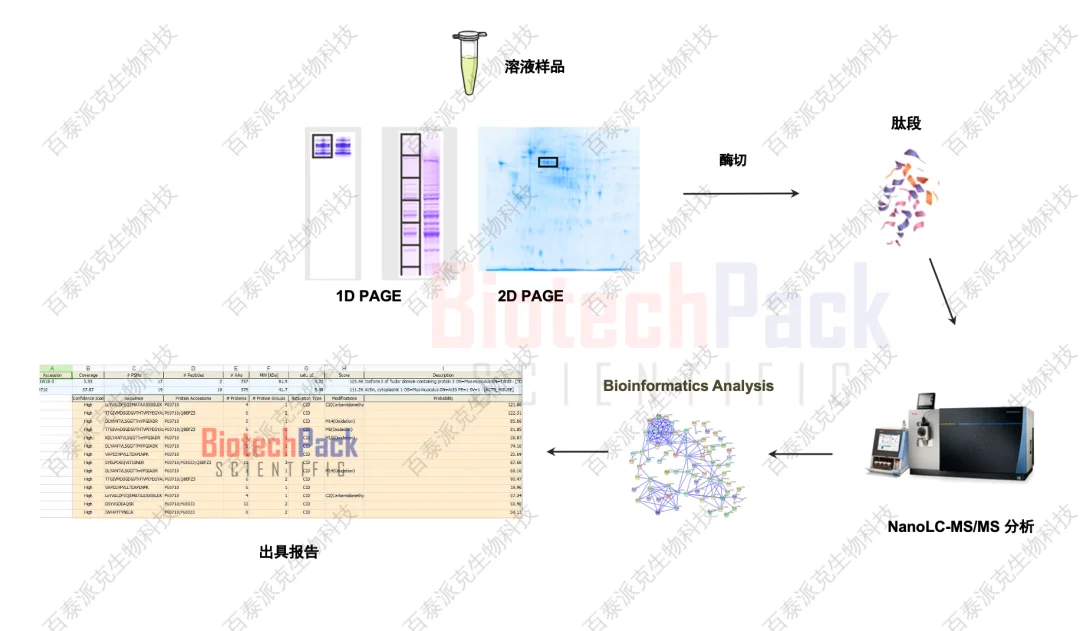
Figure 1
Biotech Co., Ltd. -- BioProductsCharacterization, High-Quality Multi-Omics Mass Spectrometry Service Provider
Related Services:
Protein Mass Spectrometry Identification
Protein Molecular Weight Determination
Protein Spot, Gel Strip, IP Sample Protein Identification
Peptide Mass Spectrometry Identification
Membrane Protein Identification Services
Pull-down Target Protein Mass Spectrometry Identification
Protein-Protein Interaction Mass Spectrometry Analysis
Post-Translational Modification Proteomics Analysis
Protein N/C-Terminal Sequencing
Comprehensive Protein Analysis
How to order?




