






Innovative Applications of Proteomics: From Biomedical to Food Safety
Proteins are fundamental components within biological organisms and play a critical role in regulating life activities. Understanding the structure, function, and interactions of proteins is crucial for biomedical research and food safety. Protein mass spectrometry, as an efficient, sensitive, and accurate technology, unveils the mysteries of the protein world and showcases innovative applications in various fields. This article provides a detailed introduction to the innovative applications of protein mass spectrometry in the fields of biomedical research and food safety, including its contributions to disease diagnosis, drug development, and personalized therapy, as well as how it ensures food safety and quality.
1.Applications of Protein Mass Spectrometry in Biomedical Research
1.1 Development of Proteomics
Proteomics is the study of the composition, structure, function, and interactions of all proteins within an organism. As the core technology of proteomics, protein mass spectrometry has become an important tool in biomedical research. Through mass spectrometry, the components in protein samples can be identified and quantified, and their changes under different physiological and pathological states can be studied.
1.2 Application of Protein Mass Spectrometry in Disease Diagnosis
Protein mass spectrometry plays an important role in disease diagnosis. By analyzing the protein spectra in blood, urine, or tissue samples, potential biomarkers can be discovered to aid in the early diagnosis of diseases such as cancer, cardiovascular diseases, and neurodegenerative diseases. Additionally, protein mass spectrometry can be used to monitor disease progression and predict treatment outcomes, providing valuable information for clinical decision-making.
1.3 Application of Protein Mass Spectrometry in Drug Development
Drug development is a complex task, and protein mass spectrometry plays an important role in it. It can be used for the identification and validation of drug targets, helping scientists understand the interaction mechanisms between drugs and proteins. Moreover, protein mass spectrometry can evaluate drug metabolic pathways, drug distribution, and identify drug-metabolite products, supporting drug optimization and rational use.
1.4 Application of Protein Mass Spectrometry in Personalized Therapy
Personalized therapy is a method of selecting the best treatment plan based on an individual's genetic information and biomarkers. Protein mass spectrometry can be used to identify the proteomic characteristics of individuals, helping determine the most suitable treatment method for patients. By understanding the proteomic characteristics of patients, it is possible to predict drug efficacy and adverse reactions, thereby achieving the goal of personalized therapy.
2.Applications of Protein Mass Spectrometry in Food Safety
2.1 Detection of Harmful Substances in Food
Protein mass spectrometry can be used to detect harmful substances in food, such as heavy metals, pesticide residues, and biological toxins. By analyzing the protein spectra in food samples, the presence of harmful substances can be quickly and accurately identified and quantified, ensuring food safety and quality.
2.2 Analysis of Food Components and Nutritional Value
Proteins are one of the important nutritional components in food. Protein mass spectrometry can be used to analyze the composition, structure, and function of proteins in food, helping to understand the nutritional value and quality of food. Through protein mass spectrometry, different protein components in food can be identified and quantified, providing support for food formulation design and nutritional evaluation.
As a powerful tool, protein mass spectrometry has demonstrated innovative applications in the fields of biomedical research and food safety. Through protein mass spectrometry, we can gain a deeper understanding of protein structures and functions, revealing the mysteries of life. In biomedical research, protein mass spectrometry plays an important role in disease diagnosis, drug development, and personalized therapy. In the field of food safety, protein mass spectrometry can be used for the detection of harmful substances in food and the analysis of components, ensuring food safety and quality. The innovative applications of protein mass spectrometry provide us with more opportunities to understand organisms and food, making important contributions to scientific research and human health.
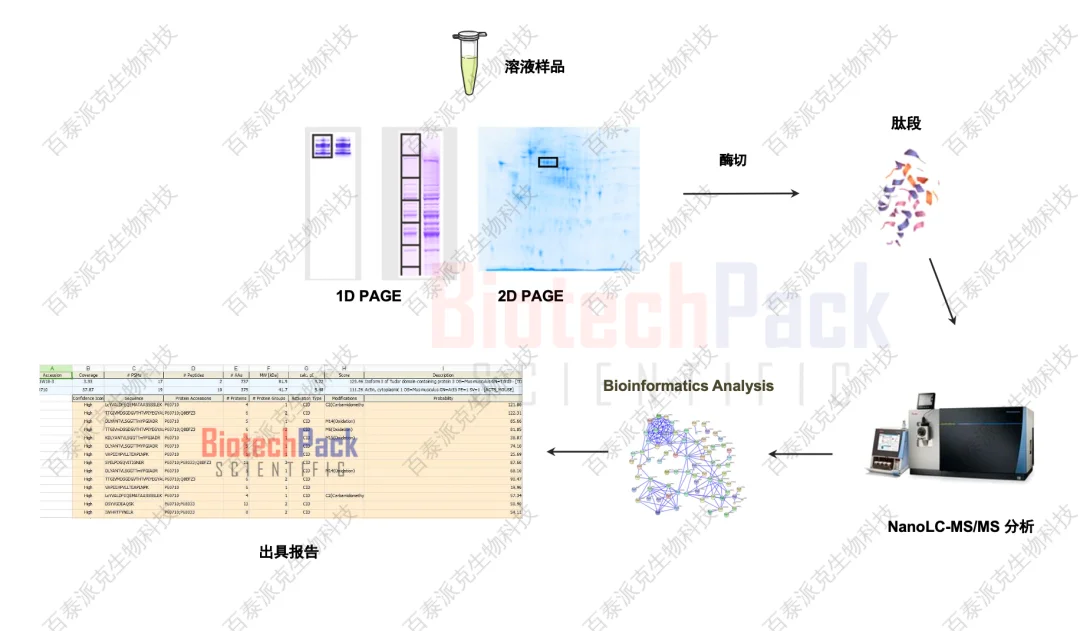
Figure 1
Biotech Biotech - BiologicalProductsCharacterization, Multigroup Biological Mass Spectrometry Testing Quality Service Provider
Related Services:
Protein Mass Spectrometry Identification
Protein Molecular Weight Determination
Protein Identification from Gel Spots, Gel Strips, and IP Samples
Peptide Mass Spectrometry Identification
Shotgun Proteomics Identification
Membrane Protein Identification Service
Pull-down Target Protein Mass Spectrometry Identification
Protein-Protein Interaction Mass Spectrometry Analysis
Post-Translational Modification Proteomics Analysis
Protein N/C Terminal Sequencing
Comprehensive Protein Analysis
How to order?




