






Application and Advantages of iTRAQ Labeling in Proteomics Research
Proteomics research is an important means of exploring the functions and interactions of proteins within organisms. In this field, the iTRAQ (Isobaric Tags for Relative and Absolute Quantification) labeling technology, as an efficient, accurate, and high-throughput quantitative method, provides researchers with a powerful tool. This article will introduce the iTRAQ labeling technology in detail and discuss its applications and advantages in proteomics research.
Principle of iTRAQ Labeling Technology
1.1 Chemical Structure and Labeling Method:
The iTRAQ labeling reagent consists of a group of labels with similar structures but different masses, which react with peptides in the sample to generate labeled peptides. Through mass spectrometry analysis, these labeled peptides can be identified and quantified, resulting in quantitative comparisons.
1.2 Relative Quantification and Absolute Quantification:
iTRAQ labeling technology can achieve both relative and absolute quantification analysis. Relative quantification determines the changes in the relative abundance of proteins in different samples by comparing the signal intensity of labeled ions of specific peptides. Absolute quantification uses external standards to calculate the absolute abundance of peptides in the sample.
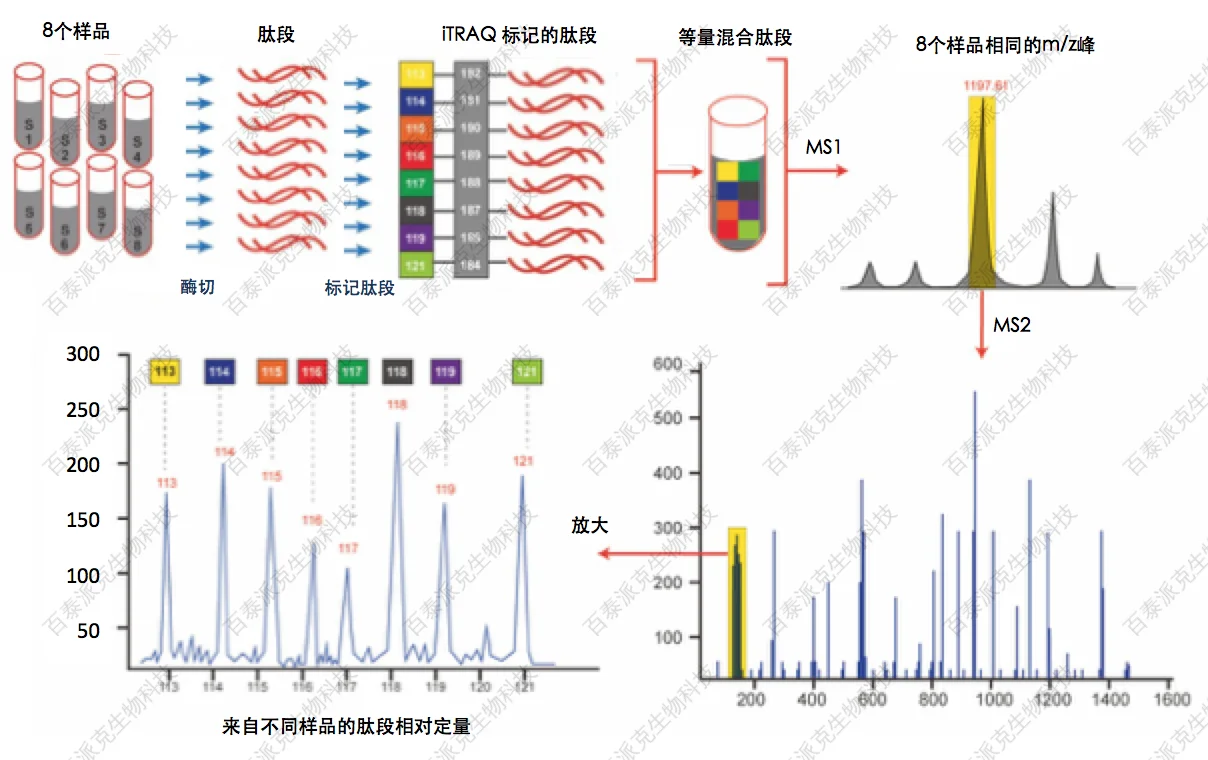
Figure 1
Technical Advantages of iTRAQ Labeling Technology
2.1 High-Throughput Quantification:
iTRAQ labeling technology can simultaneously analyze multiple samples, achieving high-throughput quantitative analysis. This allows researchers to compare protein expression differences in different samples under the same experimental conditions, improving research efficiency.
2.2 Quantitative Accuracy:
iTRAQ labeling technology, combined with mass spectrometry analysis, offers high sensitivity and accuracy. By comparing the relative intensity of different labeled ions, accurate relative and absolute quantification analysis can be achieved, revealing quantitative differences in proteins within samples.
Application Cases of iTRAQ Labeling Technology in Proteomics Research
3.1 Multi-Sample Comparison:
iTRAQ labeling technology can be used for quantitative comparison between multiple samples, revealing changes in protein expression under different conditions. For example, comparing the differences in protein expression between disease and normal samples helps to understand disease mechanisms and identify new therapeutic targets.
3.2 Time-Series Analysis:
iTRAQ labeling technology can also be used for quantitative analysis of proteins in a time series, revealing dynamic changes in protein expression. This method can track changes in protein expression during development or drug treatment, further understanding the regulatory mechanisms of protein functions.
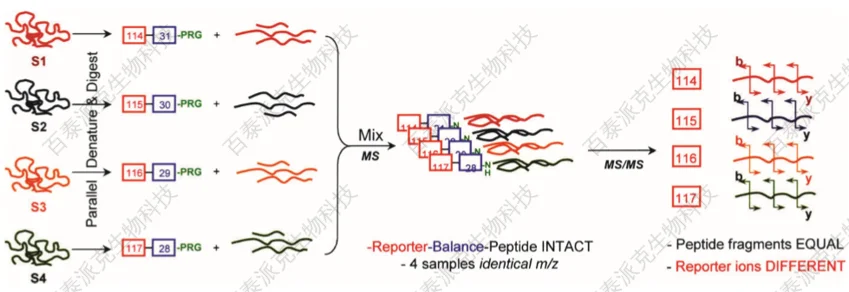
Figure 2
Future Prospects and Challenges
iTRAQ labeling technology has broad application prospects in proteomics research, but it also faces challenges such as the complexity of data processing and interpretation, the need for standardization, and difficulties in technical promotion. Future development requires continuous improvement and innovation to enhance the sensitivity, accuracy, and reliability of iTRAQ labeling technology.
As an efficient, accurate, and high-throughput quantitative method, iTRAQ labeling technology has significant applications and advantages in proteomics research. By elucidating its principles, technical advantages, and application cases, we can see the importance and potential of iTRAQ labeling technology in proteomics research. It provides an important tool and method for revealing quantitative changes, functions, and interactions in proteomics.
BioPark Biotechnology--A quality service provider for bioproduct characterization and multi-omics mass spectrometry detection.
Related Services:
Label-based Protein Quantification Technologies - iTRAQ, TMT, SILAC
Quantitative Proteome Analysis
4D Proteomics
Label-Free Quantitative Proteome Analysis
TMT/iTRAQ/MultiNotch Quantitative Proteomics Analysis
TMT-based Proteomics Analysis
SILAC/Dimethyl Labeling-Based Quantitative Proteome Analysis
SWATH Quantitative Proteomics Services
DIA Quantitative Proteomics
2D-DIGE Quantitative Proteomics
Targeted Proteomics
MRM/PRM Quantitative Proteomics Analysis
Absolute Quantification Analysis (AQUA)
Post-Translational Modification Proteome Analysis
Proteomics Bioinformatics Analysis
How to order?




