






What are the research methods and techniques for exploring the proteome?
Proteomics, as a discipline that studies the composition, structure, function, and interactions of all proteins within a biological entity, involves numerous research methods and techniques. These methods and techniques play a crucial role in proteomics research, helping us to gain a deeper understanding of the properties and functions of proteins. This article will provide a detailed introduction to the commonly used methods and techniques in proteomics research, exploring research approaches for the proteome, and revealing the significance of proteomics in the field of biopharmaceuticals.
I. Methods for Protein Separation and Purification:
1. Gel Electrophoresis:
Gel electrophoresis is a commonly used protein separation method, including polyacrylamide gel electrophoresis (PAGE), two-dimensional gel electrophoresis, etc. Gel electrophoresis can separate proteins according to their molecular weight or isoelectric point, providing a basis for subsequent analysis and identification.
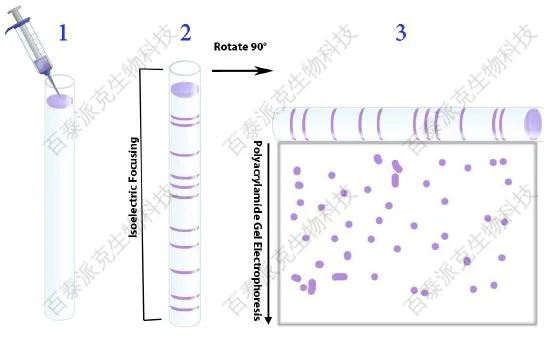
Figure 1
2. Liquid Chromatography:
Liquid chromatography is a commonly used protein purification method, including ion exchange chromatography, affinity chromatography, reverse-phase chromatography, etc. Liquid chromatography can selectively separate and enrich target proteins based on their characteristics.
II. Methods for Protein Identification and Quantification:
1. Mass Spectrometry:
Mass spectrometry is a commonly used analytical technique in proteomics research, including mass spectrometry analysis, tandem mass spectrometry, etc. By measuring with a mass spectrometer, information about the mass and structure of proteins can be obtained, enabling protein identification and quantification.
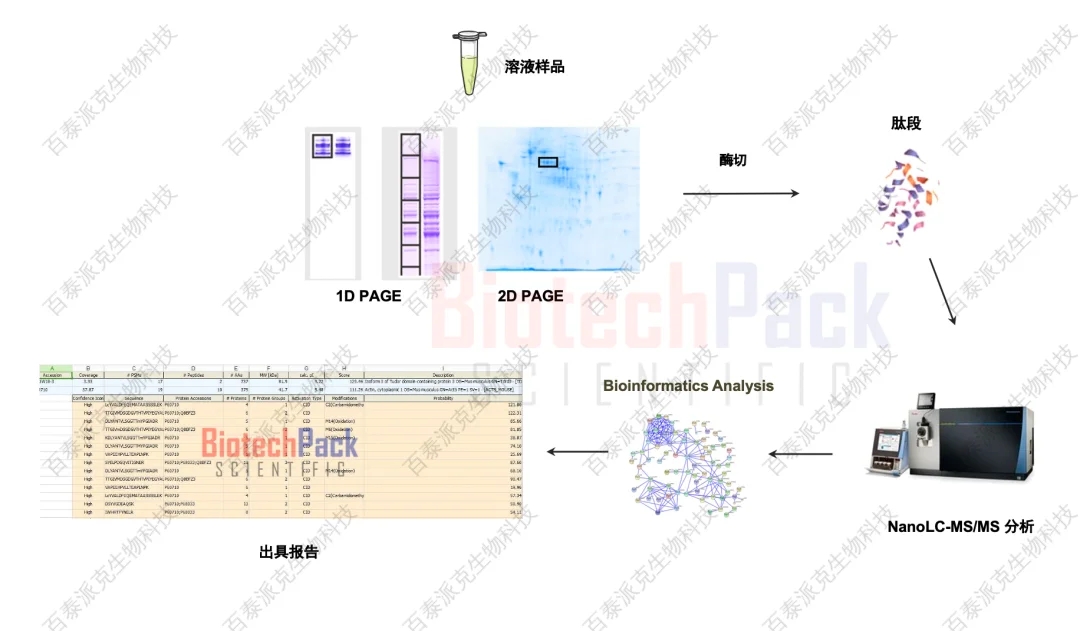
Figure 2
2. Immunoassays:
Immunoassays are a common method for protein quantification, including enzyme-linked immunosorbent assay (ELISA), immunoblotting, etc. By binding to specific antibodies, the content of target proteins can be measured.
III. Methods for Protein Function Analysis:
1. Protein Interaction Network Analysis:
Protein interaction network analysis is an important means of studying protein interactions. Through proteomics techniques, protein interaction networks can be constructed to reveal the interaction relationships between proteins, thereby studying protein functions and regulatory mechanisms.
2. Site of Modification Analysis:
Protein modifications have a significant impact on their functions. Proteomics techniques can help identify and quantify sites of protein modifications, such as phosphorylation, acetylation, methylation, etc., thereby revealing the roles and regulatory mechanisms of these modifications in protein functions.
IV. Data Analysis and Bioinformatics in Proteomics:
1. Data Analysis:
Proteomics research generates a large amount of data that needs to be organized, analyzed, and interpreted. Statistical methods, bioinformatics tools, and software can help process and interpret proteomics data, uncovering potential biological significance.
BiotechPack, A Biopharmaceutical Characterization and Multi-Omics Mass Spectrometry (MS) Services Provider
Proteomics databases collect and organize vast amounts of protein information, including sequences, structures, functions, etc. By comparing and analyzing with databases, a more in-depth study of protein characteristics and functions can be conducted.
The continuous development of research methods and techniques in proteomics provides us with abundant means and tools to explore the proteome in depth. Through methods of protein separation and purification, identification and quantification, as well as functional analysis and data analysis, we can reveal the characteristics, functions, and interaction networks of proteins, providing important scientific evidence for biopharmaceutical research and development. The development of proteomics also relies on the support of bioinformatics and the construction of proteomics databases. With the continuous advancement of technology and the continuous improvement of methods, proteomics research will play a more important role in the field of biomedicine.
Biotecan Biosciences--BiologicalProductsCharacterization, a high-quality service provider for multi-omics biomass spectrometry detection
Related Services:
Quantitative Proteome Analysis
Targeted Proteomics
Post-Translational Modification Proteome Analysis
4D Proteomics
Protein Mass Spectrometry Identification
Shotgun Protein Identification
Label-Free Quantitative Proteome Analysis
Label-Based Protein Quantification Techniques - iTRAQ, TMT, SILAC
MRM/PRM Quantitative Proteomics Analysis
Absolute Quantification Analysis (AQUA)
DIA Quantitative Proteomics
SWATH Quantitative Proteomics Services
Bioinformatics Analysis in Proteomics
How to order?




