






Absolute Quantification of Proteomes: What Advanced Techniques Are Used for Quantitative Analysis?
One important direction in proteomics research is the quantitative analysis of proteins. Traditional relative quantification methods provide information about the relative abundance of proteins but cannot accurately measure the absolute abundance of proteins. To overcome this limitation, researchers have developed many advanced techniques for the absolute quantification of proteomes. This article will detail the advanced techniques commonly used in proteomics research for absolute quantification, revealing the latest advancements and applications in protein quantification for readers.
I. Isotope Labeling Quantification Method:
1. Stable Isotope Labeling with Amino Acids in Cell Culture (SILAC):
Achieves protein quantification by using isotopically labeled amino acids in cell culture.
2. Isobaric Tags for Relative and Absolute Quantitation (iTRAQ):
Uses isotopically labeled compounds to label protein samples, enabling absolute quantification of proteins through mass spectrometry.
II. Parallel Reaction Monitoring Quantification Method:
1. Selected Reaction Monitoring (SRM):
Selectively monitors specific peptides through mass spectrometry to achieve absolute quantification of proteins.
2. Parallel Reaction Monitoring (PRM):
Similar to SRM, it monitors multiple specific peptides simultaneously through mass spectrometry for absolute quantification of proteins.
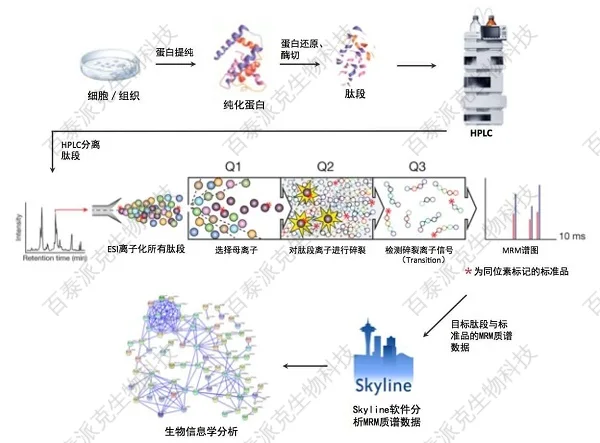
Figure 1
III. Protein Abundance Calculation Method:
1. Top3 Method:
Estimates the relative and absolute abundance of proteins based on the peptide signals of the top three peaks in mass spectrometry analysis.
2. Protein Abundance Index (PAI):
Estimates the relative and absolute abundance of proteins by using the ratio of observed spectral counts to theoretical spectral counts.
BiotechPack, A Biopharmaceutical Characterization and Multi-Omics Mass Spectrometry (MS) Services Provider
Digital PCR (dPCR): Achieves absolute quantification of DNA by partitioning DNA samples into many small reaction volumes.
V. Considerations for Selecting Suitable Techniques:
1. Sample Nature: Different types of samples may require different quantification methods, such as cell culture supernatants, tissue samples, or body fluid samples.
2. Research Purpose: Choose appropriate quantification methods based on the research objectives, such as protein identification, quantification, or protein interaction studies.
3. Technical Conditions: Consider the laboratory equipment and technical proficiency when selecting suitable techniques for absolute protein quantification.
Absolute quantification of proteomes holds significant importance in biopharmaceutical research. As technology continues to advance, techniques such as isotope labeling quantification, parallel reaction monitoring quantification, protein abundance calculation, and parallel reaction DNA quantification provide effective means for absolute quantification of proteomes. When selecting an appropriate quantification technique, it is essential to consider factors such as sample nature, research purpose, and experimental conditions. The application of these advanced technologies will provide more precise and reliable quantitative data for proteomics research, promoting progress in biopharmaceutical development and clinical applications.
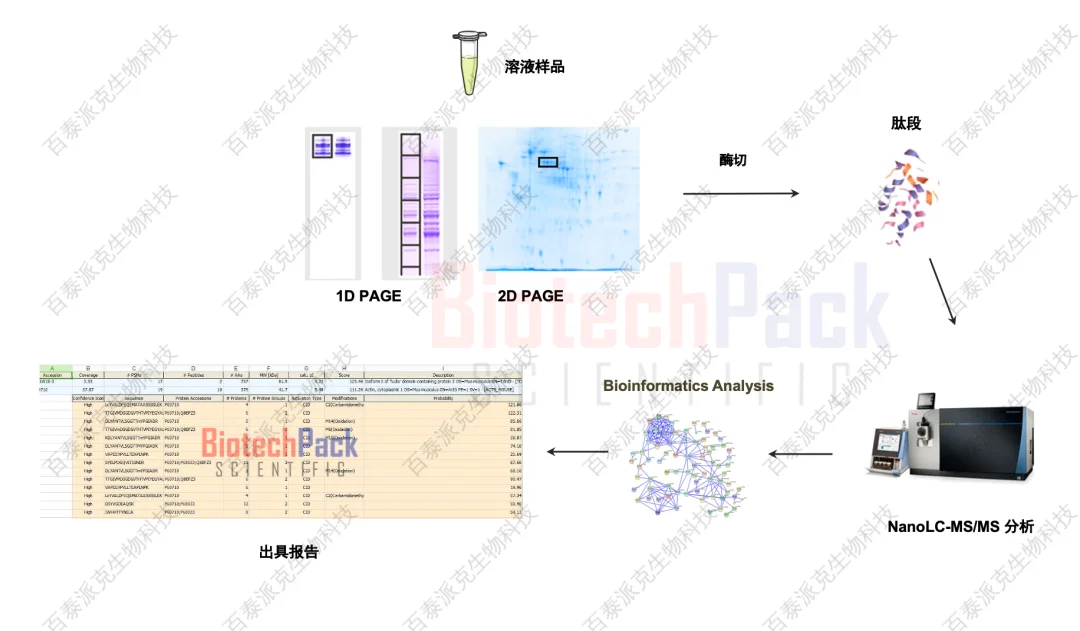
Figure 2
Biotech Company--BiologicalProductsCharacterization, a premium service provider for multi-omics mass spectrometry analysis
Related Services:
Quantitative Proteomics Analysis
Targeted Proteomics
Post-Translational Modification Proteomics Analysis
4D Proteomics
Protein Mass Spectrometry Identification
Shotgun Proteomics for Protein Identification
Label-Free Quantitative Proteomics Analysis
Label-Based Protein Quantification Techniques - iTRAQ, TMT, SILAC
MRM/PRM Quantitative Proteomics Analysis
Absolute Quantification Analysis (AQUA)
DIA Quantitative Proteomics
SWATH Quantitative Proteomics Service
Proteomics Bioinformatics Analysis
How to order?




