






Quantitative Analysis Based on 4D-DIA Proteomics: Accelerating Drug Development and Clinical Diagnosis
With the rapid development of biotechnology, proteomics, as an important means of studying the function and regulation of proteins in organisms, is receiving increasing attention. In recent years, a technique called 4D-DIA proteomics has emerged in this field, bringing significant advancements to the quantitative analysis of proteomics. This article will provide a detailed introduction to this emerging technology and explore its important role in accelerating drug development and clinical diagnosis processes.
First, let's understand what proteomics is. Proteomics is the study of the composition, structure, function, and interactions of all proteins within a biological organism. Through proteomics technologies, scientists can perform high-throughput identification and quantification of proteins, revealing their crucial roles in living organisms.
4D-DIA proteomics is an innovative technology in the field of proteomics, combining 4D (time, space, expression, and metabolism) information with data-independent acquisition mass spectrometry (DIA-MS) to achieve highly accurate quantitative protein analysis. Compared to traditional proteomics technologies, 4D-DIA proteomics offers higher sensitivity, a broader dynamic range, and better quantitative accuracy, enabling researchers to gain a more comprehensive understanding of protein expression and regulation patterns.
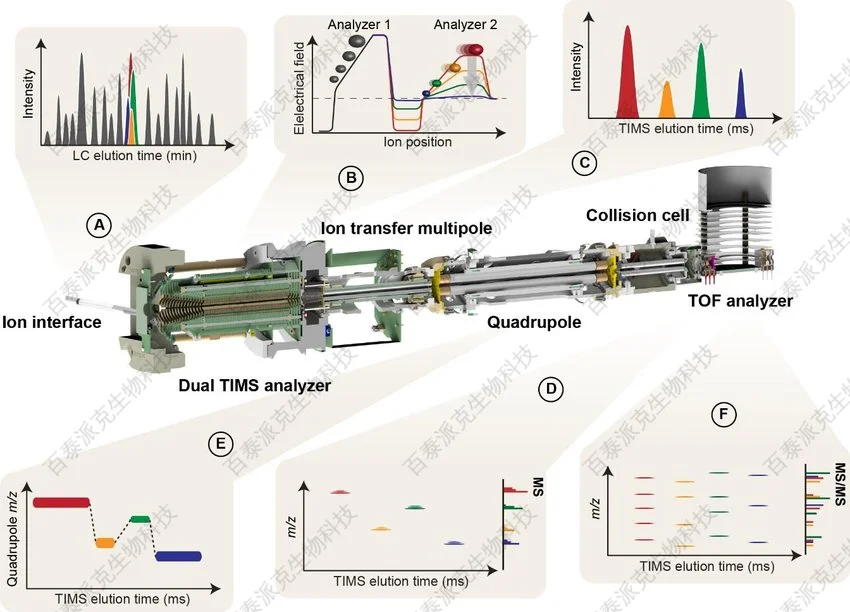
Figure 1
I. Limitations of Traditional Proteomics Technologies
Traditional proteomics technologies, such as data-dependent acquisition mass spectrometry (DIA-MS) or data-dependent ion trap mass spectrometry (DIA-PRM), have certain limitations. These methods only fragment pre-selected peptides, potentially overlooking some low-abundance peptides, and have restrictions on quantitative accuracy as well.
II. Principles and Advantages of 4D-DIA Proteomics Technology
4D-DIA proteomics technology combines 4D information with data-independent acquisition mass spectrometry. It utilizes the SWATH-MS approach, dividing the mass spectrometry range into multiple windows and conducting full scans in each window to capture more peptide information. This design can enhance peptide capture rates.
4D-DIA proteomics technology offers several advantages. Firstly, it has higher sensitivity, capable of detecting low-abundance proteins and providing a broader dynamic range. Secondly, 4D-DIA proteomics offers better quantitative accuracy, allowing the accurate measurement of protein expression differences between different samples. Additionally, due to the use of full-scan methods, 4D-DIA proteomics enables retrospective data analysis, improving data reproducibility and reusability.
III. Applications of 4D-DIA Proteomics in Drug Development
In drug development, 4D-DIA proteomics provides strong support for the discovery and development of new drugs. By integrating drug mechanism studies with proteomic data analysis, researchers can more accurately assess drug efficacy and safety. Furthermore, 4D-DIA proteomics can aid in identifying new drug targets, accelerating the drug development process, and providing a basis for personalized medicine.
IV. Applications of 4D-DIA Proteomics in Clinical Diagnosis
In the field of clinical diagnosis, 4D-DIA proteomics also holds great potential. By analyzing proteomic data from patient samples, doctors can obtain more accurate diagnostic results, guiding the selection of clinical treatment plans. Additionally, 4D-DIA proteomics can help identify new biomarkers, enhancing early disease detection rates and supporting the realization of precision medicine.
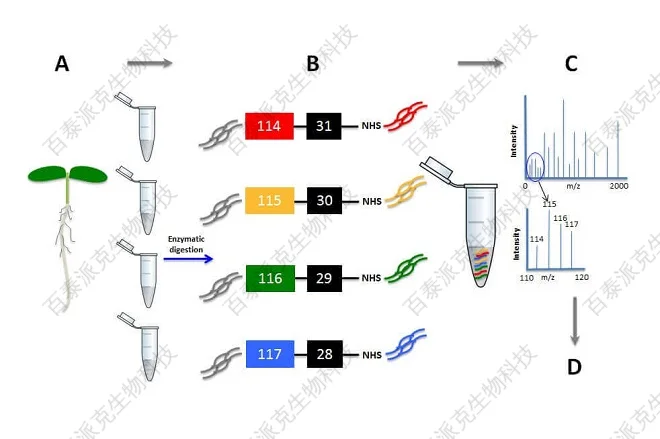
Figure 2
The quantitative analysis technology based on 4D-DIA proteomics plays a vital role in drug development and clinical diagnosis. It provides more comprehensive and accurate protein quantification information, supporting scientific research and medical applications. With the continuous development and refinement of 4D-DIA proteomics technology, it will play an increasingly important role in the field of biopharmaceuticals, making a greater contribution to human health.
Biotech-Pac BioTech--Biological product characterization, high-quality service provider of multi-omics mass spectrometry detection
Related Services:
Parallel Reaction Monitoring (PRM) Services
Absolute Quantitation Analysis (AQUA)
Quantitative Proteome Analysis
Post-Translational Modification Proteome Analysis
Label-Free Quantitative Proteome Analysis
Label-based Protein Quantification Techniques - iTRAQ, TMT, SILAC
TMT/iTRAQ/MultiNotch Quantitative Proteomic Analysis
SWATH Quantitative Proteomics Services
2D-DIGE Quantitative Proteomics
How to order?




