






4D DIA Proteomics: A Comprehensive Introduction to Proteomics Quantification and Differential Analysis
1. Introduction
Proteomics is the scientific field that studies the composition, structure, and function of all proteins in an organism. With continuous technological advancements, quantitative and differential analysis in proteomics has become an important research direction in the biopharmaceutical field. Among these, 4D DIA proteomics, as an emerging technological approach, features comprehensive, high-throughput, and high-sensitivity characteristics, and is widely used in biopharmaceutical research.
2. First Dimension: Sample Preprocessing
Before conducting 4D DIA proteomics analysis, sample preprocessing is required. This step includes extraction, protein lysis, and digestion. The purpose of sample preprocessing is to convert complex biological samples into protein mixtures that are easy to analyze.
3. Second Dimension: Protein Separation
Protein separation is one of the key steps in 4D DIA proteomics. Common methods for protein separation include gel electrophoresis and liquid chromatography. Through protein separation, complex protein mixtures can be broken down into several simpler components, providing a foundation for subsequent quantitative and differential analysis.
4. Third Dimension: Mass Spectrometry Analysis
Mass spectrometry analysis is the core technology of 4D DIA proteomics. By analyzing protein samples with mass spectrometry instruments, information on the mass and structure of proteins can be obtained. In 4D DIA proteomics, commonly used mass spectrometry methods include liquid chromatography-mass spectrometry (LC-MS/MS) and high-resolution mass spectrometry. These methods enable high-throughput protein quantification and differential analysis.
5. Fourth Dimension: Data Analysis
Data analysis is an indispensable part of 4D DIA proteomics. Through processing and analyzing mass spectrometry data, quantitative information on proteins and lists of differentially expressed proteins can be obtained. Common data analysis methods include peak identification, peak matching, quantitative calculation, and differential analysis. These methods help researchers discover potential biomarkers in biological samples, providing important references for biopharmaceutical development.
6. Application Prospects
As a comprehensive, high-throughput, and high-sensitivity technological approach, 4D DIA proteomics has broad application prospects. In biopharmaceutical research, it can be used for drug target discovery and validation, drug dosage optimization, and drug efficacy evaluation. Additionally, 4D DIA proteomics can be applied to disease diagnosis and treatment research, providing significant support for personalized medicine.
6. Conclusion
As an emerging technological approach, 4D DIA proteomics offers a comprehensive, high-throughput, and high-sensitivity analysis platform for biopharmaceutical research. Through sample preprocessing, protein separation, mass spectrometry analysis, and data analysis, protein quantification and differential analysis can be achieved. In the future, 4D DIA proteomics will play an increasingly important role in biopharmaceutical research and clinical applications, contributing to the development of the biomedical field.
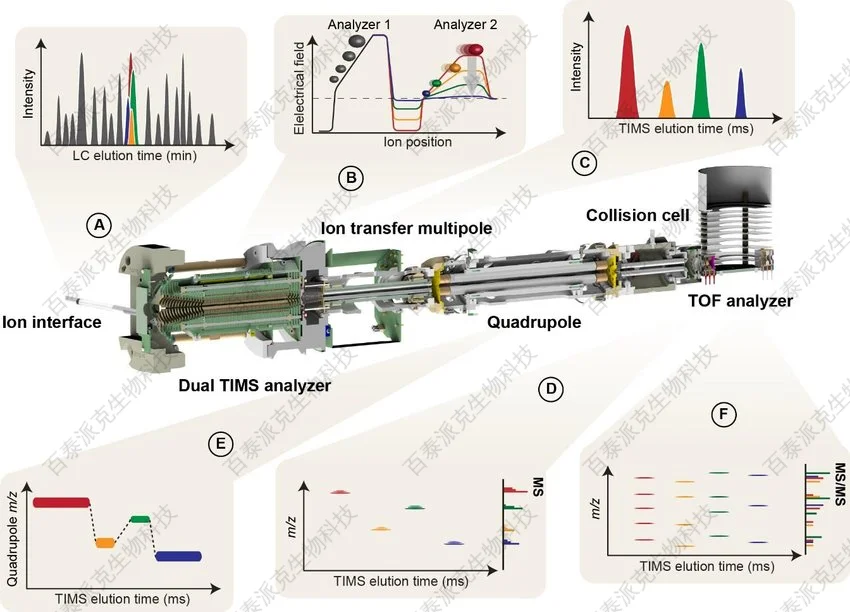
Figure 1
BiotechPack, A Biopharmaceutical Characterization and Multi-Omics Mass Spectrometry (MS) Services Provider
Related Services:
Quantitative Proteome Analysis
Label-Free Based Quantitative Proteome Analysis
Label-based Protein Quantification Techniques - iTRAQ, TMT, SILAC
MRM/PRM Quantitative Proteomics Analysis
Absolute Quantification Analysis (AQUA)
SWATH Quantitative Proteome Service
Post-translational Modification Proteome Analysis
Phosphorylation Quantitative Proteomics Research
Acetylation Quantitative Proteomics Research
Ubiquitination Quantitative Proteomics Research
Glycosylation Quantitative Proteomics Research
Methylation Quantitative Proteomics Research
How to order?




