






Advantages of DDA Proteomics Analysis Method in High-Resolution Molecular Weight Determination of Peptide Drugs
With the widespread application of peptide drugs in the biopharmaceutical field, accurately determining the molecular weight of peptide drugs has become an important task. In this field, the Data-Dependent Acquisition (DDA) proteomics analysis method is emerging as an efficient and reliable technology with distinct advantages. This article will detail the DDA proteomics analysis method and explore its applications and technical advantages in peptide drug development.
Principle of DDA Proteomics Analysis Method
1.1 Data-Dependent Acquisition:
The DDA proteomics analysis method is based on mass spectrometry, where data-dependent acquisition selects and prioritizes precursor ions with high ion intensity for fragmentation, thereby obtaining more accurate and comprehensive mass spectrometry data. This method effectively enhances the sensitivity and specificity of peptide drug analysis.
1.2 Fragment Spectrum Library Search:
The DDA proteomics analysis method compares the fragment spectra with known protein libraries for precise identification and quantitative analysis, determining the molecular weight and composition of peptide drugs. This method helps researchers accurately understand the structure and sequence information of peptide drugs.
Application Cases of DDA Proteomics Analysis Method
2.1 Molecular Weight Determination of Peptide Drugs:
The DDA proteomics analysis method offers high-resolution and high-accuracy advantages in determining the molecular weight of peptide drugs. By comparing with known protein databases, it can accurately determine the molecular weight and sequence information of peptide drugs, providing important basis for drug development and quality control. This is crucial for ensuring the consistency and quality of peptide drugs.
2.2 Quality Analysis of Peptide Drugs:
The DDA proteomics analysis method can also be used for quality analysis of peptide drugs, including the detection and quantitative analysis of post-translational modifications. By analyzing the sites and types of post-translational modifications in peptide drugs, the quality and stability of the drugs can be assessed. This is of great importance for ensuring the consistency and safety of peptide drugs.
Technical Advantages of DDA Proteomics Analysis Method
3.1 High-Resolution Analytical Capability:
The DDA proteomics analysis method, with the high resolution of mass spectrometry instruments, provides more accurate and comprehensive mass spectrometry data, enabling high-resolution molecular weight determination and identification of peptide drugs. This aids in accurately assessing the purity and composition of peptide drugs.
3.2 Quantitative Accuracy and Reproducibility:
Through data-dependent acquisition, the DDA proteomics analysis method obtains accurate and reproducible mass spectrometry data, enabling quantitative analysis of peptide drugs. This is crucial for ensuring dose consistency and efficacy evaluation of peptide drugs.
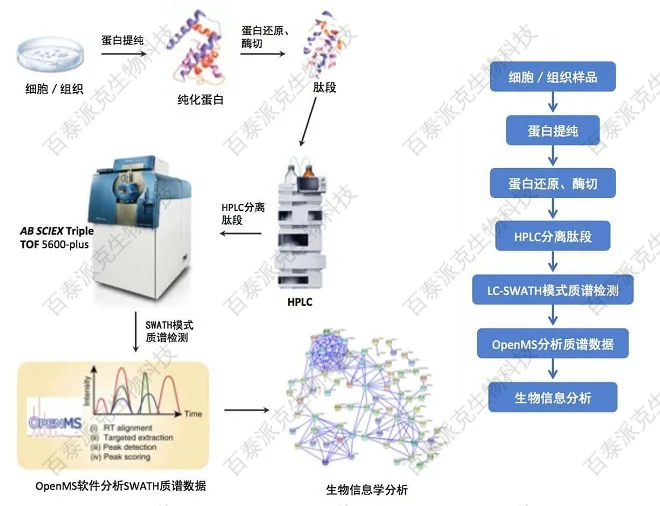
Figure 1
Future Prospects and Challenges
The DDA proteomics analysis method, as a powerful tool, holds significant application potential in peptide drug development. However, it still faces challenges such as the complexity of data processing and interpretation, and the standardization and promotion of technology. Future development requires continuous improvement and innovation to better apply the DDA proteomics analysis method in peptide drug development.
The DDA proteomics analysis method demonstrates distinct advantages in the high-resolution molecular weight determination of peptide drugs. Through the introduction of its principles and application cases, we can see that the DDA proteomics analysis method has technical advantages such as high-resolution analytical capability, quantitative accuracy, and reproducibility. Accurate molecular weight determination of peptide drugs provides important support for drug development and quality control.
Biotechnology Characterization by Biotai Pack -- High-Quality Service Provider of Multigroup Biomass Mass Spectrometry Testing
Related Services:
4D Proteomics
Quantitative Proteomics Analysis
Label-Free Based Quantitative Proteomics Analysis
Label-Based Protein Quantification Techniques - iTRAQ, TMT, SILAC
MRM/PRM Quantitative Proteomics Analysis
Absolute Quantification Analysis (AQUA)
SWATH Quantitative Proteomics Service
Post-Translational Modification Proteomics Analysis
Phosphorylation Quantitative Proteomics Research
Acetylation Quantitative Proteomics Research
Ubiquitination Quantitative Proteomics Research
Glycosylation Quantitative Proteomics Research
Methylation Quantitative Proteomics Research
How to order?




