






Comparison of Quantitative Protein Detection Methods: Choosing the Most Suitable Technical Solution
Proteins are the most fundamental functional molecules in living organisms. Accurate measurement of protein expression levels is crucial for understanding cellular functions, disease mechanisms, and drug development. In the field of protein quantification, selecting the appropriate technical approach is essential for obtaining reliable results. This article will compare different quantitative protein detection methods to help readers choose the most suitable technique.
1. Mass Spectrometry Quantification Methods
Mass spectrometry quantification is a high-throughput, comprehensive protein quantification method. Common techniques include qualitative mass spectrometry, quantitative mass spectrometry, and metabolic labeling. Mass spectrometry quantification infers protein expression levels by measuring the signal intensity and abundance of protein peptides. It offers high sensitivity, accuracy, and throughput, making it suitable for complex samples and large-scale proteomics research. Mass spectrometry quantification can provide rich information, such as protein quantitative comparison, modification states, and subcellular localization. However, it requires specialized equipment and data analysis techniques, which may pose a certain barrier for beginners.
2. Immunodetection Methods
Immunodetection is a commonly used quantitative protein detection method, including enzyme-linked immunosorbent assay (ELISA), immunohistochemistry, and Western blotting. These methods are based on the specific binding of antibodies to target proteins and measure the signal intensity produced by the immune reaction to quantify the expression levels of target proteins. Immunodetection methods offer high sensitivity and specificity and are relatively simple to operate, suitable for studies with small sample sizes. They are widely used in clinical diagnostics and biological research. However, immunodetection methods rely on the availability of specific antibodies, which may limit their use for rare proteins, and require the establishment of standard curves and optimization of experimental conditions.
3. Gene Expression Analysis Methods
Gene expression analysis is an indirect method for inferring protein expression levels by measuring the transcription levels of genes. Common methods include real-time quantitative PCR and RNA sequencing. Gene expression analysis methods have high sensitivity and a broad range of applications, providing insights into the correlation between genes and proteins. They play an important role in basic research and disease diagnosis. However, gene expression analysis methods cannot directly measure protein expression levels and are affected by post-transcriptional modifications.
4. Selecting the Most Suitable Technical Approach
Selecting the most suitable technical approach requires consideration of multiple factors, including sample type, research objectives, experimental conditions, and budget. First, determine the range of proteins or proteomes that need to be measured based on the research objectives. If a comprehensive understanding of protein expression levels and modification states is required, mass spectrometry quantification is an ideal choice. Next, evaluate the feasibility and applicability of mass spectrometry quantification based on the characteristics of the sample and available equipment resources. If the research objective is to measure the expression level of specific proteins with reliable antibodies available, immunodetection methods may be more suitable. Finally, consider the feasibility and applicability of gene expression analysis methods based on experimental conditions and budget.
Quantitative protein detection is an important means for understanding cellular functions, disease mechanisms, and drug development. Different quantitative protein detection methods have their own advantages and disadvantages. Mass spectrometry quantification offers high throughput and comprehensiveness, suitable for complex samples and large-scale research but requires specialized equipment and data analysis techniques. Immunodetection methods are simple to operate, offer high sensitivity and specificity, and are suitable for quantifying specific proteins but are limited by antibody availability and experimental conditions. Gene expression analysis methods can provide insights into the correlation between genes and proteins but can only indirectly infer protein expression levels and are affected by post-transcriptional modifications. When choosing the most suitable technical approach, comprehensive consideration of research objectives, sample characteristics, and available resources is necessary to obtain accurate and reliable quantitative results.
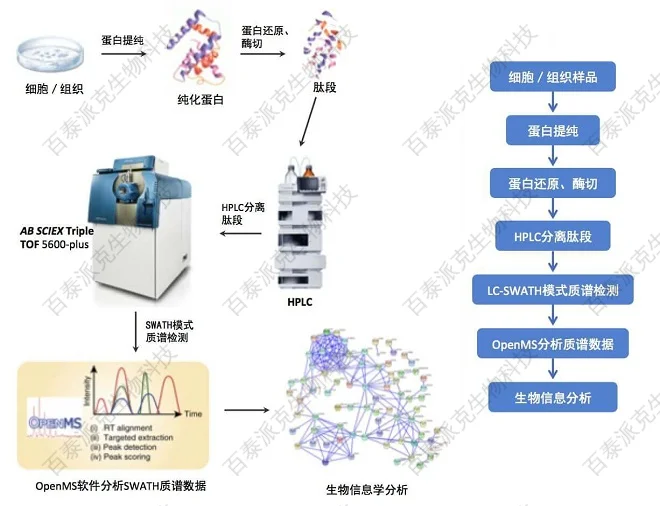
Figure 1
Bio-Techne Corporation - BiotechnologyProductsCharacterization, a high-quality service provider for multi-group biomolecule mass spectrometry detection
Related services:
Quantitative Proteome Analysis
4D Proteomics
SWATH Quantitative Proteomics Service
DIA-PRM Proteomics
PCT-DIA Proteomics
Label-Free Quantitative Proteome Analysis
Label-Based Protein Quantification Techniques - iTRAQ, TMT, SILAC
TMT/iTRAQ/MultiNotch Quantitative Proteomics Analysis
TMT-Based Proteomics Analysis
2D-DIGE Quantitative Proteomics
Targeted Proteomics
MRM/PRM Quantitative Proteomics Analysis
Absolute Quantification Analysis (AQUA)
Post-Translational Modification Proteome Analysis
Proteomics Bioinformatics Analysis
How to order?




