






Post-translational modifications of proteins: Key to regulating biological activity
Post-translational modification (PTM) refers to the chemical modifications that occur after a protein is synthesized from mRNA. These modifications involve chemical changes to the protein molecule after protein synthesis is complete, through a series of biochemical reactions, to regulate its function, stability, location, or interactions. These modifications can occur on amino acid residues or on the overall structure of the protein. Here are some common forms of post-translational modifications:
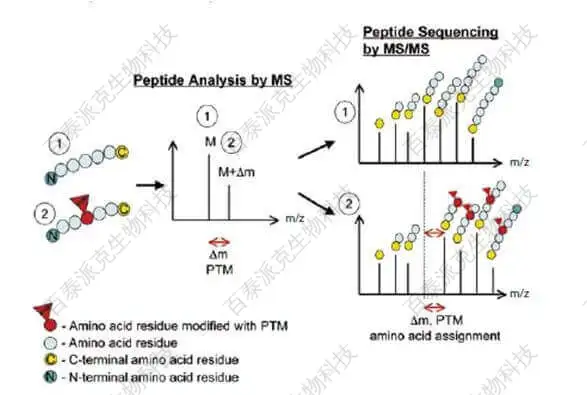
Figure 1. Illustration of methods for identifying post-translational modifications of proteins
1. Phosphorylation: This is one of the most common forms of post-translational modification, typically occurring on serine, threonine, or tyrosine residues. Phosphorylation regulates the activity of many proteins. It involves the addition of phosphate groups to specific amino acid residues, such as serine, threonine, and tyrosine. Phosphorylation can regulate protein activity, affinity, and stability.
2. Ubiquitination: Involves the attachment of ubiquitin proteins to target proteins, usually marking them for degradation.
3. Acetylation: Typically occurs at the N-terminus of proteins or on lysine residues, affecting the protein's binding to DNA or its activity.
4. Methylation: The addition of methyl groups to certain amino acid residues, such as lysine methylation. This modification can affect interactions between proteins and DNA or other proteins.
5. Glycosylation: The addition of sugar chains to proteins, which is crucial for protein stability and cellular localization.
6. Palmitoylation: Involves attaching fatty acids to proteins, typically related to the localization of proteins on the cell membrane.
7. C-terminal cleavage and acylation: After protein translation, one or more amino acids may be cleaved, or acylation modifications may occur at the C-terminus.
8. Structural modifications: Such as the formation of disulfide bonds, which are very important for the stability of the protein's three-dimensional structure.
Biotech Pac - Characterization of biologics, a premium service provider for multi-omics mass spectrometry analysis
Related services:
Quantitative phosphoproteomics research
Quantitative acetylproteomics research
Quantitative ubiquitin proteomics research
Quantitative glycoproteomics research
Identification and quantitative analysis of protein disulfide bonds
Analysis of histone post-translational modifications
Multi-pathway phosphoproteomics
Quantitative methylproteomics research
Quantitative acylproteomics research
Protein SUMOylation identification
Characterization of PTMs based on Top down approach
Protein deamidation modification analysis
How to order?




