






Bridging the Gap in the Microscopic World: Innovative Applications of Proteomics in Biopharmaceutical Research
The research and development of biopharmaceuticals is at the forefront of contemporary medical science. To ensure the quality and efficacy of biopharmaceuticals, scientists need to thoroughly understand the characteristics of drug molecules and their interaction mechanisms. Proteins, as one of the most important functional molecules in organisms, play a significant role in biopharmaceutical research. Proteomics, as a powerful analytical tool, provides us with the possibility of bridging the gap in the microscopic world.
1. Principles and Techniques of Proteomics
Proteomics is a technical approach to studying the composition, structure, and function of proteins. Among these, mass spectrometry is one of the most important methods in proteomics. Mass spectrometry works by converting protein molecules into charged ions and identifying and quantifying proteins based on their mass-to-charge ratio. Common mass spectrometry techniques include mass spectrometry analysis (MS) and tandem mass spectrometry analysis (MS/MS). The development of these techniques has enabled scientists to efficiently and accurately analyze complex protein samples.
2. Applications of Proteomics
2.1 Applications of Proteomics in Drug Development
Proteomics plays a critical role in biopharmaceutical research. By analyzing the interactions between drugs and target proteins, drug metabolism, and drug release mechanisms, scientists can evaluate the efficacy and safety of drugs. Proteomics can also aid in optimizing drug design, improving drug specificity and selectivity.
2.2 Applications of Proteomics in Biomarker Discovery
Biomarkers are molecular indicators used for diagnosing, monitoring disease progression, and evaluating therapeutic efficacy. Proteomics can help scientists discover and identify biomarkers associated with diseases. By comparing protein expression differences between healthy and diseased samples, potential markers related to specific diseases can be identified, providing a basis for early diagnosis and treatment.
2.3 Applications of Proteomics in Personalized Medicine
Personalized medicine aims to provide individualized prevention, diagnosis, and treatment plans based on a patient's genotype, phenotype, and environmental factors. Proteomics can provide information on individual protein expression and variation, supporting the realization of personalized medicine. By analyzing individual proteomic data, scientists can develop more accurate diagnostic and therapeutic strategies for patients, enhancing medical outcomes.
3. Challenges and Future Development in Proteomics
Although proteomics holds great potential in biopharmaceutical research, it also faces some challenges. For instance, the preparation and processing of complex samples, data analysis, and interpretation remain challenging. In the future, we need to further improve proteomics techniques and methods to enhance their accuracy and sensitivity. Additionally, integrating emerging technologies such as artificial intelligence and machine learning will further drive the development and application of proteomics.
Proteomics plays a significant role and has broad applications in biopharmaceutical research. By gaining a deeper understanding of protein expression and function, scientists can better comprehend the mechanisms and effects of biopharmaceuticals. However, continuous efforts are needed to overcome technical and methodological challenges, further advance the development of proteomics, and make greater contributions to biopharmaceutical research and personalized medicine.
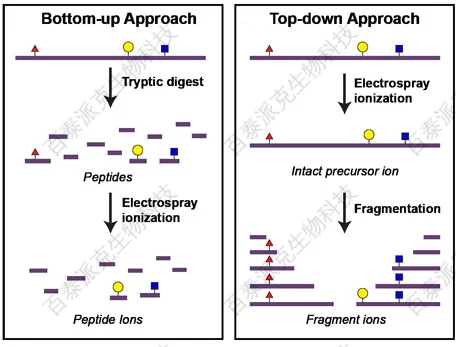
Figure 1
Biotech-Peak Biotechnology--Characterization of Bioproducts, High-Quality Services in Multi-Omics Mass Spectrometry
Related Services:
Quantitative Proteomics Analysis
Post-Translational Modification Proteomics Analysis
Protein Mass Spectrometry Identification
Shotgun Proteomics Identification
Label-Free Quantitative Proteomics Analysis
Tag-Based Protein Quantification Techniques - iTRAQ, TMT, SILAC
MRM/PRM Quantitative Proteomics Analysis
Absolute Quantification Analysis (AQUA)
How to order?




