






Circular Dichroism for Observing Protein Conformational Changes
In biology, the structure and function of proteins are closely related. Therefore, understanding and observing conformational changes in proteins is crucial for uncovering their biological functions. This article mainly discusses how to observe and analyze protein conformational changes using circular dichroism.
Circular Dichroism (CD) is a spectroscopic method primarily used to study the three-dimensional structures of biological macromolecules such as proteins and nucleic acids. Since proteins and other biological macromolecules are optically active, they can absorb left- and right-circularly polarized light differently, a phenomenon known as dichroism.
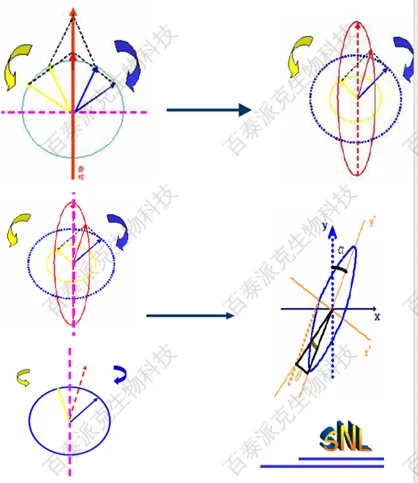
Figure 1. Circular Dichroism of Protein
1. Observation of Protein Conformational Changes
1. Spectral Acquisition:
Under certain environmental conditions, CD spectra are obtained by measuring the dichroism of proteins at different wavelengths.
2. Data Analysis:
Specialized software is used to process and analyze the collected CD spectra to obtain secondary structure information of the protein.
3. Observation of Conformational Changes:
By changing environmental conditions such as temperature, pH, and ion concentration, CD spectra are reacquired and analyzed to observe protein conformational changes.
Through the above steps, we can obtain secondary structure information of proteins under different environmental conditions and further analyze their conformational changes.
2. Advantages and Limitations
Circular dichroism, as a method for evaluating protein conformational changes, has several distinct advantages. Firstly, it is a non-invasive method that does not require any chemical modification or labeling of the sample. Secondly, it can be performed in almost all solvent environments, including water, organic solvents, and acidic or basic environments. Finally, it allows for real-time observation of secondary structure changes in samples.
However, CD also has some limitations. Firstly, CD can only provide rough information about the secondary structure of proteins and cannot obtain precise three-dimensional structural information. Secondly, since CD signals originate from all soluble proteins, analysis of complex samples may be interfered with by other components.
Overall, circular dichroism is a scientifically professional tool that provides strong support for studying protein conformational changes. In future research, we look forward to further improving its resolution and accuracy through more advanced analytical methods and technologies.
BiotechPack, A Biopharmaceutical Characterization and Multi-Omics Mass Spectrometry (MS) Services Provider
Related Services:
Protein Circular Dichroism Analysis
How to order?




