






Anion-Cation Column Purification Protein Glycosylation Detection
Since the late 1940s, Ion Exchange Chromatography (IEC) technology has been widely used in protein separation processes. To this day, ion exchange remains the most commonly used method for separating proteins, including antibodies and other large biomolecules. The principle of IEC for protein separation is based on the different net charges of protein components, which are separated by the varying electrostatic interactions between proteins and charged stationary phases. That is, based on the differences in the charged properties of proteins, protein components have different affinities on ion exchange media, and are eluted using buffers of different pH or ionic strengths, thus achieving protein separation through column chromatography.
Ion exchange can be divided into two categories: anion exchange chromatography and cation exchange chromatography, collectively known as ion exchange chromatography. In terms of elution methods, anion exchange chromatography mainly changes the ionic strength concentration of the buffer, generally using a flow-through mode, commonly used for separating most proteins and removing endotoxins, host proteins, DNA, etc.; whereas cation exchange chromatography mainly changes the pH of the buffer, usually using an adsorption mode, where positively charged target proteins are adsorbed on the ion exchange media, and negatively charged impurities flow through. It is mainly applied to proteins with an isoelectric point (PI) > 5.
Protein glycosylation, as an important post-translational modification of proteins, is widespread in mammalian cells. Its study is of great significance for the monitoring of clinical diseases and the discovery of drug targets. Compared to traditional identification techniques such as gel electrophoresis and liquid chromatography, mass spectrometry technology, which has the advantages of being efficient, sensitive, and fast, has become the main method for detecting glycosylated proteins in recent years. However, due to the heterogeneity of protein glycosylation and the interference of a large number of non-glycopeptides, it is difficult to directly detect and identify glycoproteins and glycopeptides through mass spectrometry. Therefore, obtaining a sufficient amount of glycoproteins or glycopeptides through appropriate sample pretreatment techniques is a basic prerequisite for their detection and identification. Ion exchange chromatography technology, due to its efficiency and specificity, has been widely used in the separation and purification of glycosylated proteins. Its general process includes the following steps:
•Sample Preparation: Extract total proteins from biological samples and remove impurities and nonspecifically bound proteins through appropriate pretreatment steps.
•Ion Exchange Chromatography: Load the pretreated protein samples onto an ion exchange column. Based on the charge properties of the proteins, adjust the pH and ionic strength of the elution buffer to allow specific binding between glycosylated proteins and the ion exchange agents on the chromatography column.
•Elution and Collection: Elute the proteins from the chromatography column stepwise using elution buffers of different concentrations. Choose appropriate elution conditions based on the binding strength of glycosylated proteins with the ion exchange agents. Collect the glycosylated proteins in the eluted fractions for subsequent purification and analysis.
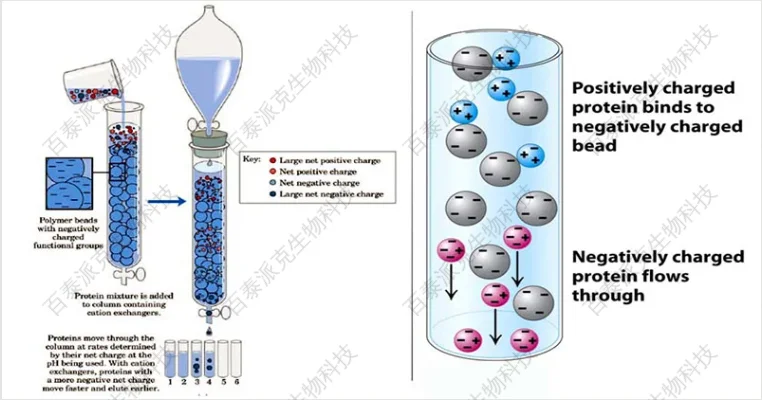
Figure 1 General process of ion exchange chromatography
Ion exchange chromatography technology, as an effective protein purification method, has played an important role in the separation and purification of glycosylated proteins. By optimizing chromatographic conditions and elution strategies, high-efficiency, high-purity separation of glycosylated proteins can be achieved. As research on glycosylated proteins continues to deepen, the importance of ion exchange chromatography technology will become more prominent, providing strong support for the structural and functional research of glycosylated proteins.
Biocytogen—Characterization of Bioproducts, High-quality Multi-omics Mass Spectrometry Detection Service Provider
Related Services:
How to order?




