






What are the methods for detecting ubiquitination levels, and what are their respective advantages and disadvantages?
With the continuous development of the biopharmaceutical field, research on protein regulation mechanisms has become increasingly important. In this process, ubiquitination level detection has become a key technology, helping scientists understand the function of the ubiquitin system and the connection between protein degradation and cellular processes. This article will introduce several commonly used ubiquitination level detection methods and discuss their respective advantages, disadvantages, and application prospects.
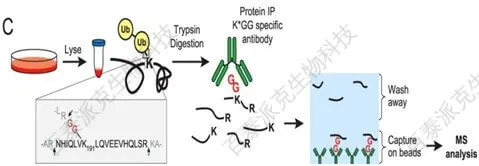
Figure 1
1.Immunoblotting (Western Blotting)
Immunoblotting is a commonly used method for detecting ubiquitination levels, utilizing specific antibodies to recognize and bind ubiquitinated proteins. This method is simple to operate and requires relatively simple experimental materials. However, immunoblotting may not be sensitive enough for low-abundance ubiquitinated proteins and cannot provide quantitative information.
2.Mass Spectrometry
Mass spectrometry is an efficient method for detecting ubiquitination levels, capable of qualitative and quantitative analysis of ubiquitinated proteins. Through mass spectrometer measurements, the exact location of ubiquitination modifications and the length of ubiquitin chains can be determined. However, mass spectrometry equipment is expensive, technically demanding, and requires professional data analysis and interpretation.
3.Immunoprecipitation
Immunoprecipitation is a method where ubiquitinated proteins are bound with specific antibodies and then precipitated to separate the target protein from the mixture. This method can be used to analyze the interactions between ubiquitinated proteins and other proteins, but may face specificity and purity challenges for samples with high complexity of ubiquitinated proteins.
4.UV Spectroscopy
UV spectroscopy is a common method for determining the concentration of ubiquitinated proteins. By measuring absorbance at specific wavelengths, the concentration of ubiquitinated proteins can be indirectly inferred. However, UV spectroscopy can only provide concentration information and cannot provide specific location and type of ubiquitination modifications.
5.Fluorescence Resonance Energy Transfer (FRET)
Fluorescence resonance energy transfer is a method that uses energy transfer between fluorescently labeled molecules to detect ubiquitination modifications. It can be used for real-time monitoring of dynamic changes in ubiquitination modifications, providing quantitative and localization information. However, FRET requires strict experimental conditions and careful selection of fluorescent labels.
In conclusion, different ubiquitination level detection methods have their own advantages and disadvantages. Choosing the appropriate method requires consideration of research objectives, sample types, technical requirements, and budget limitations. With continuous technological development, new ubiquitination level detection methods are constantly emerging, offering more choices. The application of these methods will promote our understanding of the ubiquitin system and advance the development of therapeutic strategies for protein degradation-related diseases.
Biotyper Biotech - BiotechnologyProductsCharacterization, Multi-omics Mass Spectrometry Detection High-Quality Service Provider
Related Services:
Ubiquitination Quantitative Proteomics Research
Post-Translational Modification Proteome Analysis
Histone Post-Translational Modification Analysis
4D Proteomics
DIA Quantitative Proteomics
Label-Free Quantitative Proteome Analysis
Tag-Based Protein Quantification Techniques - iTRAQ, TMT, SILAC
MRM/PRM Quantitative Proteomics Analysis
How to order?




