






Causes of Disorder in Peptide Mass Spectrometry Peaks
1. Sample Purity Issues
If the sample contains multiple different peptides, the mass spectrum will display many different peaks, resulting in a very cluttered spectrum. Therefore, the purity of the sample should be improved as much as possible before mass spectrometry analysis.
2. Incomplete Peptide Cleavage
During the enzymatic cleavage of peptides, if cleavage is incomplete, larger peptide fragments may form, resulting in additional peaks in the mass spectrum.
3. Incomplete Peptide Fragmentation
During mass spectrometry analysis, peptides are fragmented in the collision cell. If fragmentation is incomplete, it will result in peaks with high mass-to-charge ratios in the spectrum.
4. Instrumental Error
Instrumental error can also lead to chaotic mass spectrum peaks. For example, insufficient resolution of the mass spectrometer can cause peak overlap, and inaccurate mass calibration can result in peak position shifts.
5. Chemical Noise
During mass spectrometry analysis, impurities in the sample solution can generate chemical noise, contributing to the disorder of the mass spectrum peaks.
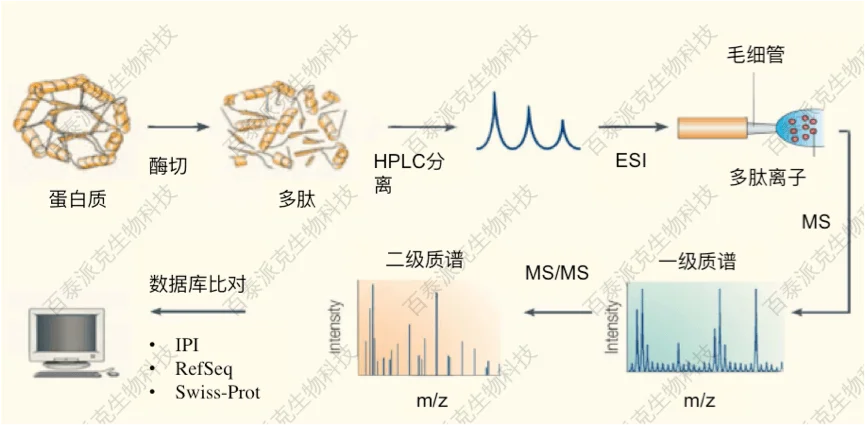
Figure 1. Steps of Polypeptide Mass Spectrometry Identification
BiotechPack, A Biopharmaceutical Characterization and Multi-Omics Mass Spectrometry (MS) Services Provider
Related Services:
Peptide Mass Spectrometry Identification
Peptide Structure Determination
Peptide Biomarker Identification
High-Precision Mass Spectrometry-Based Immunopeptidomics Analysis and Neoantigen Discovery
How to order?




