






Advantages and Challenges of Mass Spectrometry in Protein Structure Analysis
1. Introduction
In the field of biomedicine, proteins are closely related to cellular activities, tissue functions, and even life activities. In-depth analysis of protein structures can help us deeply understand their biological functions and provide important theoretical support for disease diagnosis and treatment.
2. Introduction to Mass Spectrometry Technology
Mass spectrometry is a high-end technology used for quantifying proteins, determining protein sequences, and confirming modifications. Its basic principle involves using electromagnetic fields to separate ions, then measuring the ions' mass-to-charge ratio to determine the structure or properties of molecules.
3. Applications and Advantages of Mass Spectrometry in Proteomics
3.1 High Quantitative Accuracy
Mass spectrometry demonstrates high quantitative accuracy in proteomics research. It can accurately measure the molecular weight of proteins and quantify protein abundance, providing empirical evidence for dynamic changes in proteins within organisms, and comparisons across tissues and species.
3.2 Comprehensive Modification Identification
It also shows significant advantages in studying post-translational modifications (PTMs) of proteins. Whether it is common modifications like phosphorylation, ubiquitination, acetylation, or less common ones like glycosylation and hydrophobic groups, mass spectrometry can comprehensively and accurately identify them.
4. Challenges in Protein Structure Analysis Using Mass Spectrometry
4.1 Limitations of Enzyme Dependency
A key step in mass spectrometry involves using enzymes to cleave proteins into peptides. However, in practice, the efficiency of enzyme cleavage can be influenced by various factors such as the size, structure, and modifications of the protein. This leads to the inherent problem of 'missing maps.'
4.2 Time and Energy Consumption
Despite rapid advancements in mass spectrometry instruments, the data processing still requires significant time and manpower. Especially for large-scale sample libraries, data processing time often becomes the bottleneck of experiments.
5. Conclusion
As a high-end, high-precision analytical technology, mass spectrometry has played a significant role in proteomics research. Although there are some challenges, with the continuous advancements in instruments, databases, and analytical methods, it is believed that mass spectrometry will bring broader horizons to the field of proteomics.
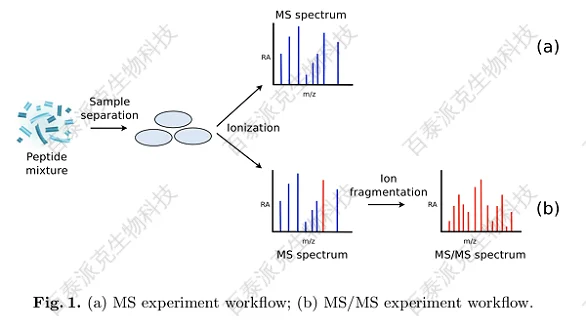
Figure 1
BiotechPack, A Biopharmaceutical Characterization and Multi-Omics Mass Spectrometry (MS) Services Provider
Related Services:
Peptide Mass Spectrometry Identification
Molecular Weight Determination
Peptide Biomarker Identification
How to order?




