






Protein Methylation Proteomics Analysis: An Exploration from Modification Markers to Functional Interpretation
With the continuous advancement of technology, many new techniques and methods have emerged in the field of biological research, helping scientists better understand the complexity of cells. Protein methylation proteomics analysis, as an emerging research area, is gradually becoming a focal point in the biopharmaceutical field. This article will guide readers through the basic concepts and methods of protein methylation proteomics analysis and explore the important role of methylation modification in regulating gene expression and cellular functions.
1. Basic Concepts of Protein Methylation
Protein methylation is an important form of epigenetic modification, which alters the structure and function of proteins by adding methyl groups to the amino acid residues in protein molecules. Common methylation sites include lysine, arginine, and histidine. Methylation modification can regulate protein stability, interactions, and localization, thereby significantly impacting biological processes such as gene expression and cell signal transduction.
2. Methods of Proteomics and Protein Methylation Proteomics Analysis
Proteomics is the study of the complete set and function of proteins in cells or organisms. Protein methylation proteomics analysis is a study conducted on the basis of proteomics, specifically targeting protein methylation modifications. The main aspects of this method include the detection and localization of methylation sites, quantification of methylation levels, and functional interpretation of methylation modifications.
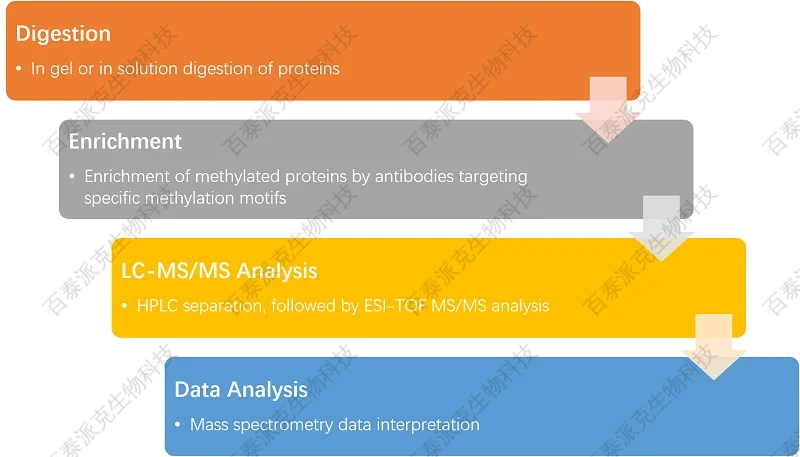
Figure 1
1.Detection and Localization of Methylation Sites
Detection of methylation sites is a crucial aspect of protein methylation proteomics analysis. Traditional methods include mass spectrometry analysis, antibody enrichment, and methylation sequence analysis. In recent years, the development of high-throughput sequencing technologies has provided more efficient and precise methods for detecting protein methylation sites, such as methylation-targeted sequencing (MeDIP-seq) and mass spectrometry identification of methylation modifications.
2.Quantification of Methylation Levels
Quantification of methylation levels is an essential method for understanding methylation modifications. Common quantification methods include mass spectrometry-based quantification and site-specific sequencing quantification of methylation. These methods can help researchers determine differences in methylation levels between different samples, thereby exploring the relationship between methylation modifications and cell states, disease occurrence, and more.
3.Functional Interpretation of Methylation Modifications
Functional interpretation of methylation modifications is a key goal of protein methylation proteomics analysis. Researchers integrate multi-omics data to analyze the associations between methylation modification sites and gene expression, signaling pathways, etc., exploring the potential mechanisms of methylation modifications in cell functions and disease occurrence. Furthermore, functional experiments such as gene knockout and overexpression are also important means of functional interpretation.
3. The Role of Methylation Modifications in the Regulation of Gene Expression and Cellular Functions
Protein methylation modifications play an important role in the regulation of gene expression and cellular functions. Studies have shown that methylation modifications can affect the structure and stability of chromatin, thereby regulating the transcriptional activity and silencing state of genes. Additionally, methylation modifications are involved in biological processes such as cell signal transduction, cell cycle regulation, and cell differentiation.
As a cutting-edge research area, protein methylation proteomics analysis provides a powerful tool for understanding the epigenetic regulatory mechanisms of cells. Through the detection and quantification of protein methylation modifications and the interpretation of their functions, we can better understand the role of protein methylation in biological processes and disease occurrence, offering new ideas and methods for biopharmaceutical development and treatment.
BaiTaiPike Biotechnology--BiologicalProductsCharacterization, High-Quality Service Provider for Multi-Omics Biomass Spectrometry Testing
Related Services:
Methylation Quantitative Proteomics Research
Post-Translational Modification Proteomics Analysis
Histone Post-Translational Modification Analysis
Quantitative Proteomics Analysis
Targeted Proteomics
4D Proteomics
DIA Quantitative Proteomics
Label-Free Based Quantitative Proteomics Analysis
Label-Based Protein Quantification Techniques-iTRAQ, TMT, SILAC
MRM/PRM Quantitative Proteomics Analysis
How to order?




