






How to analyze protein modifications? What are the key methods for accurately detecting the modification state of proteins?
Protein modification research is one of the important research directions in the field of biopharmaceuticals. Understanding analysis methods for protein modifications is of great significance for revealing protein functions and disease mechanisms. This article will introduce analysis methods for protein modifications and key methods for accurately detecting protein modification states.
1. Analysis Methods for Protein Modifications
Analysis methods for protein modifications can be divided into two main categories: global analysis and targeted analysis.
1.1 Global Analysis
Global analysis refers to the identification and quantification of modifications across the entire proteome. Mass spectrometry is one of the most commonly used methods. Mass spectrometry can determine the type and location of modifications by measuring the mass and mass distribution of proteins. Common mass spectrometry techniques include mass spectrometry profiling, mass spectrometry quantification, and mass spectrometry imaging.
1.2 Targeted Analysis
Targeted analysis refers to the identification and quantification of proteins with specific modifications. Various methods are used for targeted analysis, including immunoprecipitation, co-immunoprecipitation, and enzyme-linked immunosorbent assays. These methods can selectively enrich modified proteins using specific antibodies or affinity agents, enabling accurate detection of modification states.
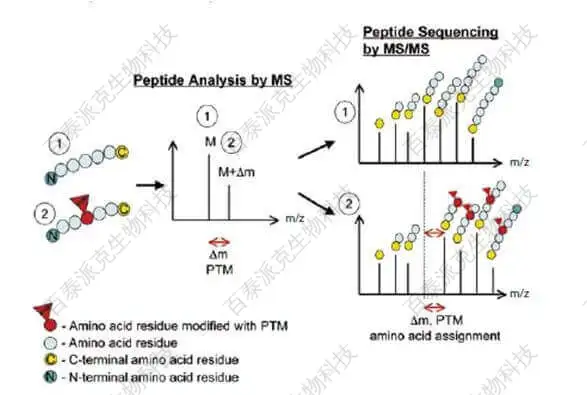
Figure 1
2. Key Methods for Accurate Detection of Protein Modification States
Accurately detecting protein modification states is a crucial step in protein modification research. The following are several commonly used key methods:
2.1 Mass Spectrometry
Mass spectrometry is one of the important methods for accurately detecting protein modification states. It can determine the type, location, and abundance of modifications. The development of mass spectrometry has made the analysis of protein modifications more efficient and precise.
2.2 Immunoprecipitation
Immunoprecipitation is a commonly used targeted analysis method that selectively enriches modified proteins using specific antibodies. It can be used to detect proteins with specific modifications, such as phosphorylation and acetylation.
2.3 Protein Microarray Technology
Protein microarray technology is a high-throughput protein analysis method that can simultaneously detect multiple modified proteins. By immobilizing different modification patterns on a chip, it enables accurate detection of multiple modification states.
2.4 Protein Structure Analysis
Protein structure analysis is a method for directly observing protein modification states. By using techniques such as X-ray crystallography and nuclear magnetic resonance, the three-dimensional structure of proteins can be determined, allowing observation of modification positions and their impact on protein structure.
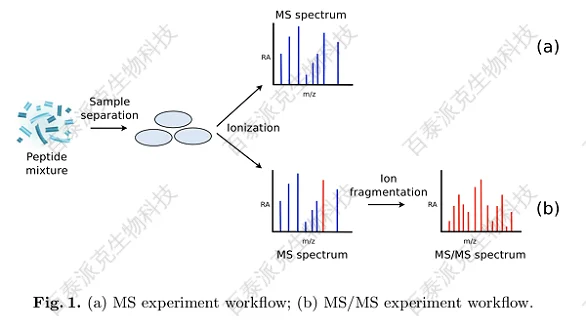
Figure 2
2.5 Metabolomics Analysis
Metabolomics analysis is a method that indirectly infers protein modification states by detecting metabolites. Protein modifications can affect metabolic pathways and the generation of metabolites, so analyzing changes in metabolites can infer the state of protein modifications.
2.6 Bioinformatics Analysis
Bioinformatics analysis is a method that predicts protein modification states using computational approaches. By analyzing protein sequences and structural features, it can predict whether proteins are likely to be modified and the types and positions of modifications.
The analysis of protein modifications is an important research area in the field of biopharmaceuticals. Accurate detection of protein modification states is a crucial step in understanding protein functions and regulatory mechanisms. Methods such as mass spectrometry, immunoprecipitation, protein microarray technology, protein structure analysis, metabolomics analysis, and bioinformatics analysis play important roles in the analysis of protein modifications. By comprehensively applying these methods, researchers can fully understand the types, locations, and abundances of protein modifications, further studying protein functions and regulatory mechanisms, and providing important scientific evidence for biopharmaceutical research and clinical applications.
Biotech Pack Biotechnology--BiologicalProductsCharacterization, High-quality Multi-omics Mass Spectrometry Services
Related Services:
Post-translational Modification Proteomics Analysis
Quantitative Proteomics Analysis
Label-free Quantitative Proteomics Analysis
Label-based Protein Quantification Techniques - iTRAQ, TMT, SILAC
TMT/iTRAQ/MultiNotch Quantitative Proteomics Analysis
MRM/PRM Quantitative Proteomics Analysis
Absolute Quantification Analysis (AQUA)
How to order?




