






Revealing Efficient Experimental Steps for Protein Secondary Structure Analysis
Proteins are one of the most important molecules in living organisms, playing a key role in cellular functions and biological processes. Understanding protein structure is crucial for revealing their functions and for drug development. The secondary structure of proteins refers to the local structures formed by hydrogen bonding interactions between amino acid residues, including α-helices, β-sheets, and random coils. This article unveils efficient experimental steps for analyzing protein secondary structures, helping readers better understand protein structures.
1. Sample Preparation
The first step in protein secondary structure analysis is sample preparation. Typically, we need to extract the target protein from a biological source and purify it to obtain high-quality samples. This can be achieved through techniques such as cell lysis, centrifugation, and chromatography. The key is to ensure the purity and integrity of the sample to avoid interference with the analysis results.
2. Circular Dichroism Spectroscopy
Circular dichroism is a commonly used technique for analyzing protein secondary structure. It utilizes the absorption properties of amino acids such as tryptophan, tyrosine, and phenylalanine in proteins, measuring the difference in absorption of left and right circularly polarized light to determine the secondary structure of proteins. Circular dichroism can provide quantitative information about the α-helix and β-sheet content in proteins.
3. Nuclear Magnetic Resonance (NMR) Spectroscopy
Nuclear magnetic resonance is a high-resolution technique for analyzing protein secondary structure. It uses the NMR signals of atoms such as hydrogen, carbon, and nitrogen in proteins to determine their structure. NMR can provide information on distances, angles, and rotation rates between amino acid residues, thereby revealing the secondary structure of proteins.
4. X-ray Crystallography
X-ray crystallography is a commonly used technique for analyzing protein secondary structure. It uses the diffraction of X-rays by protein crystals to determine the protein structure. X-ray crystallography can provide high-resolution structural information about proteins, including distances, angles, and conformations between amino acid residues.
5. Bioinformatics Analysis
Bioinformatics is a computational and statistical method for analyzing protein secondary structure. It uses information from protein sequences to predict their secondary structure. Bioinformatics analysis can quickly and in high-throughput predict protein secondary structure, providing important references for experimental design and result interpretation.
Conclusion
Protein secondary structure analysis is an important means of revealing protein structure and function. Through the integrated application of techniques such as sample preparation, circular dichroism, nuclear magnetic resonance, X-ray crystallography, and bioinformatics analysis, we can efficiently uncover the secondary structure of proteins. The development of these analytical methods provides important tools and theoretical foundations for protein research and drug development.
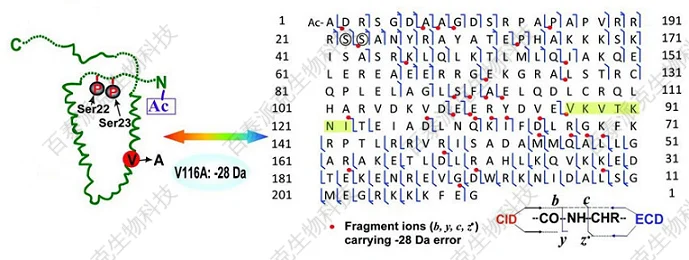
Figure 1
Bietai Park Biotechnology - A high-quality service provider for the characterization of biological products and multi-omics mass spectrometry detection
Related Services:
Protein Structure Identification
Protein Circular Dichroism Analysis
Determination of Protein Primary Structure
Protein Secondary Structure Analysis
Detection of Disulfide Bonds/Free Cysteine in Biopharmaceuticals
Identification and Quantitative Analysis of Protein Disulfide Bonds
Shotgun Proteomics Identification
Hydrogen-Deuterium Exchange Mass Spectrometry (HDX MS)
Top-Down Characterization of PTMs
Protein Isoelectric Point Determination
How to order?




